Endangered
Günther's flat-tail gecko
Uroplatus guentheri
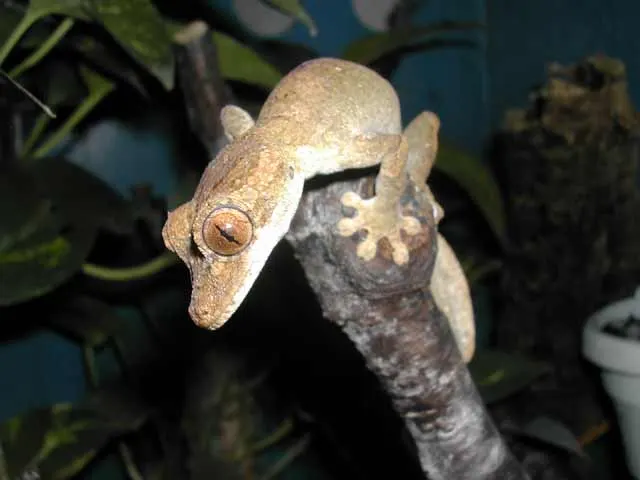
Günther's flat-tail gecko is a nocturnal, camouflaged gecko found only in Madagascar, with records from dry forest in the north-west and west. The IUCN Red List lists it as Endangered (assessed 2011), with a decreasing population, and it is subject to international trade controls.
How to recognise it
This is a leaf-tailed gecko in the genus Uroplatus, a group known for blending into bark and dead branches. It reportedly reaches about 150 millimetres in total length, tail included. It hides by camouflage, mimicking dead branches and bark, and at night it hunts invertebrates.
François Mocquard described the species in 1908. Its name honours Albert Günther, a German-born British herpetologist. It is also called Güenther's leaf-tail gecko.
Where it lives
The species is endemic to Madagascar. It is recorded from the north-west around Ankarafantsika, and a locality near Morondava in the west is also reported. The IUCN counts four locations, with an extent of occurrence of about 3,550 square kilometres, and describes the population as severely fragmented.
It lives in dry tropical forest at low elevation, between 30 and 120 metres. That makes it an exception in its genus, since most Uroplatus come from eastern rainforests, as a keepers' magazine article points out.
Pins are Wikidata “endemic to” fields. Orange dots, when present, are GBIF occurrence tiles — survey bias included.
How it lives
It forages and roosts on small trees and bushes, usually under 6 metres above the ground. It lays eggs, and the spherical eggs are laid in leaf litter. In captivity, one keeper reports that it rests in bamboo tubes during the day and that gravid females often laid eggs inside them.
Why it is in trouble
The IUCN lists shifting agriculture, small-holder grazing and farming, and more frequent fires as ongoing threats to its forest. It also lists unintentional effects of small-scale harvest. Shifting agriculture and harvest are each rated as affecting a minority of the population (under 50%), causing slow, significant declines.
The species occurs in at least one protected area, and the IUCN records it as subject to international trade controls. The assessment shows no harvest management plan, no monitoring scheme and no captive population.
Sources
Written for this catalog in our own words from the sources below, checked against them on 12 November 2026. Population figures are estimates and carry the year they were made. Status and assessment year: IUCN. 2026. The IUCN Red List of Threatened Species. Version 2026-1. iucnredlist.org.




