Critically Endangered
Emoia slevini
Emoia slevini
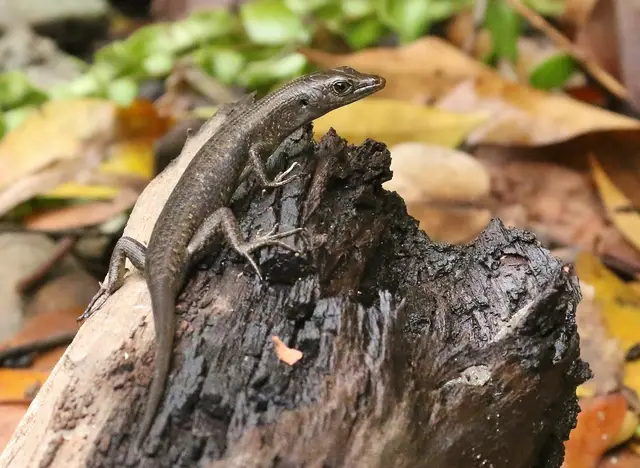
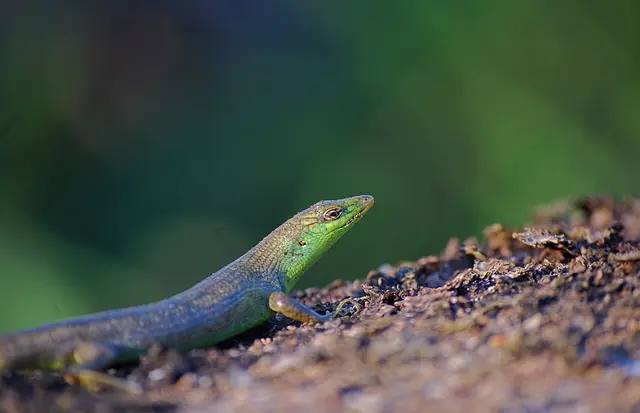
The Mariana skink (Emoia slevini) is a small brown lizard found only in the Mariana Islands in the western Pacific. The IUCN Red List rated it Critically Endangered in 2013. It has disappeared from the main island of Guam and several others, and a 2011 rediscovery on a tiny islet showed how easily such lizards go unseen.
How to recognise it
Emoia slevini is a skink, a smooth-scaled lizard in the family Scincidae. Adults reportedly measure 5.8 to 8.5 cm from snout to vent (not counting the tail), fairly large for the genus. USGS describes it as small and brown. It lays eggs.
W. C. Brown and Falanruw described the species in 1972. The name honours Joseph Richard Slevin (1881 to 1957), who was curator of herpetology at the California Academy of Sciences from 1928 until his death. The type locality is Cocos Island, off Guam.
Where it lives
The skink is endemic to the Mariana Islands, with the Red List recording it from the Northern Mariana Islands and listing it as extinct on Guam. It lives in forest from sea level to 400 m, and the assessment also lists rural gardens among its habitats. In 2013 the assessment counted seven locations and an extent of occurrence of about 99 square kilometres, with a severely fragmented population.
It was once documented on 10 islands: Dåno', Guam, Rota, Aguijan, Tinian, Sarigan, Guguan, Alamagan, Pagan and Asuncion. A 2015 US Fish and Wildlife Service summary, cited in a 2022 Oryx paper, suggested it persisted on only five: Sarigan, Guguan, Alamagan, Pagan and Asuncion. Dåno' is the Chamorro name for Cocos Island, an offshore islet that USGS calls the only snake-free refuge on Guam and the home of Guam's last resident population.
Pins are Wikidata “endemic to” fields. Orange dots, when present, are GBIF occurrence tiles — survey bias included.
Why it is in trouble
The Red List assessment names several invasive animals among the threats, including rats, goats, pigs, the brown treesnake and other lizards, plus small-scale farming and shifting agriculture that clear forest. USGS says brown treesnakes likely contributed to the loss on Guam, and Reptile Database lists the skink as extirpated from the main island.
The 2022 Oryx paper says it no longer occurs on as many as five of its historic islands, most likely because of invasive species and loss of native forest, though it calls the patchy pattern of decline enigmatic. As assessed in 2013, the skink did not occur in any protected area, and the population was judged to be decreasing.
A rediscovery on Dåno'
Before 2011 the last verifiable records were from Guam in 1945 and from Dåno' in 1993. Researchers then saw the skink on Dåno' in January 2011, about 21 months after invasive Pacific rats (Rattus exulans) were removed in 2009. DNA from tail tissue of four animals, taken in 2014, confirmed the identification.
The find is encouraging and fragile. In 2011 the skinks were confined to under 300 square metres of a 37-hectare islet that rises no higher than 2 m and is only about a third native forest. Monitor lizards were cut from 6.3 to 1.0 per hectare by 11 months of trapping and shooting in 2011 and 2012. Brown treesnakes have been recorded on Dåno' since 1988 but have not become established there.
What is being done
The Red List lists invasive species control and site protection as actions. The Oryx paper suggests moving animals to managed assurance colonies, offshore islets, parts of Guam or other Mariana islands. It also cautions against declaring a species extinct too readily, since that can discourage the surveys that lead to rediscoveries, and this skink is a good example.
Sources
Written for this catalog in our own words from the sources below, checked against them on 12 November 2026. Population figures are estimates and carry the year they were made. Status and assessment year: IUCN. 2026. The IUCN Red List of Threatened Species. Version 2026-1. iucnredlist.org.