Endangered
Emoia samoensis
Emoia samoensis
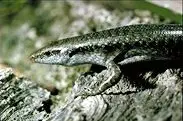
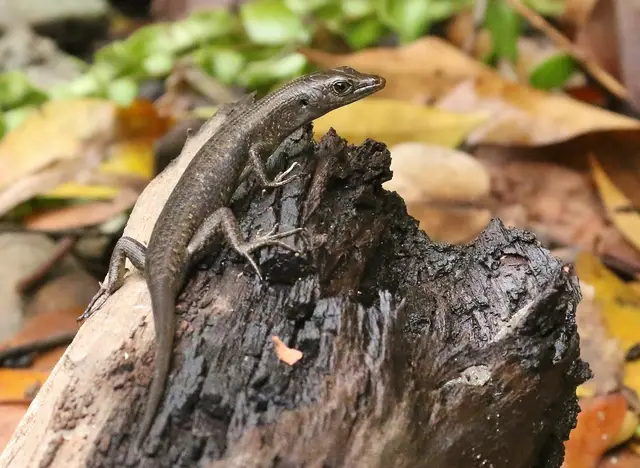
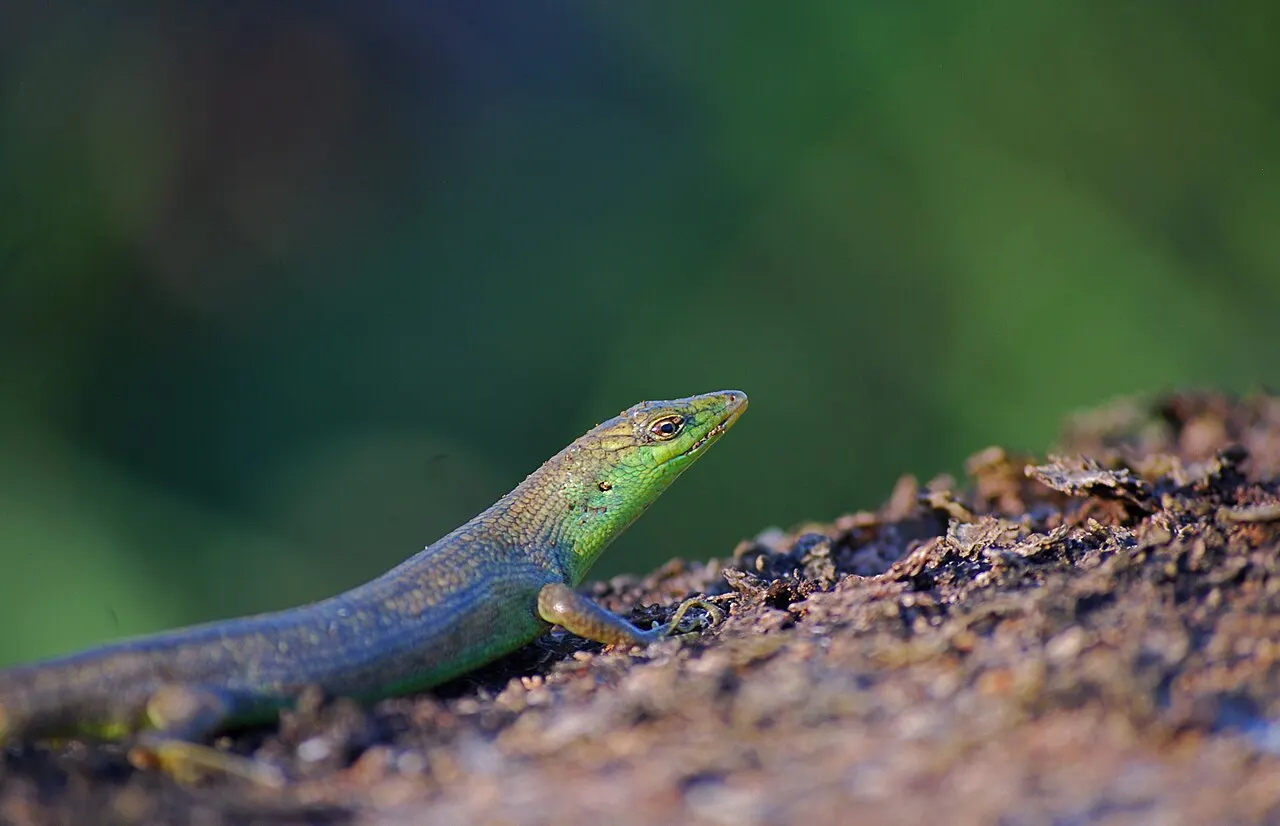
The Samoa skink (Emoia samoensis) is a small, smooth-scaled lizard of the Samoan islands. It lives in moist forest from the lowlands up to about 1,300 m. The IUCN Red List assessed it as Endangered in 2013, because its forest habitat is split up and shrinking and its numbers are falling.
What it is
Emoia samoensis is a skink, a smooth-scaled lizard in the genus Emoia. The French zoologists Duméril and Duméril described it in 1851 from Samoa, originally under the name Gongylus (Eumeces) samoensis. The Reptile Database gives its snout-to-vent length at maturity as a wide 45 to 122 mm.
It gives its name to the samoensis species group, which the herpetologist Walter Brown (1991) said held 13 species. Members of the group have smooth scales and are greenish or brown, often with darker markings. The group is still being sorted out: a 2011 paper by Zug, Hamilton and Austin noted that molecular data did not support the subgroups Brown proposed, and described a large treeskink from Rarotonga in the Cook Islands as a separate species, Emoia tuitarere. The Reptile Database still lists the Cook Islands in the Samoa skink's range, so that part of its distribution is uncertain.
Where it lives
The IUCN records it from Samoa and American Samoa. It lives in lowland and mountain moist forest, from sea level to about 1,300 m. The assessment describes the forest as fragmented and the area the skink occupies as still shrinking. It lays eggs. Very little else has been published about its habits, and no population count exists.
Pins are Wikidata “endemic to” fields. Orange dots, when present, are GBIF occurrence tiles — survey bias included.
Why it is in trouble
The Red List names housing and urban development as one threat, together with problem species that damage habitat and cause deaths. Field evidence from Savaii fits the second point. A survey along a 21 km transect from the coast east of Asau up toward Mauga Silisili, published by the US Geological Survey in 2012, found yellow crazy ants and big-headed ants at low elevations, swarming traps from sea level to 500 m. The Samoa skink was absent from that zone and turned up only above it, even though elsewhere it lives down to sea level.
The same survey found the ground above 500 m still free of invasive ants. Rats, cats and pigs were present at various sites, including high ground. No reptiles were found above 1,320 m.
What is being done
Part of its range lies in a protected area. The one conservation action the IUCN lists is controlling invasive species. No species-specific recovery plan is on record.
Sources
Written for this catalog in our own words from the sources below, checked against them on 12 November 2026. Population figures are estimates and carry the year they were made. Status and assessment year: IUCN. 2026. The IUCN Red List of Threatened Species. Version 2026-1. iucnredlist.org.