Endangered
Emoia boettgeri
Emoia boettgeri
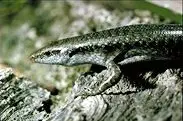
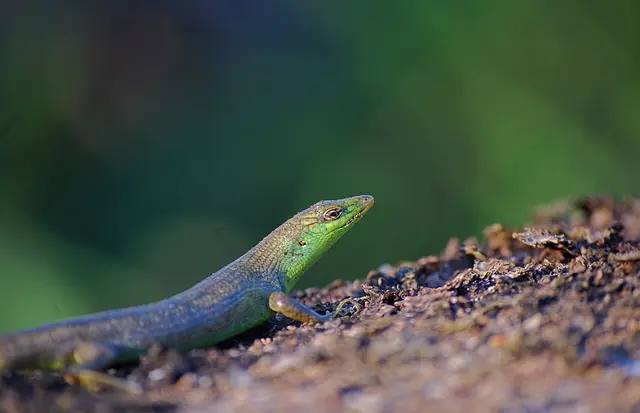
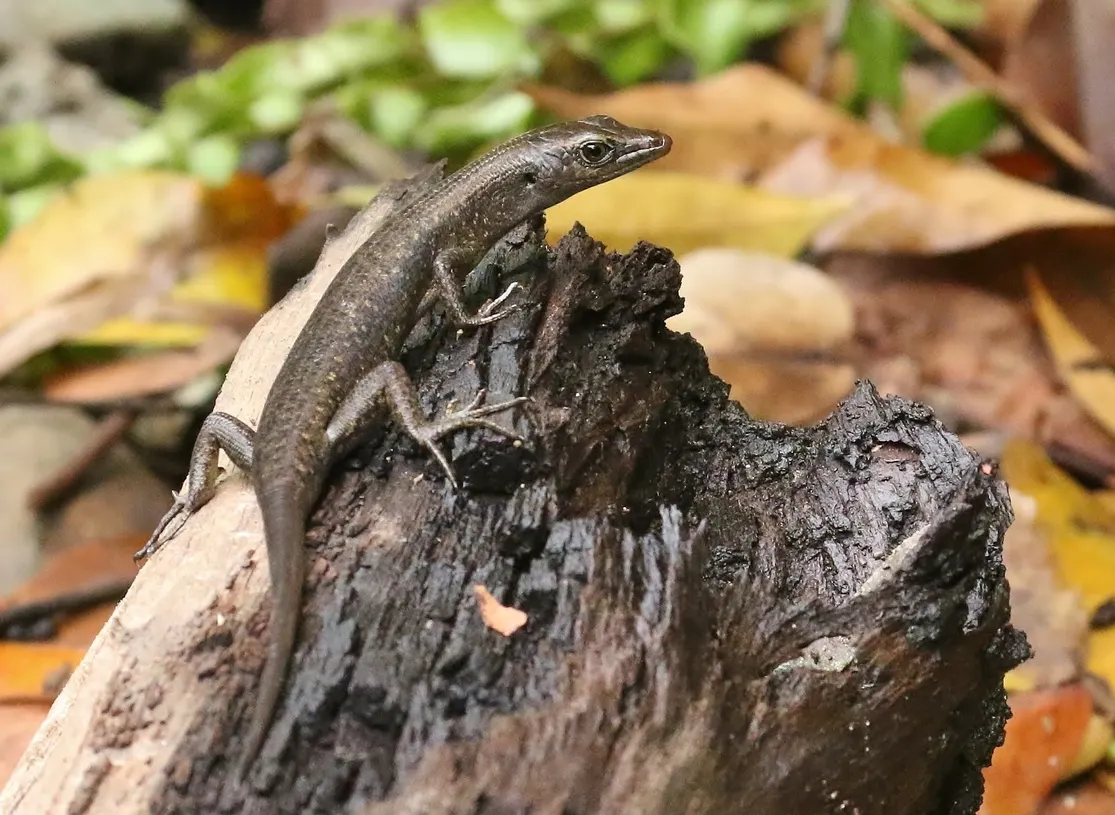
Boettger's emo skink (Emoia boettgeri) is a small ground-living lizard of eastern Micronesia, known from the Caroline Islands and the Marshall Islands. The IUCN Red List last assessed it in 2013 as Endangered, because it occupies a tiny, split-up range of lowland forest and coast that is losing cover.
How to recognise it
It goes by several names: Boettger's emo skink, the Micronesia forest skink and the Micronesia spotted skink. It's a member of the skink family, Scincidae, and was first described in 1918 by Richard Sternfeld, who named it for the German herpetologist Oskar Boettger. No subspecies are recognised.
On Pohnpei, a naturalist's field notes describe it as the only local Emoia skink with neither a brightly coloured tail nor yellow stripes along the body, which makes it easier to pick out from its relatives. It lives on the ground and lays eggs.
Where it lives
Pohnpei, in the eastern Carolines, is the type locality, where the first specimens were collected. The Red List also records it from Sapwuahfik Atoll and the Mortlock Islands in the Carolines. In the Marshall Islands it has been found on three islets of Arno Atoll, and it was once recorded on Majuro Atoll, which is now heavily developed and has produced no recent records. The Reptile Database also lists Lukunor Atoll and the Uman District islands.
The IUCN counts only two locations, one in the Federated States of Micronesia and one in the Marshall Islands, and estimates the extent of its range at just 522 square kilometres, the summed area of the islands it occupies. Because that range is spread across separate islands, the population is severely fragmented.
Pins are Wikidata “endemic to” fields. Orange dots, when present, are GBIF occurrence tiles — survey bias included.
How it lives
Its main habitat is moist lowland forest, found up to about 780 m, though on Pohnpei it has only been recorded below 400 m. The Red List describes a ground-dweller of rocky, shaded forest floors with sparse ground cover, and also of forest edges beside rocky beaches. It has also turned up at the bases of breadfruit trees, in houses and in piles of coconut and thatch. Heavily degraded former forest and the intertidal zone count as suitable habitat, and rural gardens and plantations as marginal.
On Pohnpei one observer found three skinks in mangroves near Nan Madol and has seen the species only very close to sea level. It often shares ground with at least two other widespread Emoia species. It tolerates some disturbance and can persist near settlements, though at lower densities, and it seems to need forest or scrub cover rather than cultivated ground or grassland.
How many there are
No count exists for the whole species. In 1953 the population on one Arno islet was estimated at anywhere from 53 to 7,600 animals, which shows how hard the lizard is to count. Surveys found it common on Oroluk Atoll, uncommon to common across the Mortlocks, and absent or scarce on some Mortlock islands that looked suitable. The Red List judges the overall trend to be decreasing.
Why it is in trouble
Ongoing pressures include housing and urban development, conversion of forest to farmland (including growing commercial cultivation of sakau in the Carolines) and introduced rats. On Pohnpei, native upland vegetation fell from 42 percent of cover in 1975 to 15 percent in 1995. Arno Atoll, home to its Marshall Islands populations, is heavily settled, and the skink has been found near its largest village.
Looking ahead, the brown tree snake, which has devastated lizards elsewhere, is flagged as a possible arrival, along with storms, rising seas and flooding on low atolls.
What is being done
No species-specific conservation measures are known, and whether any part of its range is a protected area is recorded as unknown. The assessment calls for research on population trends, habitat tolerance and life history. It dates from 2013, so newer work is not reflected in the Red List status.
Sources
Written for this catalog in our own words from the sources below, checked against them on 12 November 2026. Population figures are estimates and carry the year they were made. Status and assessment year: IUCN. 2026. The IUCN Red List of Threatened Species. Version 2026-1. iucnredlist.org.