Endangered
Kinyongia tenuis
Kinyongia tenuis
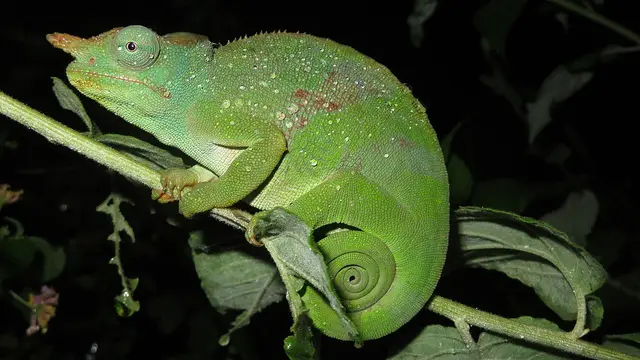
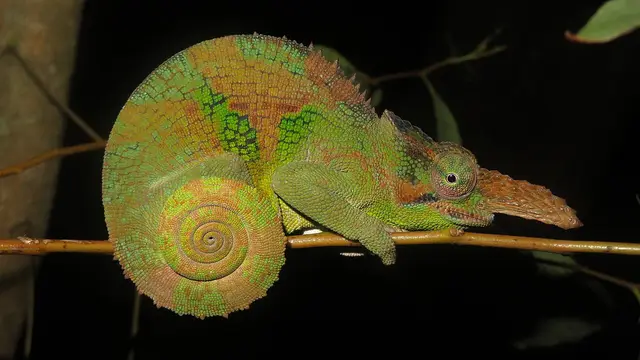
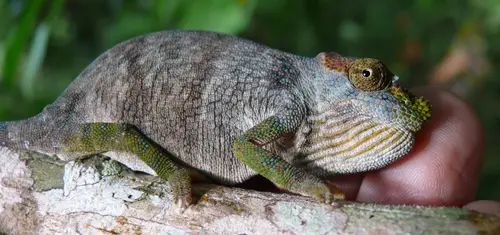
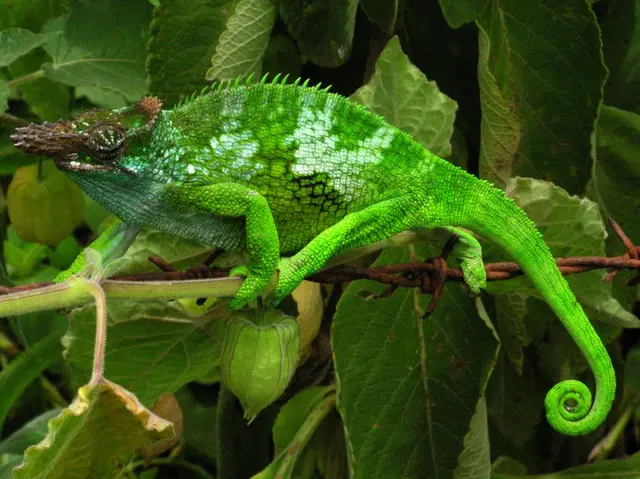
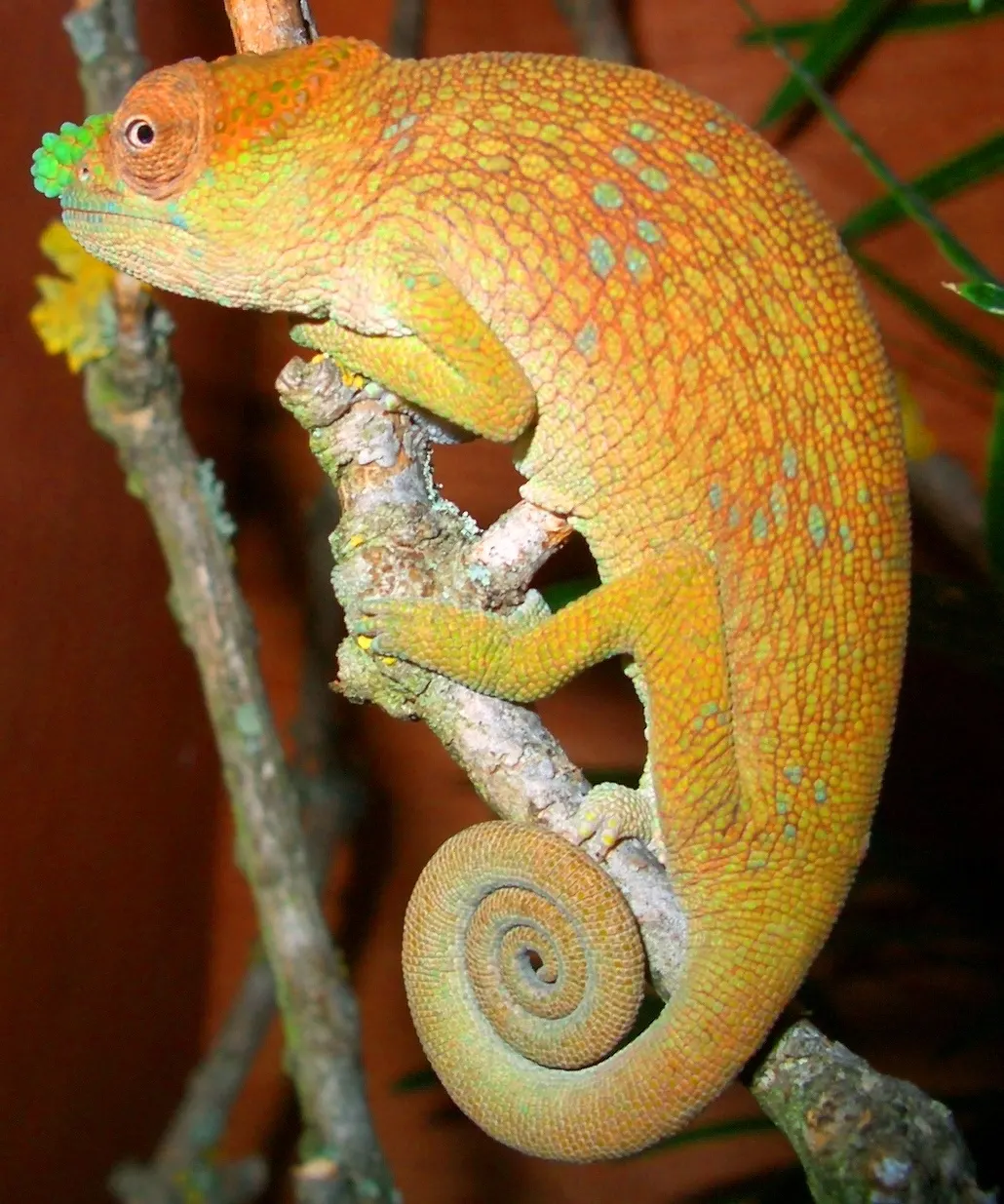
The Usambara soft-horned chameleon (Kinyongia tenuis) is a fairly small chameleon of eastern African forests, known from the Usambara Mountains in Tanzania and the Shimba Hills in Kenya. The IUCN Red List rated it Endangered in 2014, mainly because its forest is scattered and shrinking.
Names and description
It is a fairly small chameleon. Paul Matschie described it in 1892 as Chamaeleon tenuis, from Derema in the Usambara Mountains of Tanzania. The species name means slender, and refers to a longer tail and legs than the similar-looking Calumma nasutum. Other common names include Usambara flap-nosed chameleon and Matschie's dwarf chameleon.
Several authors placed it in Bradypodion as Bradypodion tenue between 1988 and 2009, and one 2013 paper used the spelling Kinyongia tenue. It now sits in Kinyongia. In 1988 Klaver and Böhme designated a lectotype, the specimen that fixes the name, catalogued as ZMB 1138. The species lays eggs.
Where it lives
In Tanzania it is recorded from forest in the East Usambara Mountains and on Magrotto Hill. In Kenya it is known only from the Shimba Hills. The two areas are clearly separated, and it has not been verified whether the Kenyan animals belong to this species or to a different one.
The IUCN assessment lists moist montane forest as its habitat, at elevations from about 100 to 1,400 m. It does not treat the range as restricted, but it describes the population as severely fragmented, records continuing decline in forest area, and does not treat the species as migratory.
Pins are Wikidata “endemic to” fields. Orange dots, when present, are GBIF occurrence tiles — survey bias included.
Why it is in trouble
The IUCN names small-holder farming as a threat, along with unintentional effects of small-scale harvest in its forest. Whether the population is falling is recorded as unknown. The Endangered rating rests on a small, broken-up range and on declining forest area, rather than on counted animals.
No conservation action is listed in the assessment, and it records no recovery plan or systematic monitoring scheme in place. The assessment was carried out by Tolley and Menegon in 2014.
Sources
Written for this catalog in our own words from the sources below, checked against them on 12 November 2026. Population figures are estimates and carry the year they were made. Status and assessment year: IUCN. 2026. The IUCN Red List of Threatened Species. Version 2026-1. iucnredlist.org.