Endangered
Magombera chameleon
Kinyongia magomberae
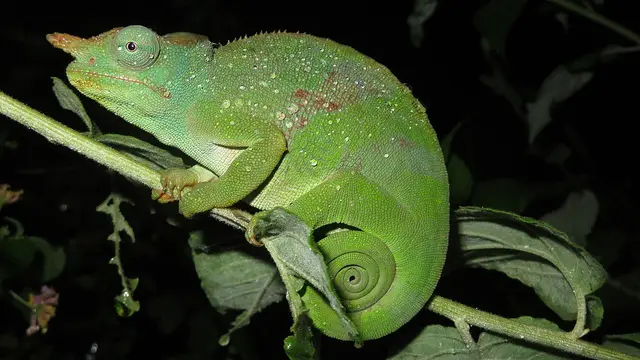
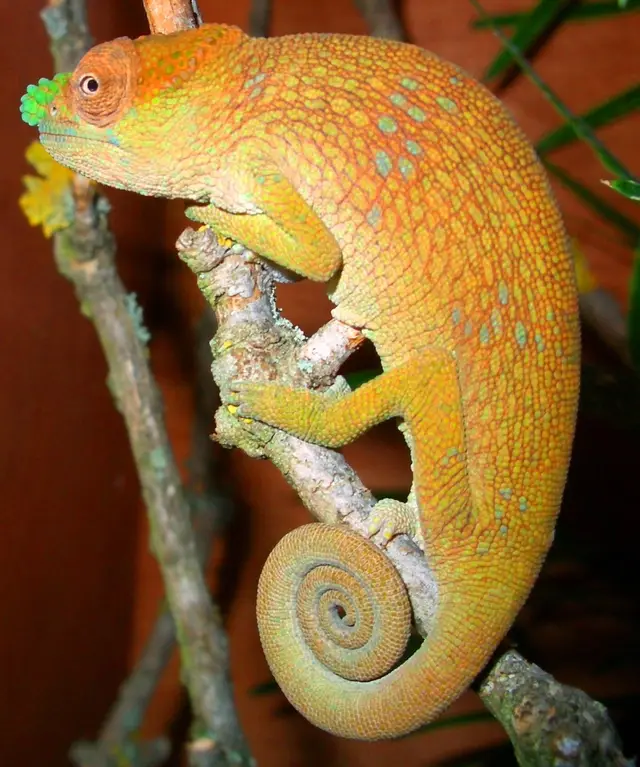
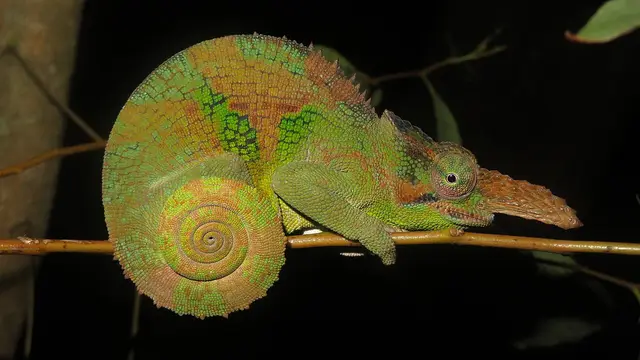
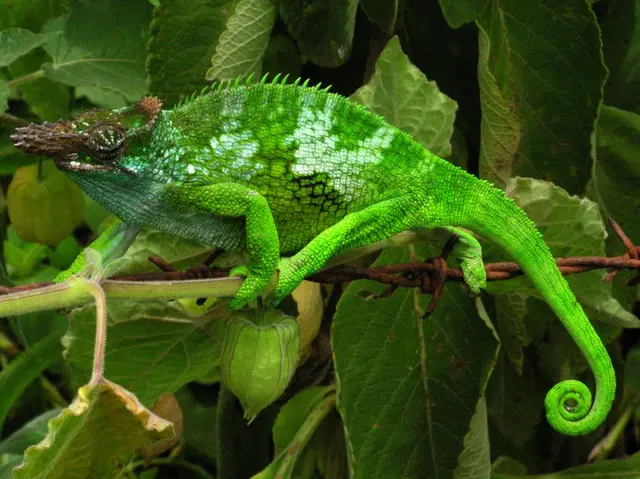
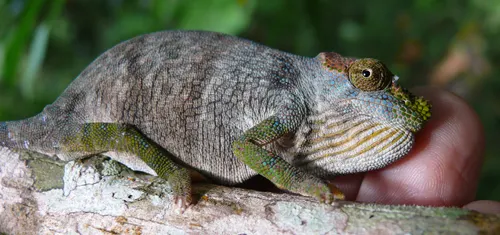
The Magombera chameleon (Kinyongia magomberae) is a single-horned chameleon from the forests of the Udzungwa Mountains region of Tanzania. It was first noticed in 2002, named in 2009, and is known from only two forests. The IUCN Red List rated it Endangered in 2014.
How it was found
The first sign of the species was a dead juvenile found by a researcher in 2002. Two more specimens turned up in the following years. One was dropped by a twig snake that was startled by Andrew Marshall of the University of York, who was surveying monkeys in Magombera forest.
Michele Menegon and colleagues described it as a new species in the African Journal of Herpetology in June 2009, backed by mitochondrial and nuclear DNA. It is a close relative of Kinyongia tenuis and Kinyongia oxyrhina, and like them it has a single rostral appendage, a horn-like growth on the snout. Its appendage is shorter and differently shaped, and it lacks the movable tip.
Where it lives
The describing paper recorded it from two places: Magombera forest, a lowland forest that was unprotected, and Mwanihana forest, a sub-montane forest inside Udzungwa Mountains National Park. The Red List counts two locations and gives an elevation range of 500 to 1,000 metres, in lowland moist forest.
The assessment puts its extent of occurrence at about 370 square kilometres and its area of occupancy at about 105 square kilometres. It estimates that 71 to 80 percent of the population lies within protected areas, and it does not consider the population severely fragmented.
Pins are Wikidata “endemic to” fields. Orange dots, when present, are GBIF occurrence tiles — survey bias included.
Why it is in trouble
The Red List criterion is B1ab(i,ii,iii)+2ab(i,ii,iii), reflecting a tiny range and a continuing decline in the extent and quality of habitat. The population trend is unknown, and no population size has been estimated.
Two threats are named, both rated medium impact and affecting more than half of the population: agro-industry plantations and small-holder farming. Magombera forest was unprotected when the species was described. In 2009 it was described as under threat, and it is also home to endangered red colobus monkeys. Marshall's research project there aims to win protected status for the forest and to find alternatives that meet local community needs.
What is being done
The Red List lists resource and habitat protection as the action needed. No recovery plan or systematic monitoring scheme is in place. International trade in the species is subject to controls.
Sources
Written for this catalog in our own words from the sources below, checked against them on 12 November 2026. Population figures are estimates and carry the year they were made. Status and assessment year: IUCN. 2026. The IUCN Red List of Threatened Species. Version 2026-1. iucnredlist.org.