Endangered
Kinyongia vosseleri
Kinyongia vosseleri
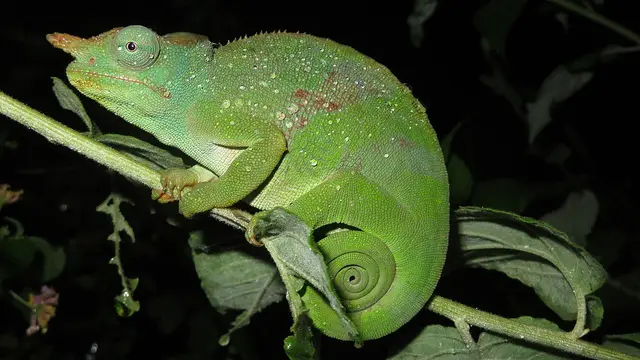
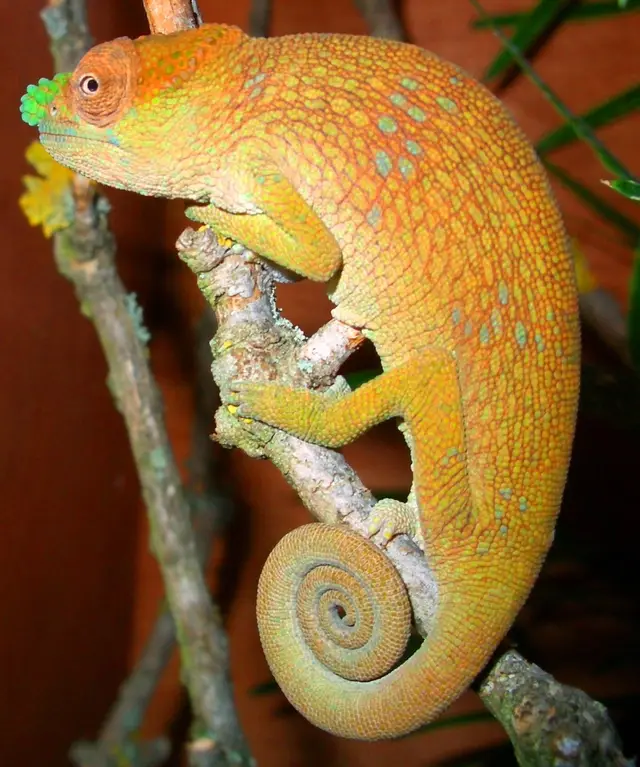
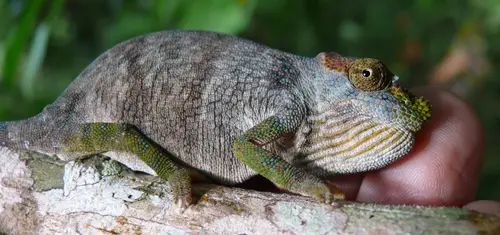
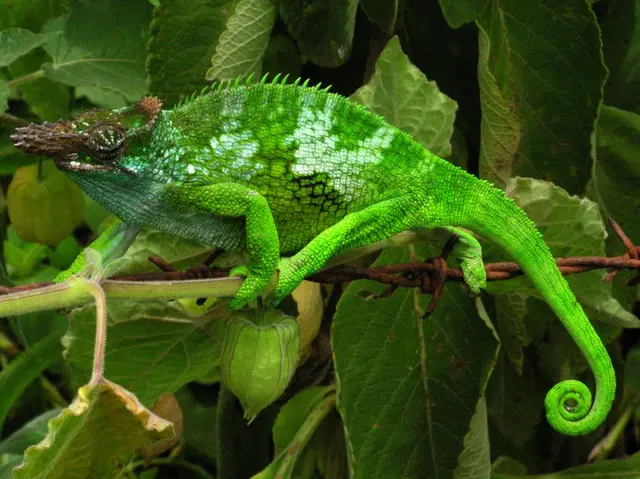
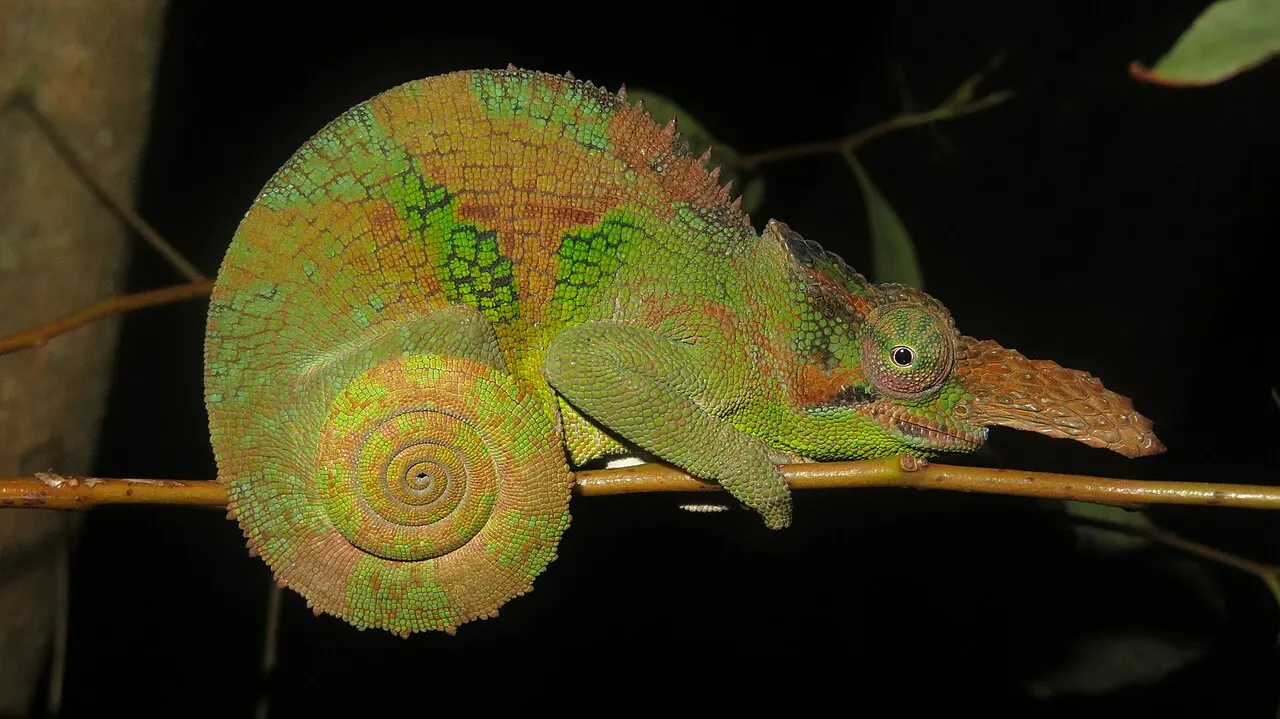
Vosseler's blade-horned chameleon (Kinyongia vosseleri), also called the Usambara two-horned chameleon, lives only in the forests of the East Usambara Mountains in Tanzania. Males carry a pair of flat horns on the snout. The IUCN assessed it as Endangered in 2014, with a decreasing population and a fragmented range.
How to recognise it
This is a medium to large chameleon, reaching about 29.5 cm in total length, more than half of it tail. Females are smaller than males. Adult males have two large horns on the nose that converge. Adult females have none, which sets this species apart from several relatives in the same group, where females carry small horns.
Males have a crest along the front third of the back and another on the front third of the tail, with a gap between. The species lays eggs.
Where it lives
Kinyongia vosseleri is endemic to Tanzania and found only in the East Usambara Mountains, up to about 1,500 m. Moist montane forest is its suitable habitat according to the IUCN, which also lists arable land as marginal habitat.
Its range overlaps with a close relative, Kinyongia matschiei, and a third relative, Kinyongia multituberculata, lives in the West Usambaras. Nieden described it in 1913 as a form of Kinyongia fischeri, and it was long treated as a synonym of that species. A 2008 study confirmed it as a separate species with a separate distribution.
Pins are Wikidata “endemic to” fields. Orange dots, when present, are GBIF occurrence tiles — survey bias included.
Why it is in trouble
The IUCN gives the area it occupies as about 288 square kilometres, within an extent of occurrence of about 799 square kilometres. It calls the population severely fragmented and decreasing, with the area of habitat still shrinking. Small-holder farming and small-scale, unintentional harvest are listed as ongoing threats. At the time of the 2014 assessment, none of the population was in a protected area.
A 2012 study led by Philip Shirk looked at forest fragments in the East Usambaras. It found the combined density of K. vosseleri and K. matschiei was higher in smaller fragments, and noted these chameleons are commonly found in disturbed habitat. Two other chameleons in the same forests showed the opposite pattern, with lower density in smaller fragments.
What is being done
The species falls under international trade controls. The 2014 assessment records no recovery plan and no systematic monitoring scheme.
A hobbyist reference says it was imported before Tanzania closed its exports, and that exporters often mislabeled animals from the old fischeri group because they did not know the species apart. It is described as not well represented in captive populations.
Sources
Written for this catalog in our own words from the sources below, checked against them on 12 November 2026. Population figures are estimates and carry the year they were made. Status and assessment year: IUCN. 2026. The IUCN Red List of Threatened Species. Version 2026-1. iucnredlist.org.