Endangered
Kinyongia matschiei
Kinyongia matschiei
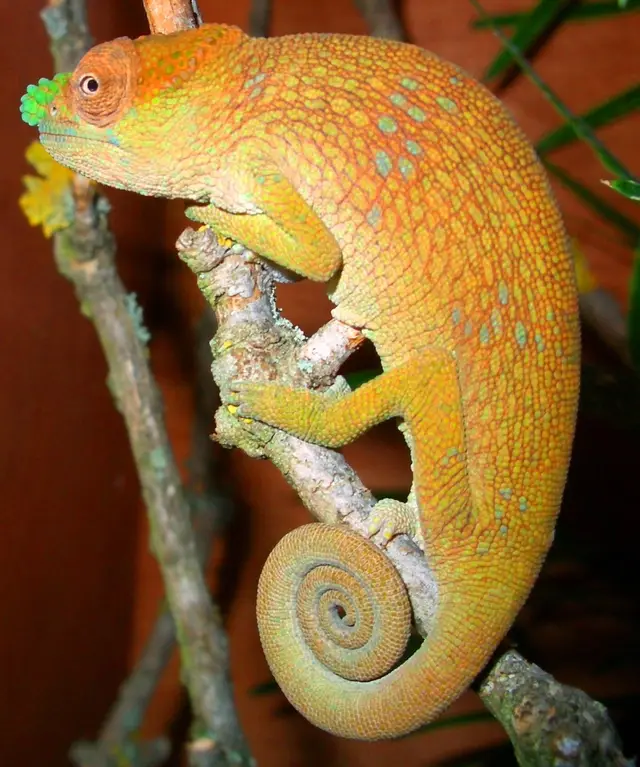
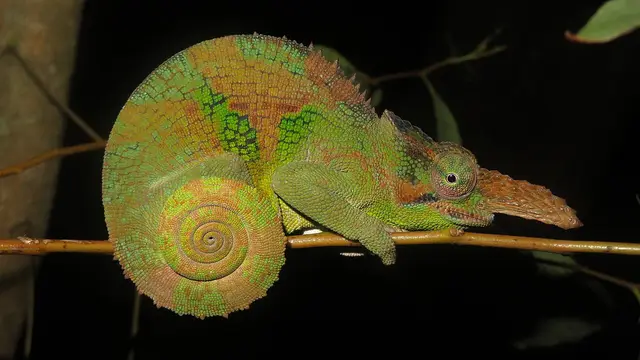
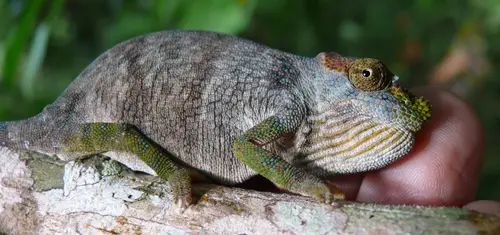
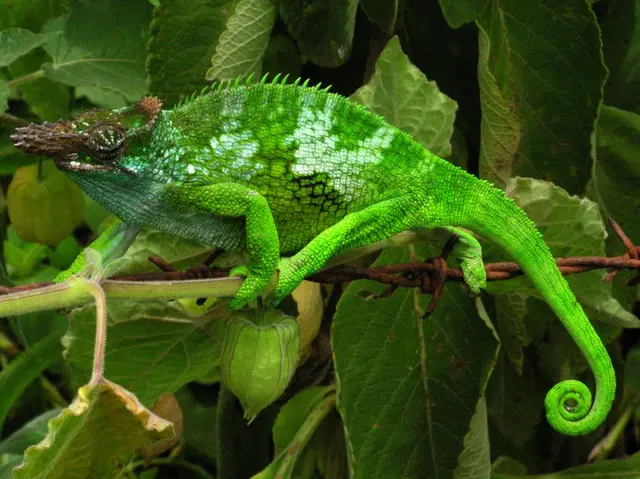
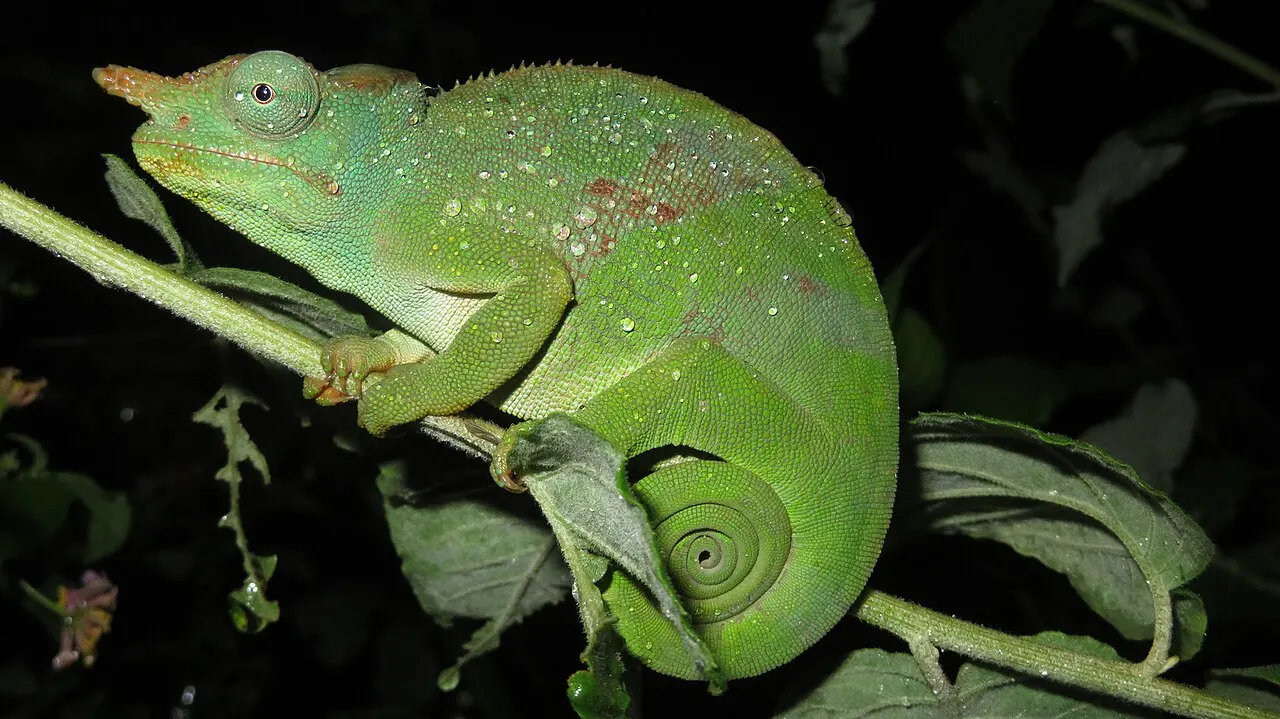
Matschie's two-horned chameleon (Kinyongia matschiei) is the largest chameleon in its genus, found only in the East Usambara Mountains of Tanzania. The IUCN Red List rated it Endangered in 2014. Males carry a pair of long horns on the nose, and the forest it depends on is shrinking.
How to recognise it
This is a big chameleon. Males reach up to about 41 cm in total length, including the tail, and females up to about 36 cm. Adult males bear a pair of long horns on the snout, which may run parallel or spread apart. Females have much smaller ones.
It also goes by names such as giant east Usambara blade-horned chameleon. For years it was confused with Fischer's chameleon (Kinyongia fischeri), a species that does not live in the East Usambaras.
Where it lives
The species is restricted to the East Usambara Mountains in north-eastern Tanzania. The type locality is Derema, in the East Usambaras, and Franz Werner described it in 1895. It lives up to about 1,500 m, in montane forest, and is sometimes found in degraded forest and forest edges, though not in fully transformed areas such as plantations.
The forest it uses is patchy. The IUCN gives an extent of occurrence of about 799 square km, and an area of occupancy of just 288 square km. It shares its range with a close relative, Kinyongia vosseleri.
Pins are Wikidata “endemic to” fields. Orange dots, when present, are GBIF occurrence tiles — survey bias included.
How it lives
Like other chameleons, it lays eggs. Beyond that, detailed accounts of its diet, breeding season and clutch size are scarce in the sources available.
Why it is in trouble
Farming is the biggest pressure. The IUCN lists both small-holder farming and agro-industry farming as ongoing threats affecting most of the species' range, and records a continuing decline in both the area it occupies and its habitat. The population is rated as decreasing and severely fragmented.
The IUCN also lists collection for the pet and display trade as a threat, affecting a minority of the population. A 2011 study of chameleons in the East Usambara Mountains, published in Herpetological Conservation and Biology, did not single out this species but called harvesting for the exotic pet trade a concern in the region and urged careful thought about future CITES export quotas. Most chameleons found there are regulated under CITES Appendix II.
What is being done
The IUCN records that the species is subject to international trade controls and estimates that 21 to 30 percent of the population lives inside protected areas. It reports no recovery plan, no identified conservation sites and no systematic monitoring scheme for the species.
Sources
Written for this catalog in our own words from the sources below, checked against them on 12 November 2026. Population figures are estimates and carry the year they were made. Status and assessment year: IUCN. 2026. The IUCN Red List of Threatened Species. Version 2026-1. iucnredlist.org.
- IUCN Red List assessment, Kinyongia matschiei (2014)
- IUCN Red List API taxon record, Kinyongia matschiei
- Wikipedia, Kinyongia matschiei
- Reptile Database, Kinyongia matschiei
- Patrick et al. 2011, Abundance and roosting ecology of chameleons in the East Usambara Mountains and potential effects of harvesting (Herpetological Conservation and Biology)