Endangered
Ophisaurus ceroni
Ophisaurus ceroni
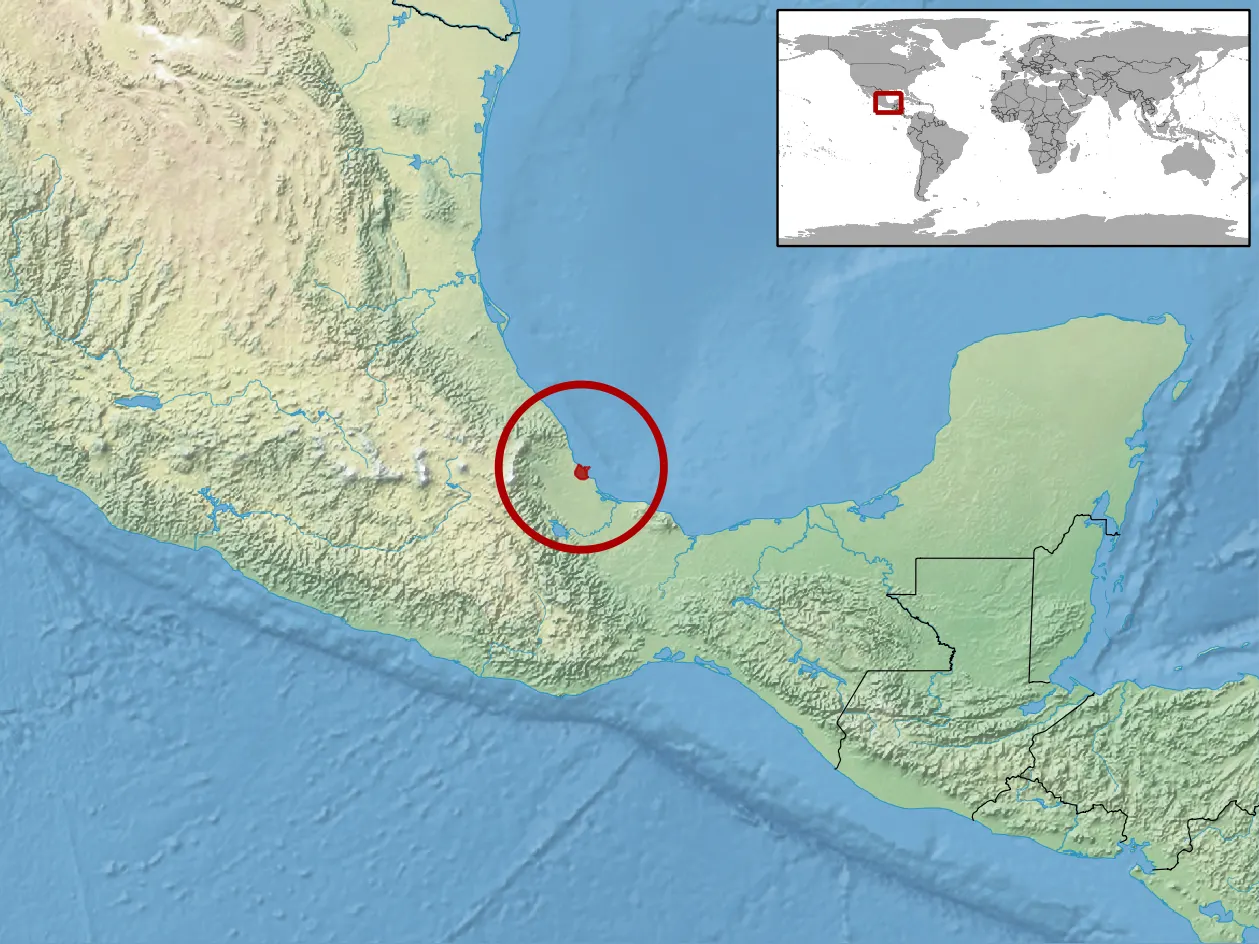
Ceron's glass lizard (Ophisaurus ceroni) is a legless lizard known only from coastal sand dunes around the city of Veracruz, Mexico. It was described in 1965. The IUCN Red List assessed it as Endangered in 2007, with a decreasing population and urban development as the listed threat.
How to recognise it
Glass lizards are legless anguid lizards, easy to mistake for snakes. This one differs from other New World species of Ophisaurus in several scale and colour details. It has a divided frontonasal scale, 101 scales along the lateral fold and no white spots on the back. A distinct dark stripe runs down the middle of the back, and the holotype had four faint white bars on each side of the neck. It lays eggs.
A live adult caught in 1965 had a body length of 181 mm, with a tail of 335 mm, part of it regrown. Its back was grayish brown with three dark stripes.
Discovery and name
J. Alan Holman described it in 1965 in a paper titled 'A new glass lizard from Veracruz, Mexico'. The holotype was collected on 11 August 1964 by Holman and Donna Rae Holman. It was a single animal found dead on a road in coastal dune scrub inside the city of Veracruz, with a partly broken tail.
The name honours Carlos Ceron (died 1999), a naturalist from Cuautlapan, Veracruz, who helped herpetologists in the field.
Where it lives
It is known from a small area of coastal dunes in central Veracruz state, near the city of Veracruz. The IUCN lists a single country, Mexico, and one habitat, coastal sand dunes.
Pins are Wikidata “endemic to” fields. Orange dots, when present, are GBIF occurrence tiles — survey bias included.
How it lives
Very little is recorded. Holman's second specimen was caught at 9 a.m. crawling through a grassy patch of dune scrub, a few feet from where the first was found. It was the first glass lizard taken alive and undamaged in Mexico. In captivity it spent much of its time buried in sand, moved with slow, deliberate motions and ate cockroaches from forceps without chasing them.
Why it is in trouble
The IUCN's only listed threat is housing and urban areas, which converts and degrades the dunes the lizard depends on. The assessment gave criterion B1ab(iii) and a decreasing trend. Its listed conservation actions are site management and site protection. The most recent assessment dates from 2007.
Sources
Written for this catalog in our own words from the sources below, checked against them on 12 November 2026. Population figures are estimates and carry the year they were made. Status and assessment year: IUCN. 2026. The IUCN Red List of Threatened Species. Version 2026-1. iucnredlist.org.




