Endangered
Yellow-throated day gecko
Phelsuma flavigularis
The yellow-throated day gecko (Phelsuma flavigularis) is a dark green, daytime gecko from the rainforests of eastern Madagascar, known only from the area around Andasibe. The IUCN Red List rates it Endangered (2011 assessment), and international trade for pets and display is recorded as a threat.
How to recognise it
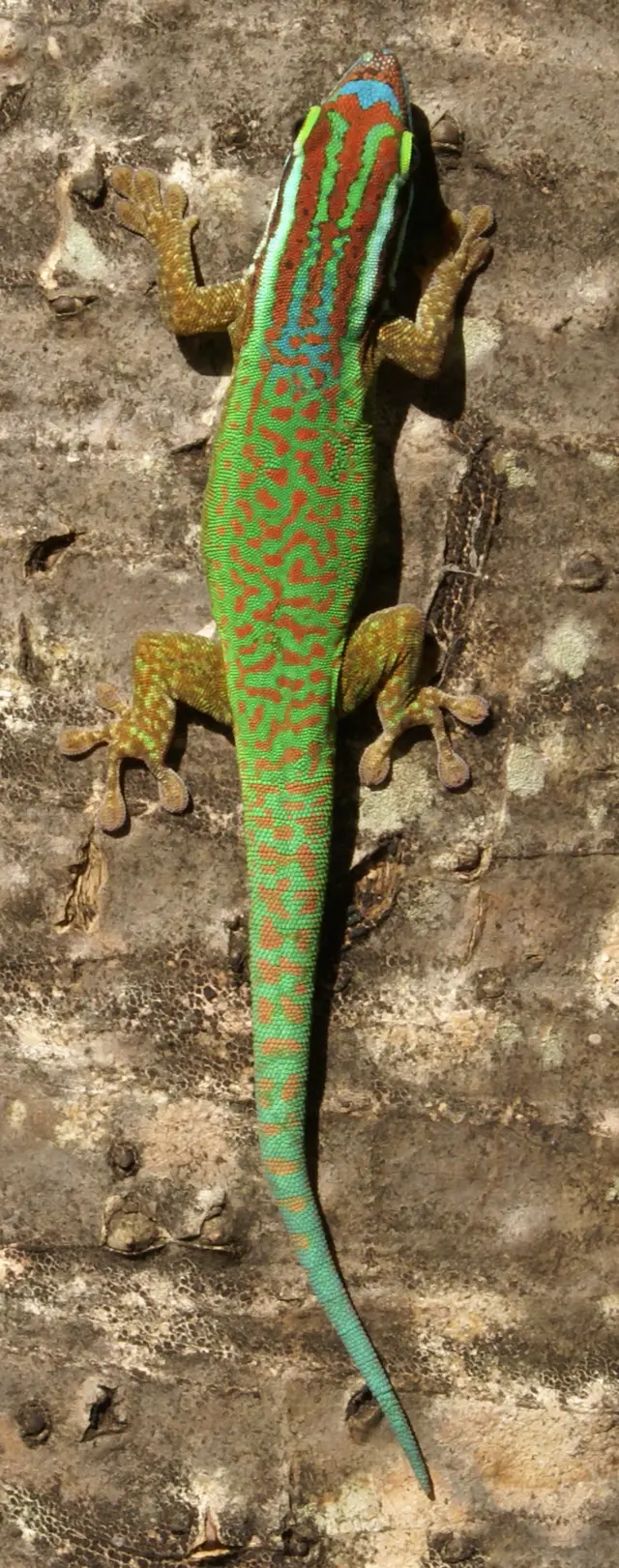
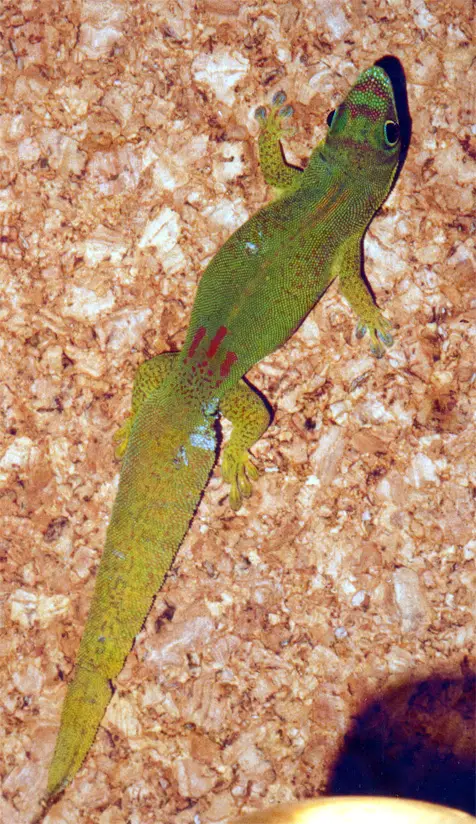
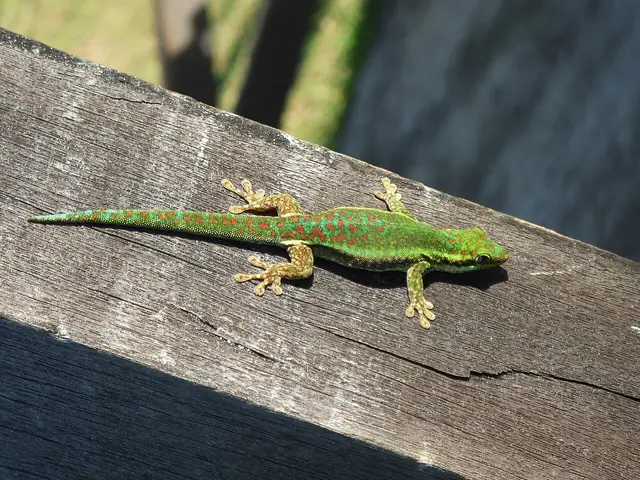
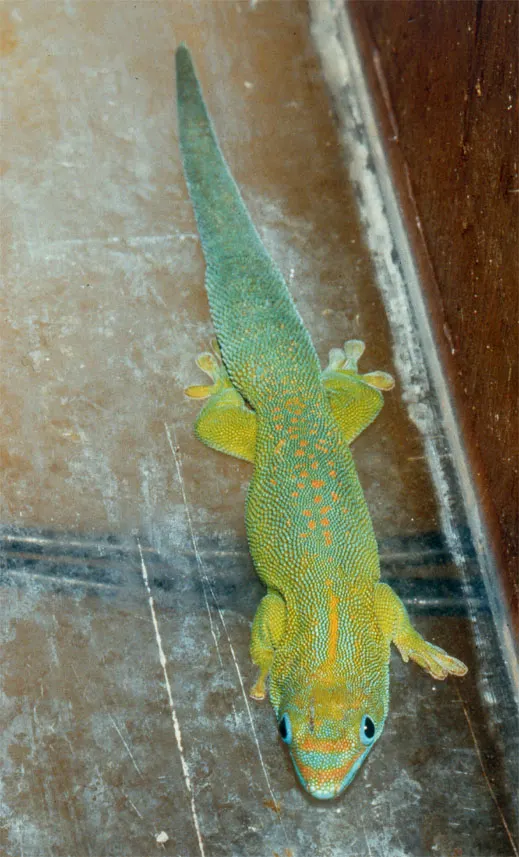
Males reach about 15 cm in total length, and females are often much smaller. The body is dark green or bluish-green with two red bars across the snout, one to three rust-coloured stripes on the neck, and small brownish or reddish dots on the back. The throat is light yellow, the underside beige and the eyes are ringed in blue. The scientific name flavigularis refers to that yellow throat.
Where it lives
It was described by Mertens in 1962 from a male collected at Perinet, about 100 km east of the capital, at 950 m above sea level. The species is otherwise known only from the area around Andasibe on the eastern side of the island. The Red List estimates its extent of occurrence at about 380 square kilometres and describes the population as severely fragmented.
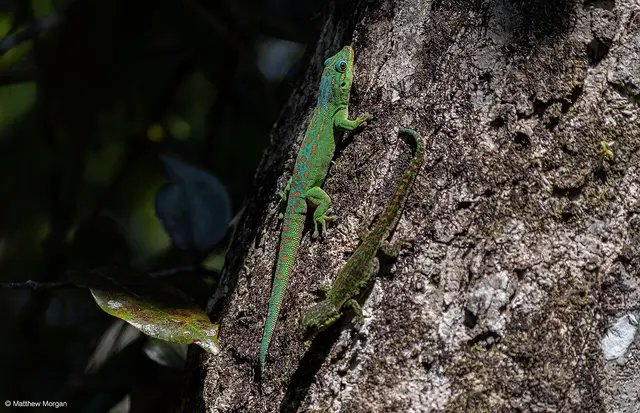
Its habitat is tropical moist lowland forest. It lives in trees and has been recorded on banana trees and palms.
Pins are Wikidata “endemic to” fields. Orange dots, when present, are GBIF occurrence tiles — survey bias included.
How it lives
It is active by day and, reportedly, males do not accept other males nearby. It feeds on insects and other small invertebrates, and also licks soft sweet fruit, pollen and nectar. It lays eggs. In captivity, males are reported to injure females badly during courtship, and keepers are advised to separate a pair at once if that happens.
Why it is in trouble
The Red List records collection of the species itself as an ongoing threat, and lists international use as pets and display animals. It rates the decline from harvesting as negligible so far. The overall population trend is decreasing.
The assessment also lists conversion and degradation of its forest habitat as stresses, though it does not record how large that threat is. With a very small, fragmented range, the gecko has little room to absorb losses.
What is being done
The gecko occurs in at least one protected area. The assessment notes that it is included in international legislation and subject to international trade controls, and it records site management as the conservation action. That assessment dates from 2011, so some details may have changed since.
Sources
Written for this catalog in our own words from the sources below, checked against them on 12 November 2026. Population figures are estimates and carry the year they were made. Status and assessment year: IUCN. 2026. The IUCN Red List of Threatened Species. Version 2026-1. iucnredlist.org.