Endangered
Darevskia rostombekowi
Darevskia rostombekowi
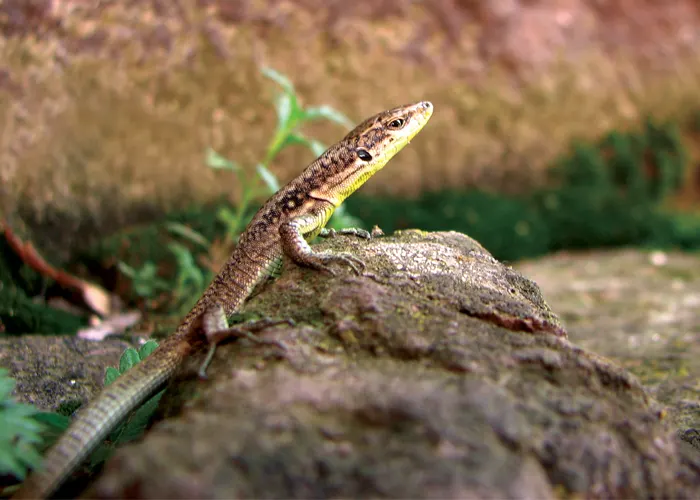
Rostombekov's rock lizard is a small, all-female lizard from the southern Caucasus, found in northern Armenia and western Azerbaijan. It is listed as Endangered on the IUCN Red List (assessed 2009), because it survives only in a handful of scattered rocky patches that are declining.
How to recognise it
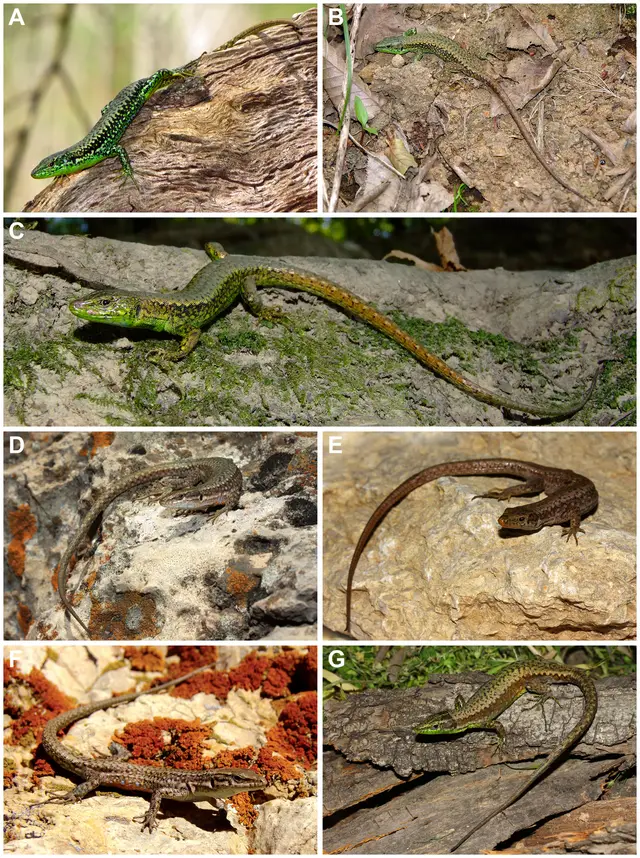
Darevskia rostombekowi is a lizard in the family Lacertidae, described by Ilya Darevsky in 1957. The spelling of the name varies between rostombekowi and rostombekovi, because of how a Russian letter is transliterated. It honours the Georgian biologist V. N. Rostombekov.
It is small even among its relatives. A 2013 skeletochronology paper comparing four parthenogenetic rock lizards found that it had the smallest body length in every age group studied.
A species of clones
Like six other Darevskia species, this lizard is parthenogenetic. Females lay eggs that develop without fertilisation, and no males are involved. Parthenogenetic species in this group are thought to have arisen from hybridisation between bisexual rock lizard species, and they show little genetic variability.
Earlier skeletal growth ring work, cited in the 2013 paper, gives a maximum age of about 6 years for this species, shorter than the 8 years recorded in two of its relatives.
Where it lives
The range is small and broken up. It covers northern Armenia and western Azerbaijan, with the type locality near Ijevan in northern Armenia. The Red List records five locations and the habitat as rocky ground, such as cliffs and outcrops, and dry shrubland, at about 600 to 1,700 m above sea level.
In Armenia, the literature lists about 14 populations. A 2015 field survey by Yerevan State University, reported to the Rufford Foundation, found the lizard at only eight of them, in the Tavush, Lori and Gegharkunik regions, in small isolated pockets and in low numbers. One of the survivors is a patch of 4 to 5 hectares about 2 km from Lake Sevan. Another is inside the town of Dilijan.
Pins are Wikidata “endemic to” fields. Orange dots, when present, are GBIF occurrence tiles — survey bias included.
How it lives
The lizards share their ground with other rock lizards. At Sevan they live alongside Darevskia unisexualis, and at Dilijan with D. dahli and D. armeniaca, with a lot of overlap in where they forage. They stay active longer into the autumn than some of their neighbours, which retreat to hibernation earlier.
Why it is in trouble
The Red List assessment, last done in 2009, describes a decreasing population in a severely fragmented range. The threat it names is small-scale grazing and farming, which converts and degrades its rocky shrubland.
Numbers vary a lot from site to site. The 2015 counts averaged about 295 lizards per hectare at Sevan, but only about 35 per hectare at Dilijan.
What is being done
The species is in Armenia's Red Book, and the Dilijan and Sevan national parks protect two of its sites. The Red List says conservation sites have been identified across its whole range and calls for site management. The same university team gave talks to students and schoolchildren, and won approval from Armenia's environment ministry for an information stand about the lizards in Dilijan National Park.
Sources
Written for this catalog in our own words from the sources below, checked against them on 12 November 2026. Population figures are estimates and carry the year they were made. Status and assessment year: IUCN. 2026. The IUCN Red List of Threatened Species. Version 2026-1. iucnredlist.org.