Critically Endangered
Trachyboa gularis
Trachyboa gularis
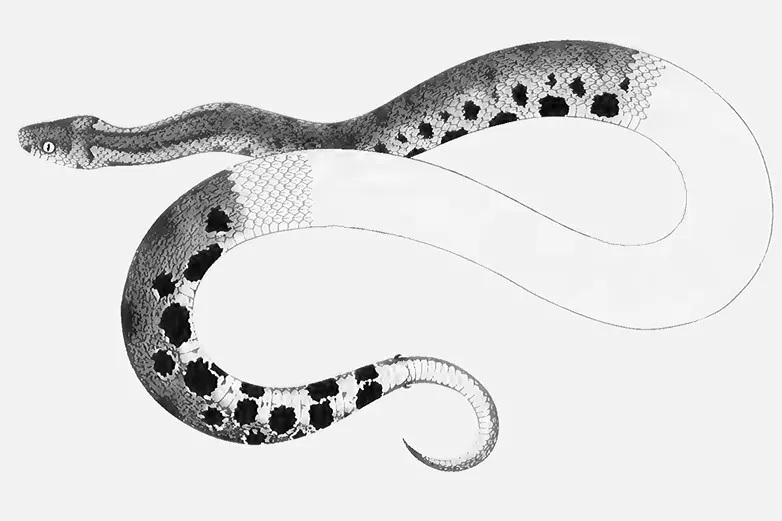
The southern eyelash boa, or Ecuadorian eyelash boa (Trachyboa gularis, now often Tropidophis gularis), is a small snake known only from western Ecuador. The IUCN Red List rated it Critically Endangered (Possibly Extinct) in 2021: it has not been seen for years and almost none of its habitat remains.
What it is
It is a non-venomous snake in the dwarf boa family, Tropidophiidae. Wilhelm Peters described it in 1860 from Guayaquil in western Ecuador, and it was long placed in its own genus, Trachyboa. A 2024 revision by Zaher and colleagues folded Trachyboa into Tropidophis because it nests inside that group, so the species now appears as Tropidophis gularis in some references.
It bears live young and is listed as partly tree-dwelling. The scientific name refers to the dark bands around its chin and throat. The species has been little studied, and its size, colour and diet are poorly documented.
Where it lived
All records come from Ecuador. The IUCN gives a single elevation of 17 metres above sea level and lists the habitat as moist savanna on the mainland. An old report from Venezuela, dating to 1911, is not part of the IUCN range, which lists only Ecuador.
The IUCN says the species is known only from an area of western Ecuador where almost no suitable habitat remains.
Pins are Wikidata “endemic to” fields. Orange dots, when present, are GBIF occurrence tiles — survey bias included.
Why it is in trouble
The IUCN names conversion of its ecosystem as the stress affecting it, with the scale of the damage unrecorded. The population trend is listed as unknown, and the assessors put the number of mature animals, if any survive, at between 0 and 49. That estimate underlies the 2021 listing under criterion D.
Anecdotal reports pointed to a rapid decline 10 to 15 years before the assessment, and the snake has not been seen since, despite targeted surveys and requests for sighting reports in a fairly densely populated area. The Recently Extinct Plants and Animals Database lists it as missing, with a photograph from the late 1900s and reports from the 2000s that were never verified as its last records.
What is being done
Very little can be done for an animal nobody can find. The IUCN records that it is not known to occur in any protected area. The species is covered by international trade controls under CITES Appendix II, and the IUCN lists site protection as the one conservation action that applies.
Sources
Written for this catalog in our own words from the sources below, checked against them on 12 November 2026. Population figures are estimates and carry the year they were made. Status and assessment year: IUCN. 2026. The IUCN Red List of Threatened Species. Version 2026-1. iucnredlist.org.




