Critically Endangered
Bavayia exsuccida
Bavayia exsuccida
The sclerophyll bavayia (Bavayia exsuccida) is a small night-active gecko from the dry forest of New Caledonia. It is known from a single locality on the Pindai Peninsula, with an extent of occurrence of about 8 square km. The IUCN Red List classed it as Critically Endangered in 2021, with a decreasing population.
How to recognise it
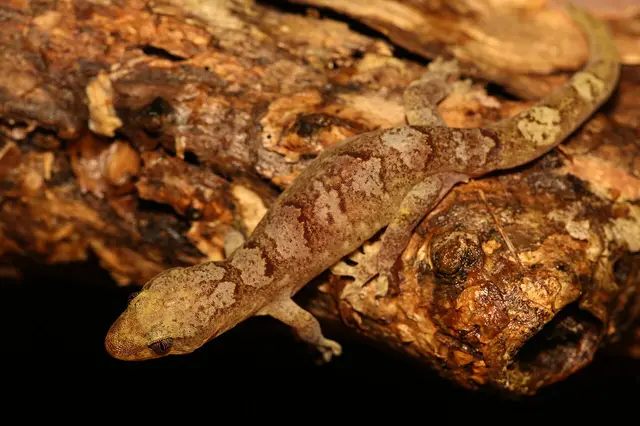
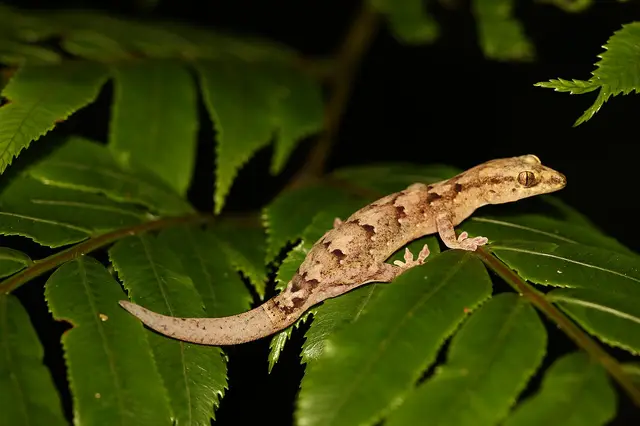
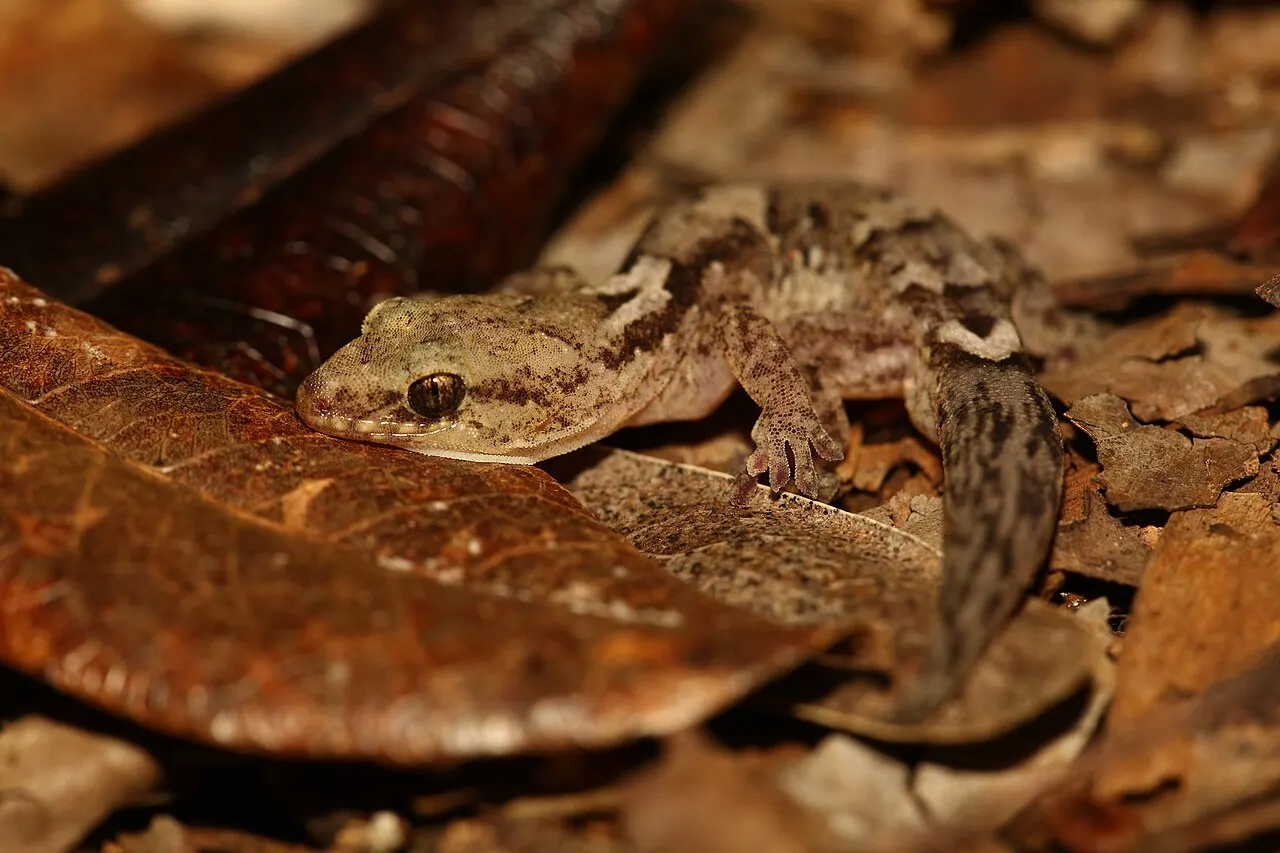
This is a small gecko. The largest known measures 47.2 mm from snout to vent, with a short, flattened body and a moderately long, thick tail about 108 percent of that length.
The back is usually light brown with a bright cream to white V-shaped mark across the nape and shoulders. Behind it come three or four dark crossbars of varying boldness, and the flanks carry small white spots. The nape mark is what separates it from its relatives in the same group, which include the larger B. endemia (up to 59.5 mm) and B. menazi, whose pattern is mostly lengthwise stripes. Bauer, Whitaker and Sadlier described the species in 1998.
Where it lives
The species is known only from sclerophyll forest on the Pindai Peninsula, on the south-western coast of North Province, New Caledonia. The type specimen came from Pindai forest at about 20 m above sea level. The IUCN counts one location, with an extent of occurrence and area of occupancy of 8 square km each, and records it up to 240 m elevation.
Sclerophyll forest is the dry forest of New Caledonia's west coast. The scientific name comes from a Latin word meaning 'without sap' and refers to that habitat.
Pins are Wikidata “endemic to” fields. Orange dots, when present, are GBIF occurrence tiles — survey bias included.
How it lives
It favours low forest dominated by the tree Acacia spirorbis, usually under 10 m tall. It is active at night on thin branches and twigs, and when disturbed it drops to the ground. It eats a mix of arthropods including beetles, spiders, ants and flies.
Females lay clutches of two eggs, and gravid females have been found in February. Mites have been recorded between its toes. Keeping and breeding it in captivity has been documented, and German-language papers from 2017 and 2018 report the first breeding in Europe.
Why it is in trouble
New Caledonia's dry forest has been cut down to a fraction of what it was. One conservation profile puts the remaining area at under 2 percent, mostly in scattered patches. Clearing for ranching, fires set by people, browsing by cattle and introduced rusa deer, and invasive plants have all taken a toll.
The IUCN rates four threats as high impact across the gecko's whole range: more frequent and intense fires, feral cats, introduced rusa deer and the invasive little fire ant (Wasmannia auropunctata). A 2022 revision of the genus says the ant may push geckos out of ground shelters and feeding sites in the trees and change what insects are available to eat. The IUCN records continuing declines in the population and in the area it occupies.
What is being done
The IUCN notes that the species occurs in at least one protected area and lists habitat restoration and site management as conservation actions needed. Its research priorities are life history and ecology, population size, distribution and trends, and threats.
On the wider forest, some private landowners work with New Caledonia's La Foret Seche programme to protect and restore dry forest patches. The same conservation profile lists protecting patches, managing fire and invasive species, and restoring habitat as priorities.
Sources
Written for this catalog in our own words from the sources below, checked against them on 12 November 2026. Population figures are estimates and carry the year they were made. Status and assessment year: IUCN. 2026. The IUCN Red List of Threatened Species. Version 2026-1. iucnredlist.org.