Critically Endangered
Roatán Skink
Marisora roatanae
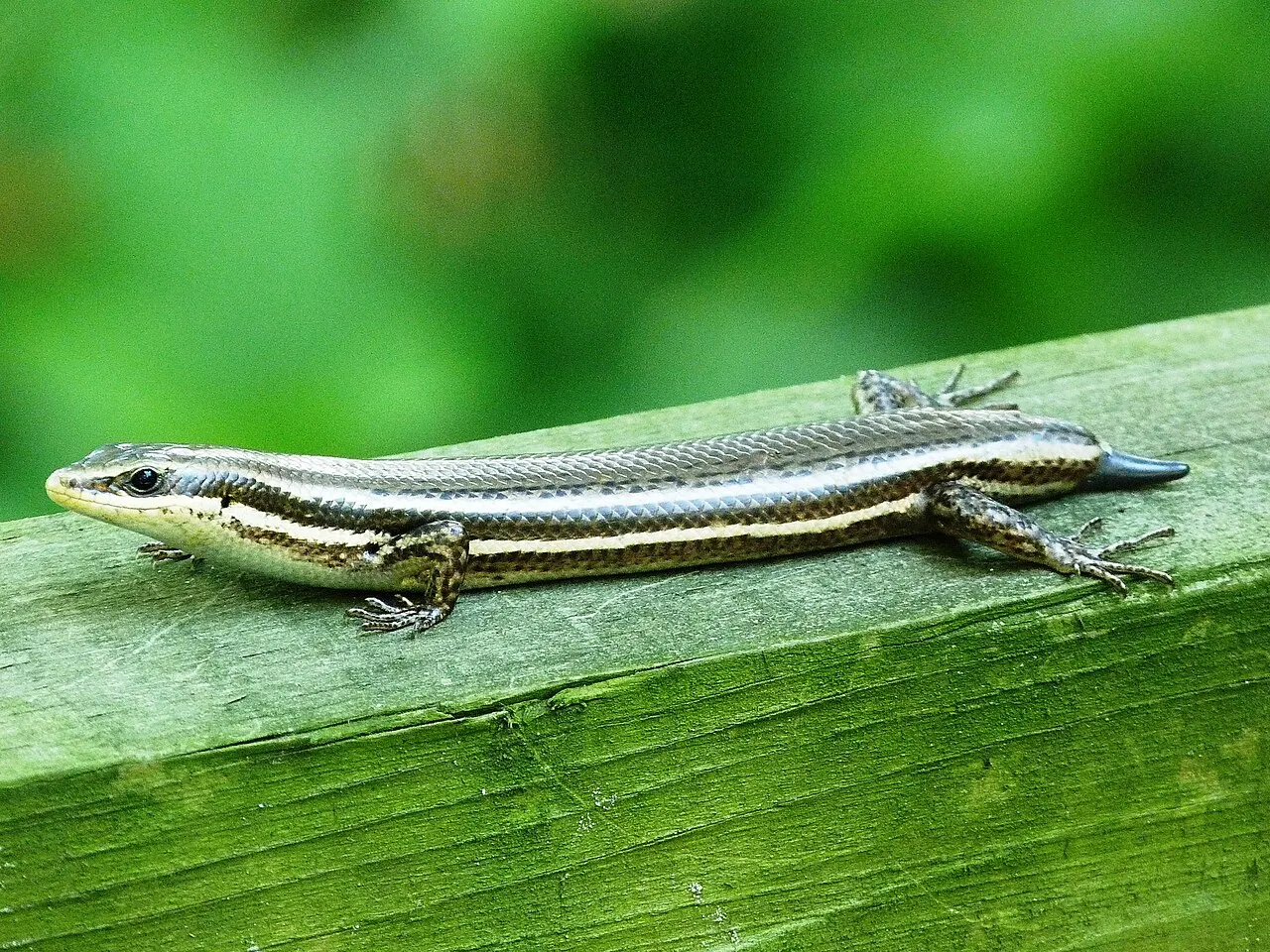
The Roatán skink (Marisora roatanae), also called the Honduran skink, is a lizard described in 2012 from the Bay Islands of Honduras. The IUCN's 2013 assessment rates it Critically Endangered, but a 2020 genetic revision found it also on the adjacent mainland, and its status has not been reassessed since.
How to recognise it
It is a mid-sized skink in the family Mabuyidae. The largest males measure 74.7 mm from snout to vent and the largest females 90.2 mm. There is no pale stripe down the middle of the back. Instead a dark stripe and a pale stripe run along each side, and the palms and soles are dark.
Its closest lookalikes are Marisora brachypoda and M. unimarginata. Earlier works filed these lizards under Mabuya names such as Mabuya unimarginata, which is why older records are confusing. A 2015 study suggested lumping roatanae into M. unimarginata, a view the 2020 revision did not follow.
Where it lives
The type locality is Jonesville on Roatán, in the Bay Islands, at about 3 m above sea level. The holotype is an adult female collected in 1965. Stephen Blair Hedges and Caitlin Conn named the species in 2012 from Roatán, and the IUCN assessment, based on their work, treated it as endemic to that island, known from a small region in the centre of it with an estimated range of about 15 square kilometres.
A 2020 revision of the genus by James McCranie, Amy Matthews and Hedges used morphological and molecular data and reported that the species also occurs on the adjacent mainland. The Reptile Database summarises the range as Roatán in Honduras and north-eastern Nicaragua. The IUCN assessment describes the habitat as moist lowland subtropical forest, though it notes that this is expected rather than documented.
Pins are Wikidata “endemic to” fields. Orange dots, when present, are GBIF occurrence tiles — survey bias included.
How it lives
Little has been published on its daily life. The IUCN assessment says no ecological information was available in 2013, and that one recent specimen was found killed on a road. The Reptile Database lists the species as live-bearing, a conclusion inferred from relatives rather than observed in this skink.
Why it is in trouble
The IUCN assessment lists the population as decreasing. At the time it was known from only four recent specimens and two museum records, an unusually low number for a lizard on an island with several known endemic reptiles. The assessment suggests introduced predators, including feral cats and black rats, as a likely cause.
It also names small-holder farming and commercial and industrial development, noting that deforestation on Roatán continues and that some nominally protected forest is not enforced. It is unclear how far habitat loss affects this skink. It qualifies as Critically Endangered under range-size criterion B1ab(v), which reflects a small range, one location and a continuing decline.
Because the 2013 assessment pre-dates the mainland records, the real range is probably larger than the assessment assumed. No updated figure for its range or numbers appears in the sources checked.
What is being done
The IUCN assessment calls for research on population status and the extent of threats, and suggests captive breeding could be needed if enough animals survive. It lists no conservation actions in place.
Sources
Written for this catalog in our own words from the sources below, checked against them on 12 November 2026. Population figures are estimates and carry the year they were made. Status and assessment year: IUCN. 2026. The IUCN Red List of Threatened Species. Version 2026-1. iucnredlist.org.




