Endangered
Usambara Stumptail Chameleon
Rhampholeon temporalis
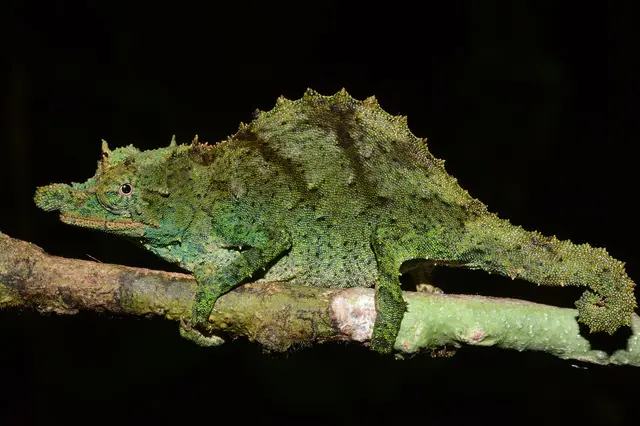
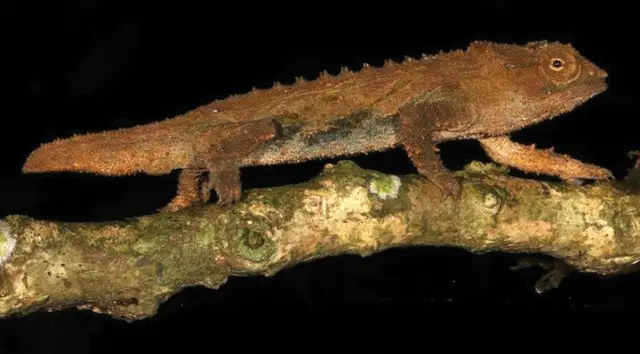
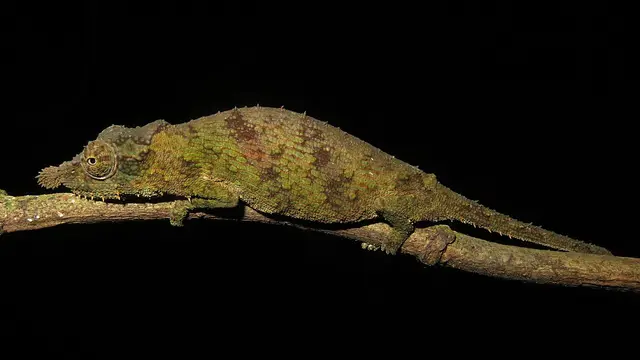
The Usambara stumptail chameleon (Rhampholeon temporalis), also called the East Usambara pygmy chameleon, is a small, brown chameleon of the rainforest floor in northeastern Tanzania. The IUCN Red List rated it Endangered in 2014, mainly because its forest home is shrinking and splitting into fragments.
How to recognise it
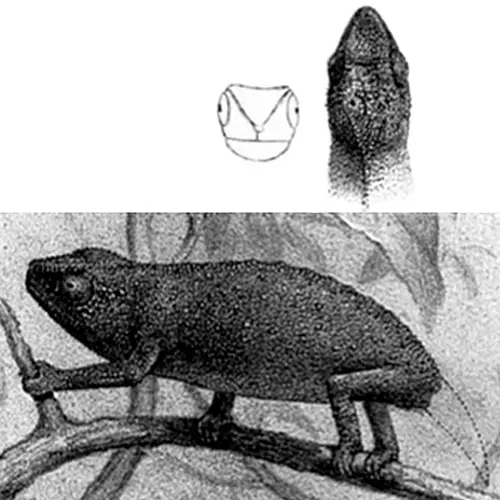
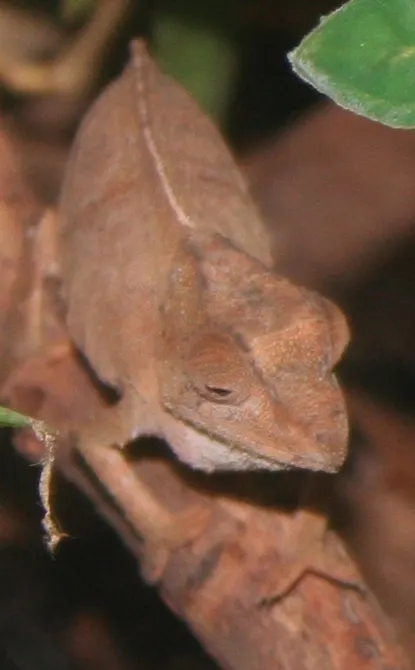
This is a pygmy chameleon, reportedly under about 10 cm in total length. Its body is grey and brown, with two or three diagonal stripes along the flanks.
The species name refers to the pronounced scales on the temple region of the head. The original specimens came from Derema in the Usambara Mountains.
Where it lives
Until recently it was known only from the East Usambara Mountains and nearby Magrotto Hill, at roughly 900 to 1,500 m above sea level. The IUCN assessment lists it as found in Tanzania only, in moist montane and lowland forest, from 8 locations. It puts the extent of its range at about 786 km2 and the area it actually occupies at about 288 km2.
In October 2023, herpetologists found four individuals (two adults, two juveniles) in a fragment of primary forest on the edge of Lushoto town in the West Usambara Mountains, about 40 km from the nearest East Usambara site and at around 1,740 m. A fifth turned up the next night. A 2026 note in Spixiana calls them 'cf.' temporalis, a tentative identification. They might be the same species, a separate close relative, or a different species altogether, so genetic work is needed.
Pins are Wikidata “endemic to” fields. Orange dots, when present, are GBIF occurrence tiles — survey bias included.
How it lives
It lives on or just above the forest floor, in leaf litter and grass, and lays eggs. The West Usambara animals were found asleep at night, adults on small branches about 20 cm up and juveniles on the bases of small leaves.
Why it is in trouble
The assessment records a decreasing population, a severely fragmented range, and continuing decline in occupied area. The threats it lists are farming, both large agricultural operations and small-holder plots, plus unintended losses from small-scale harvesting. It also lists pets and display animals as a use of the species.
A 2014 study in Diversity and Distributions covered this species, a spiny pygmy chameleon and a three-horned chameleon in the East Usambara Mountains. It estimated that the three had fallen by roughly 60% from historical numbers in the study area, about a third more than forest loss alone would predict. Densities were higher in larger forest patches and farther from patch edges.
What is being done
The IUCN assessment estimates that 21 to 30% of the population lives inside protected areas. Listed needs include site and habitat protection, and management of harvest and trade. No monitoring scheme or recovery plan is recorded. The 2014 study found that most remaining animals of the three species live in nature reserves, and concluded that their future will depend largely on how well those reserves are protected.
Sources
Written for this catalog in our own words from the sources below, checked against them on 12 November 2026. Population figures are estimates and carry the year they were made. Status and assessment year: IUCN. 2026. The IUCN Red List of Threatened Species. Version 2026-1. iucnredlist.org.
- IUCN Red List assessment, Rhampholeon temporalis (2014)
- Reptile Database, Rhampholeon temporalis
- Spixiana note (2026) on a West Usambara record
- ADCHAM species page
- VCU News, habitat loss and fragmentation reduce chameleon population in Tanzania
- Shirk et al. 2014, Diversity and Distributions 20(10): 1186-1199 (full text, UDSM repository)