Endangered
Rosette-Nosed Chameleon
Rhampholeon spinosus
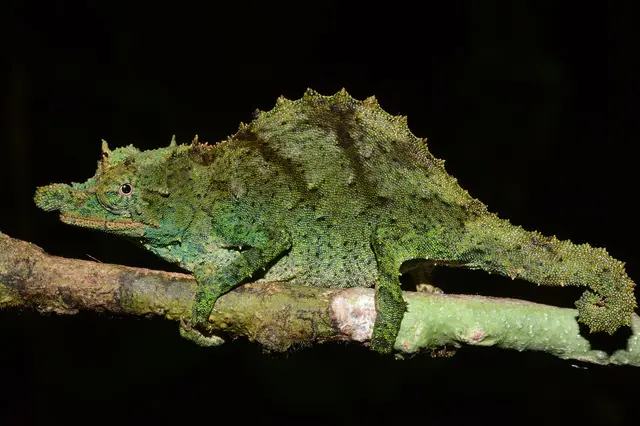
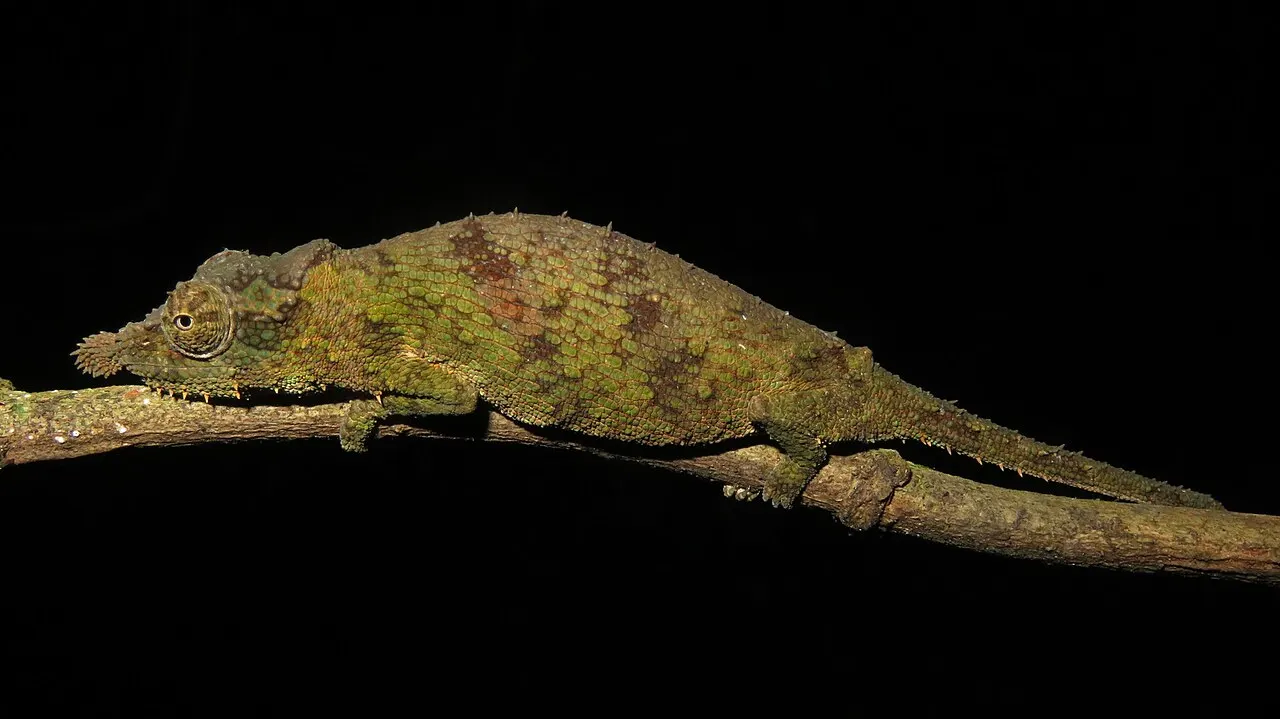
The rosette-nosed chameleon (Rhampholeon spinosus) is a tiny, cryptically coloured forest chameleon with a knobbly, flexible snout tip, found only in the Usambara Mountains of northern Tanzania. The IUCN Red List rated it Endangered in 2014, mainly because its montane forest home is small, broken up and still shrinking.
How to recognise it
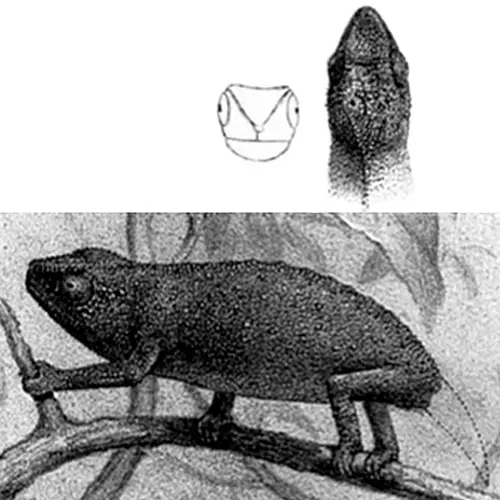
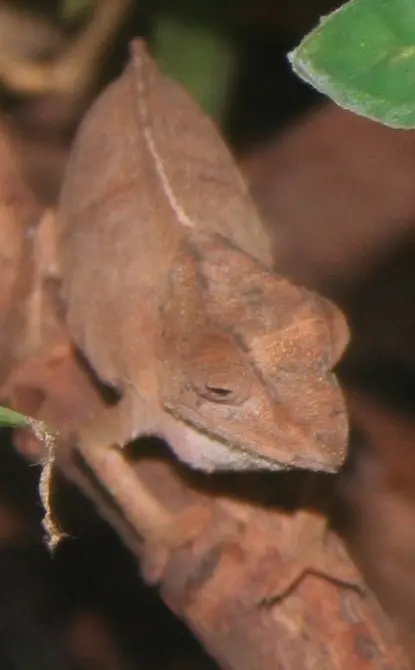
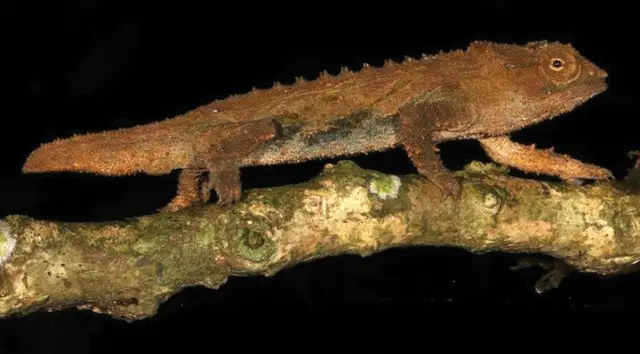
This is a dwarf, short-tailed chameleon with cryptic colouring. Its most obvious feature is the rounded growth on the tip of the snout, a soft, flexible cushion ringed by small conical tubercles. Rows of spines run along its back and limbs, and the scientific name comes from the Latin word for spine.
A 2004 anatomical study in the Revue suisse de Zoologie put the tail at around 40 percent of total length, long for its genus but still short for a chameleon. Unlike most of its relatives in Rhampholeon, it has simple claws rather than split ones.
Where it lives
It occurs in both the eastern and western Usambara Mountains, in forest at about 1,000 to 1,500 m. The IUCN places it in tropical and subtropical moist montane forest. The species was described in 1892 from a single specimen collected at Derema in the East Usambaras.
The IUCN estimates its extent of occurrence at about 1,797 square km, with an area of occupancy of roughly 567 square km, and describes the population as severely fragmented.
Pins are Wikidata “endemic to” fields. Orange dots, when present, are GBIF occurrence tiles — survey bias included.
How it lives
It lives in the lower layers of deep forest, perching anywhere from a few centimetres to about 3 m off the ground. In the Eastern Usambaras it shares forest with another dwarf chameleon, Rhampholeon temporalis. It lays eggs. Little else about its daily life has been published.
Why it is in trouble
Farming by smallholders and agricultural plantations have cleared and cut up the forest, and the IUCN records a continuing decline in the area the species occupies. Collection of the animal itself is also listed as a threat.
A 2014 Diversity and Distributions study surveyed three East Usambara chameleons, this one included, and reported that chameleon populations in Tanzania's montane rainforests had fallen by more than 60 percent from historical levels over about 50 years. It tied the losses to habitat loss and fragmentation. The figure is not broken down by species.
What is being done
The chameleon occurs in at least one protected area, and the IUCN estimates that 21 to 30 percent of its population is protected. It is also subject to international trade controls, and the lead researcher of the 2014 study said Tanzanian authorities were expected to use its findings in setting export quotas. In 2014 the IUCN recorded no recovery plan and no systematic monitoring scheme.
Sources
Written for this catalog in our own words from the sources below, checked against them on 12 November 2026. Population figures are estimates and carry the year they were made. Status and assessment year: IUCN. 2026. The IUCN Red List of Threatened Species. Version 2026-1. iucnredlist.org.