Endangered
Saint Lucia lancehead
Bothrops caribbaeus
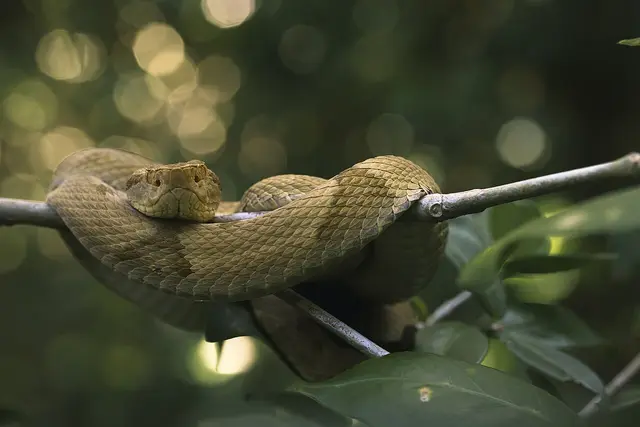
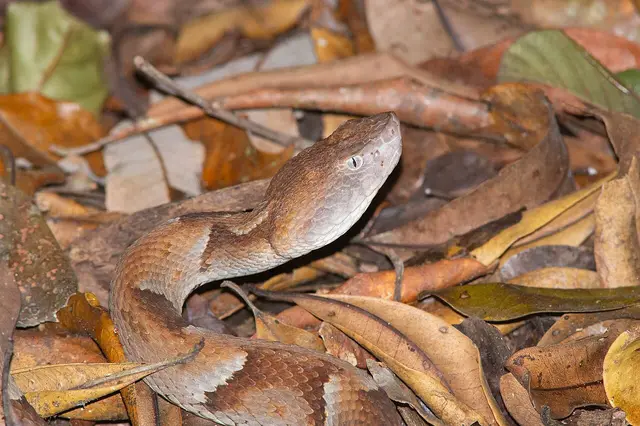
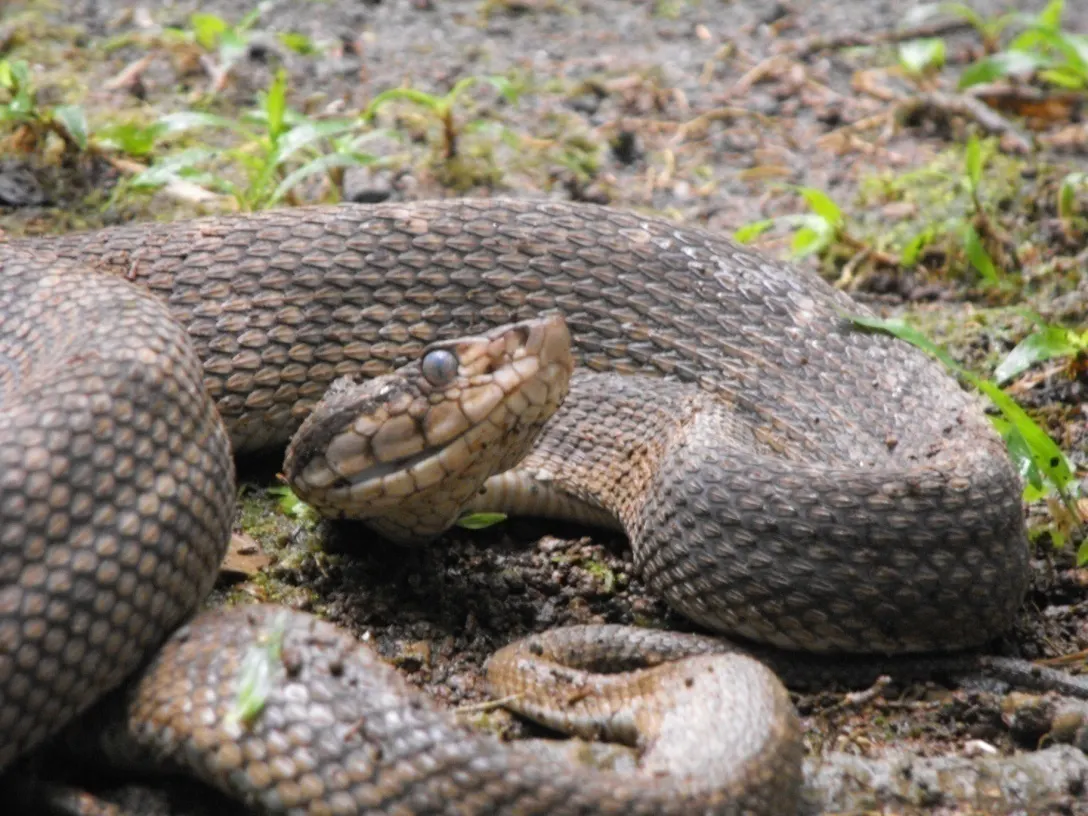
The Saint Lucia lancehead (Bothrops caribbaeus) is a large pit viper that lives nowhere except the Caribbean island of Saint Lucia, where islanders call it the fer-de-lance. The IUCN Red List rated it Endangered in 2019. It survives in only one or two patches of the island.
How to recognise it
This is a heavy-bodied snake that can top 1.3 m (4.3 ft). Its colour runs from gray to gray-brown, with an irregular stripe behind the eye and gray or brown blotches down the middle of the back that fade toward the sides.
Where it lives
It is endemic to Saint Lucia in the Lesser Antilles. Its range has shrunk, and it is now thought to survive only in scattered pockets in the northeast and south-central parts of the island. The IUCN counts just one to two locations.
The snake favours wetter parts of the island, including lowland moist forest, and it also turns up in plantations. The IUCN gives its elevation as sea level to about 600 m.
Pins are Wikidata “endemic to” fields. Orange dots, when present, are GBIF occurrence tiles — survey bias included.
How it lives
Natural history data are sparse. The lancehead is a large, generalist predator. Since the small Indian mongoose was brought to the island, it has gained that mammal as prey, and herpetologist James Lazell described these snakes eating mongooses "with relish."
Genetic work suggests its lineage split from its closest relative about 5 million years ago, and from the Bothrops asper and atrox group about 6 million years ago.
Why it is in trouble
People have killed it for a long time, including through bounties and organised hunts. Habitat loss continues, including land taken for tourism and recreation, and the IUCN records a continuing decline in both its area and numbers.
The mongoose was introduced to the island to control the snake. It instead wiped out much of the native fauna, and it likely contributed to the loss of Underwood's mussurana, a snake that was probably one of the lancehead's few native predators. Viper specialists have ranked it among the 20 most endangered vipers in the world.
What is being done
The species occurs in at least one protected area. The IUCN lists invasive species control, site management, public awareness and training as actions in place or needed.
In August 2025, Saint Lucia announced a seven-month assessment led by herpetologist Lenn Isidore. It will update field surveys of distribution and habitat, review the national fer-de-lance management plan, and train communities in safe handling and relocation.
Sources
Written for this catalog in our own words from the sources below, checked against them on 12 November 2026. Population figures are estimates and carry the year they were made. Status and assessment year: IUCN. 2026. The IUCN Red List of Threatened Species. Version 2026-1. iucnredlist.org.