Critically Endangered
Bothrops muriciensis
Bothrops muriciensis
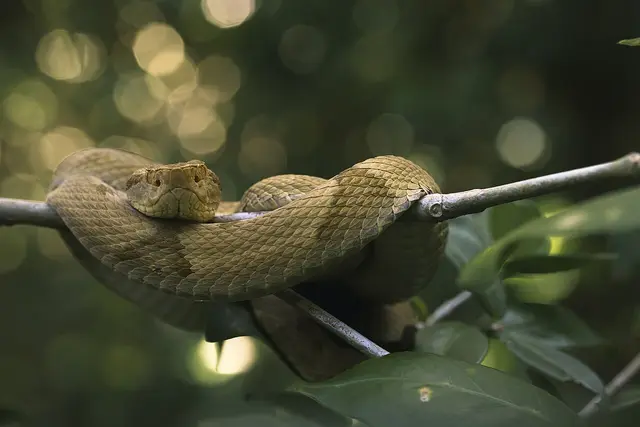
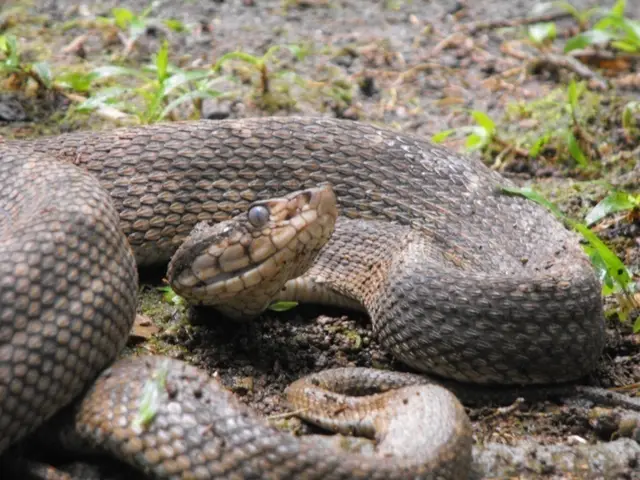
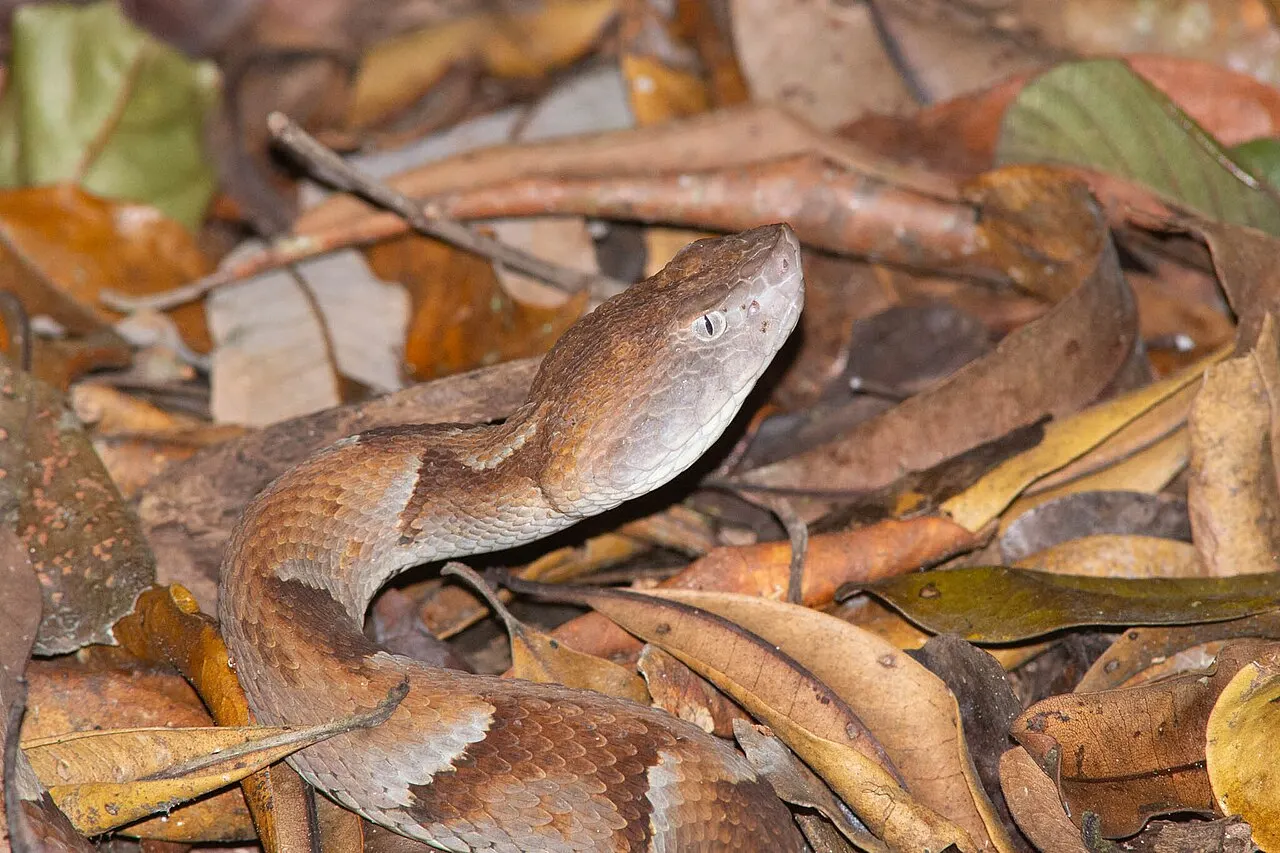
Bothrops muriciensis is a venomous pit viper from a single patch of Atlantic Forest in northeastern Brazil. The IUCN Red List rated it Critically Endangered in 2021. Only nine individuals were known up to 2012, and its forest is shrinking.
How to recognise it
This is a fairly large viper, reportedly reaching up to 77 cm from snout to vent. The back carries 13 to 14 dark triangular or trapezoid markings, with no markings in the gaps between them. The mouth and throat are black in males and white in females.
It is known locally as jararaca, jararaca-de-Alagoas and jararacuçu. Like other pit vipers it is venomous, and young are born live rather than hatched from eggs.
Where it lives
The snake is named after the Mata de Murici forest in the state of Alagoas, where it was found. Ferrarezzi and Freire described it in 2001 from three specimens, and the type locality is Fazenda Bananeira at Murici, given as 640 m above sea level.
Recent records are all confined to the Murici Ecological Station, a protected area of about 6,130 hectares, which a survey of the area's reptiles in Biota Neotropica describes as one of the largest continuous forest areas north of the São Francisco River. That survey found the species restricted to the station, in the remnant called Mata da Bananeira. The IUCN lists the habitat as moist lowland forest and counts one location, with an extent of occurrence of about 30 square kilometres.
Pins are Wikidata “endemic to” fields. Orange dots, when present, are GBIF occurrence tiles — survey bias included.
How it lives
Very little is known. A 2012 paper by Freitas and colleagues in the North-Western Journal of Zoology added six specimens, juveniles and adults, found on the ground close to streams at roughly 400 m elevation. The Biota Neotropica survey also describes basic knowledge of its biology as scarce. Diet and activity patterns have not been documented in the sources available.
Why it is in trouble
Up to 2012 only nine individuals were known, all close to the place of first description. The IUCN lists the population as decreasing, records a continuing decline in the habitat, and names small-holder grazing, ranching or farming as the threat, with conversion of the ecosystem as the stress. Freitas and colleagues pointed to forest being cleared around the station and judged that the snake's survival probably depends on it.
It is classed as Endangered on Brazil's national list (ICMBio 2018), and a 2016 analysis by Maritz and colleagues ranked it among the 30 most endangered viper species.
What is being done
Its main protection is that it occurs inside a protected area, and the IUCN records site and area management as the conservation action. Freitas and colleagues suggested in 2012 that the IUCN consider listing the species as Critically Endangered, which the 2021 assessment later did.
Sources
Written for this catalog in our own words from the sources below, checked against them on 12 November 2026. Population figures are estimates and carry the year they were made. Status and assessment year: IUCN. 2026. The IUCN Red List of Threatened Species. Version 2026-1. iucnredlist.org.