Endangered
Lepidoblepharis miyatai
Lepidoblepharis miyatai
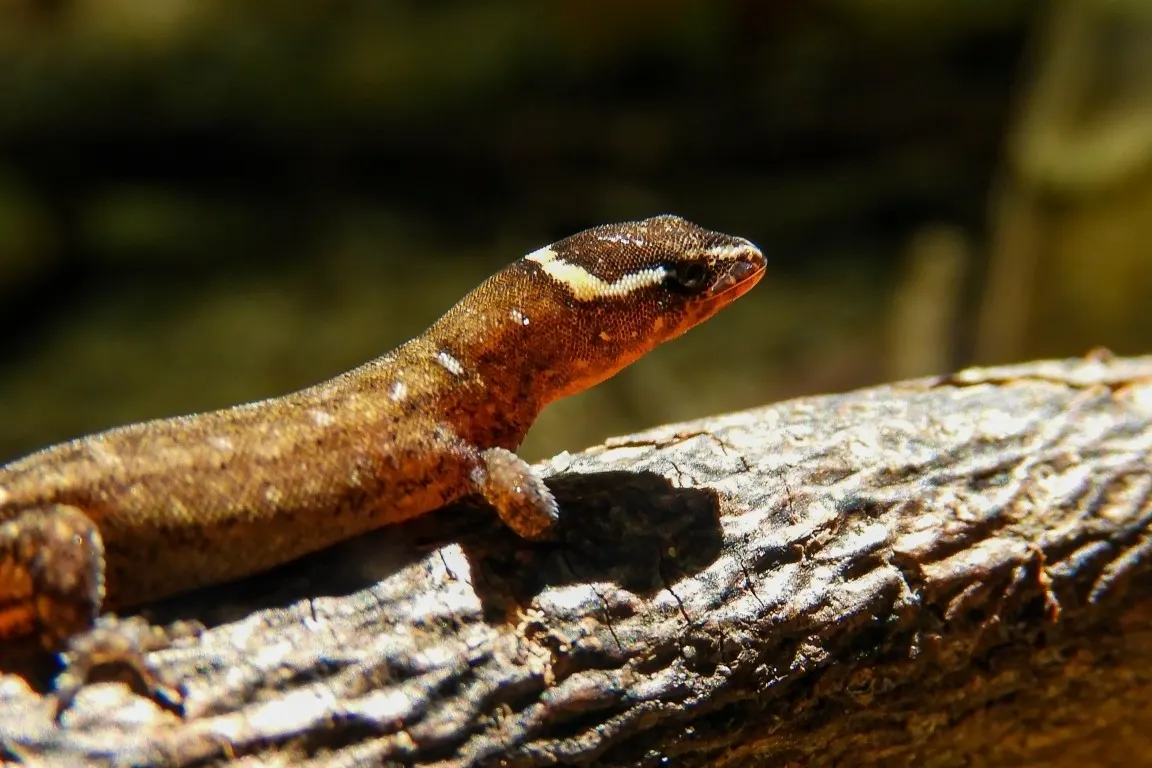
The Colombian dwarf gecko (Lepidoblepharis miyatai) is a tiny leaf-litter lizard from the dry forests and thorn scrub of Colombia's Caribbean coast, around Tayrona National Park. The IUCN assessed it as Endangered in 2025. Adults are only about 2 cm long, and for decades it was feared lost.
How to recognise it
This is one of the scaly-eyed geckos, genus Lepidoblepharis, in the family Sphaerodactylidae. It is very small. The single specimen the species was described from, an adult male collected in 1964, measured 20 mm from snout to vent, and its tail was broken. It lays eggs.
Its close relatives in the region look similar, which has caused trouble. A 2018 study in the journal Phyllomedusa concluded that recent records from the south-eastern Sierra Nevada de Santa Marta actually belong to a different form, Lepidoblepharis cf. sanctaemartae, so identification should rest on location as well as appearance.
Where it lives
The species is endemic to Colombia and occurs in Magdalena Department, in the Sierra Nevada de Santa Marta region. The herpetologist William Lamar described it in 1985 from Gayraca Bay (Ensenada Gairaca), in the area of Tayrona National Park where it was first found. The name honours the herpetologist Kenneth Miyata.
The 2018 study confirmed four additional localities and put the extent of occurrence at about 21 square km, from sea level up to 360 m. The 2025 IUCN assessment gives a similar picture: two to four locations, an area of occupancy of about 104 square km, an elevation range up to 400 m, and at least one protected area within its range.
Pins are Wikidata “endemic to” fields. Orange dots, when present, are GBIF occurrence tiles — survey bias included.
How it lives
It lives on the floor of scrub thorn and tropical dry forest, among fallen leaves. In the 2018 study, researchers recorded microhabitat use by 88 individuals at a site called Las Tinajas and found that leaf litter was the substrate they used most.
Why it is in trouble
After the single 1964 specimen, the species went unnoticed for a very long time. Colombian press coverage in 2020 said it had been considered possibly extinct for more than 52 years before a team from the Universidad del Magdalena and the Universidad del Quindio found it in Tayrona National Park, with support from the Zoological Society of London's EDGE programme.
The IUCN lists ongoing threats from housing and commercial development, small-holder and industrial farming, grazing, roads, more frequent fires, recreation and unintentional effects of small-scale harvest. Tourism at nearby beaches affects Tayrona, where it was first found. The assessment records continuing decline in the area it occupies but lists the population trend as unknown, and no population size has been estimated. Colombia's own classification, as reported in 2020, cites its small range, the age of its records and highly threatened vegetation types.
What is being done
Part of the range lies inside a national park. The IUCN recommends training and awareness work. An EDGE-funded project led by Liliana Saboya Acosta ran in the Sierra Nevada de Santa Marta from 2018 to 2021. Its conservation plan calls for studies of genetics and population structure, community monitoring, and education for communities, park staff and tour operators. A captive breeding programme is listed there as a low priority.
Sources
Written for this catalog in our own words from the sources below, checked against them on 12 November 2026. Population figures are estimates and carry the year they were made. Status and assessment year: IUCN. 2026. The IUCN Red List of Threatened Species. Version 2026-1. iucnredlist.org.




