Endangered
Green Psammodromus
Psammodromus microdactylus
The green psammodromus (Psammodromus microdactylus), also called the small-fingered psammodromus, is a slow-moving lizard found only in Morocco. The IUCN Red List rated it Endangered in 2025. It is known from about 20 localities, and most records are decades old.
How to recognise it
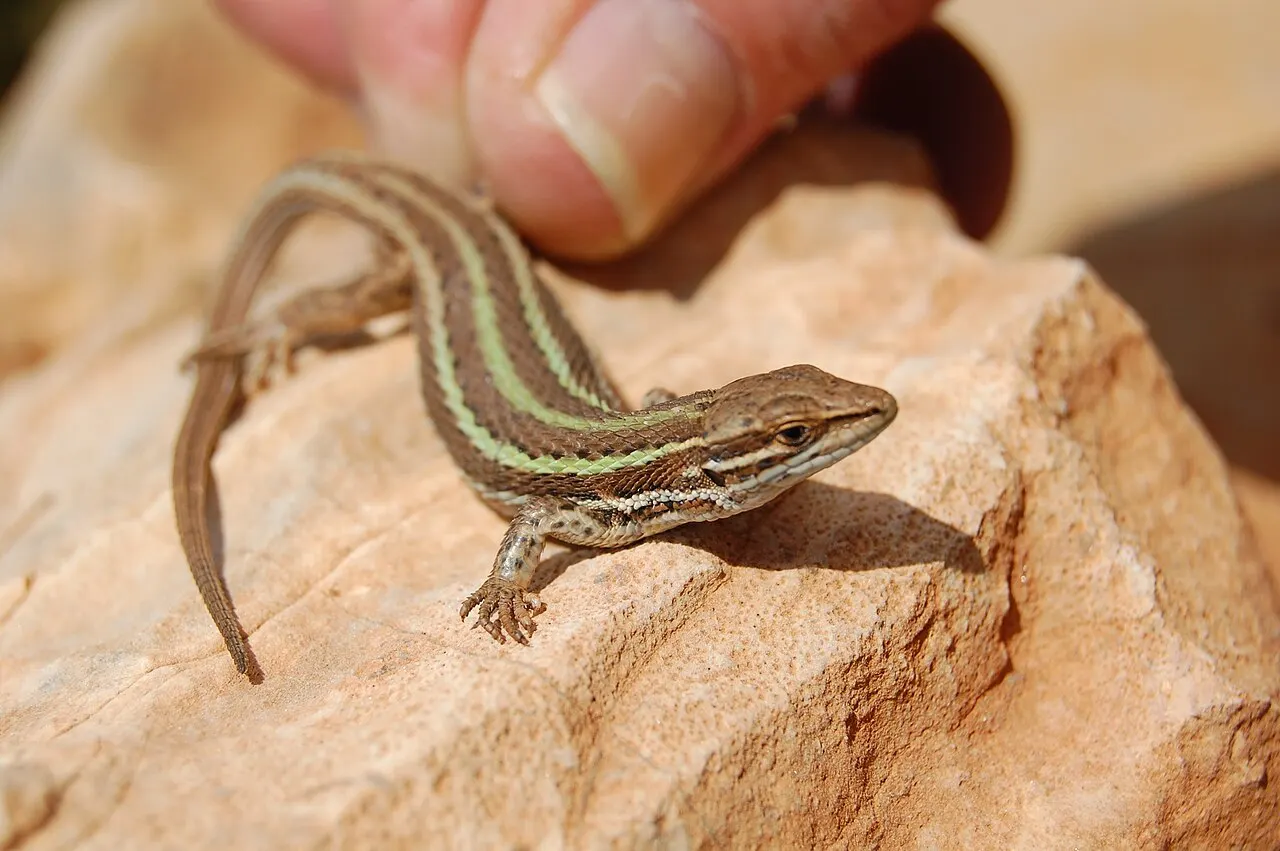
It is a small, olive-green lacertid with three bold green stripes down its back, reaching about 150 mm in total length. In early spring, breeding males turn a brighter pea green and show yellow on the outer rows of belly scales, which females lack.
It has no collar, which is the best feature for telling it from the very similar Psammodromus blanci. The two have at times been treated as one species. Boettger described it in 1881, and the name comes from Greek words for small and finger, a reference to its short toes.
Where it lives
The species is endemic to Morocco. It occurs in isolated mountain populations in the Rif, the Middle Atlas and the High Atlas of northern and central Morocco. Localities in the literature include Azilal, Sefrou, Tangier, Tetouan, Casablanca and Jbel Toubkal. The IUCN estimates its overall range at roughly 85,000 square km, but the area it actually occupies at only about 8 to 72 square km.
It has been found from about 50 to 2,250 m above sea level. It favours dense stands of dwarf fan palm (Chamaerops humilis), and the IUCN lists Mediterranean-type scrub and temperate grassland as habitat. Pastureland is also recorded as suitable.
Pins are Wikidata “endemic to” fields. Orange dots, when present, are GBIF occurrence tiles — survey bias included.
How it lives
Very little is known about its biology. It moves slowly and rarely strays far from cover. Rather than hiding under stones as many lizards do, it buries itself in leaf litter or loose gravel. One male seen basking beside a palm bush slipped into it when approached.
It lays eggs. Its diet and breeding season have not been published.
Why it is in trouble
The species is rare. A little over 40 specimens have been collected, mostly in the late 19th and early 20th centuries, and records have been scarce since the 1960s. Observers have counted at most four animals in a day. Its secretive habits may explain some of that. The IUCN describes the population as severely fragmented, lists the overall trend as unknown, and records a continuing decline in the area occupied.
Threats are poorly pinned down. One source describes the slopes where it has been found as overgrazed, while a 2006 IUCN regional summary suggested the opposite, that abandoned grazing may have let habitat grow over. The 2025 assessment lists housing and urban areas, pesticides and herbicides, other ecosystem changes, and future drought and temperature extremes.
The assessment records no site protection or site management for the species, and it is unknown whether any protected area holds it. Surveys of its numbers, life history and threats are listed as research needs.
Sources
Written for this catalog in our own words from the sources below, checked against them on 12 November 2026. Population figures are estimates and carry the year they were made. Status and assessment year: IUCN. 2026. The IUCN Red List of Threatened Species. Version 2026-1. iucnredlist.org.




