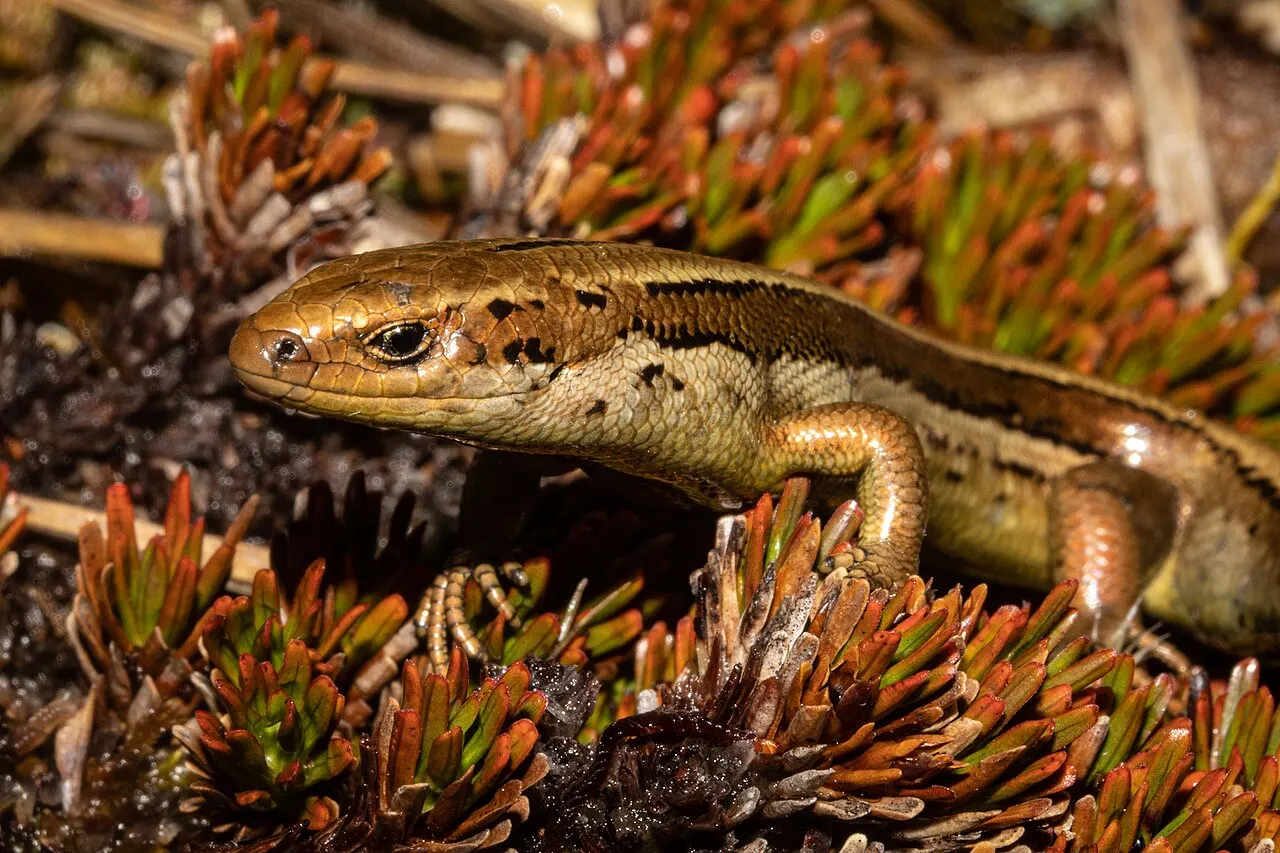
Endangered
Small-eared skink
Oligosoma stenotis
The small-eared skink (Oligosoma stenotis) is a small lizard found only in the high, rocky country of Stewart Island/Rakiura, New Zealand. It was rated Endangered by the IUCN in 2021 and is classed Nationally Vulnerable at home. A tiny ear opening gives it its name.
How to recognise it
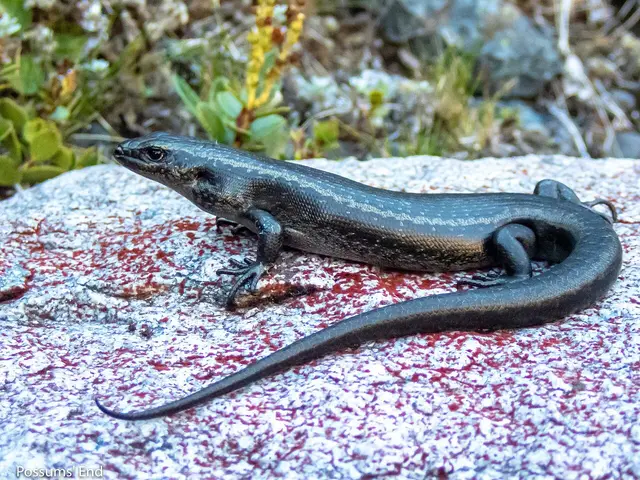
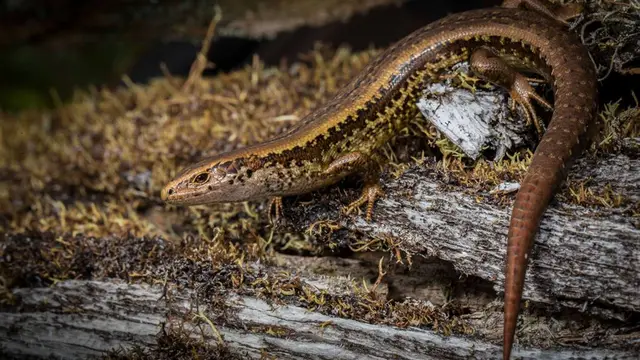
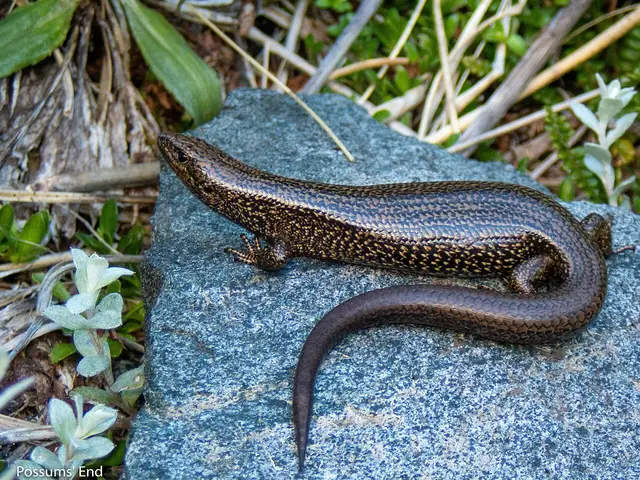
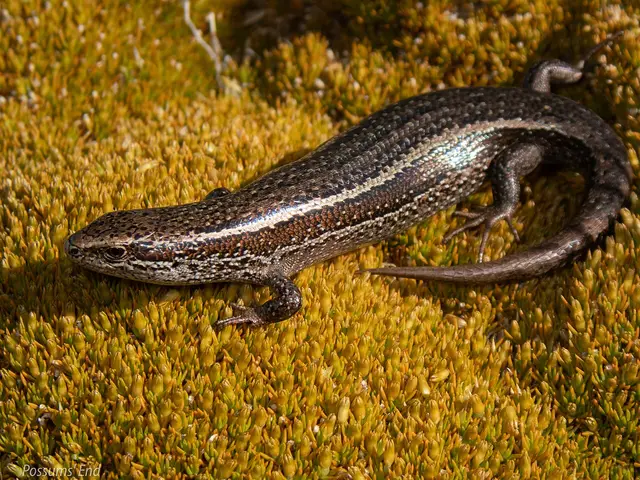
It's a small skink up to about 75 mm from snout to vent, with a tail as long as the body or longer, and a weight of up to 6 g. Another account gives about 80 mm, so sizes vary by source. The upper side runs from yellow-brown to green-brown, often with a black stripe down the middle edged in yellow, though the stripe is sometimes missing. The flanks have a brown band bordered with cream or yellow.
The very small ear opening gives the species its name, and the scientific name comes from the Greek for narrow and ear. It was formally described in 1994 by Geoff Patterson and Charles Daugherty.
Where it lives
The species is known only from Stewart Island/Rakiura, where it lives above the treeline in alpine and subalpine country. The IUCN lists rocky areas and temperate grassland as its habitats, at 480 to 960 m, with a single location and an extent of occurrence of about 1,200 square kilometres. It is found in boulderfields, tussock grassland and herbfields, and it may shelter in invertebrate burrows.
Pins are Wikidata “endemic to” fields. Orange dots, when present, are GBIF occurrence tiles — survey bias included.
How it lives
It's active by day and lives alone. The diet includes spiders, insects and amphipods, and small fruits. It gives birth to live young. Little is known about breeding: one study female gave birth to two young in November, each about 26 mm long and weighing roughly 0.2 g. Its lifespan is unknown.
Why it is in trouble
For years the skink was thought to be stable, protected by the pest control already being done for southern New Zealand dotterels in the same habitat. Then opportunistic observations suggested a significant decline. In 2021 the Department of Conservation's reassessment of New Zealand reptiles moved it from At Risk, Nationally Uncommon to Threatened, Nationally Vulnerable.
The IUCN records a decreasing population and lists invasive species as the threat, affecting more than 90 percent of the range, without naming which species. The assessment also records that the skink occurs in a protected area and that invasive species control is in place.
Sources
Written for this catalog in our own words from the sources below, checked against them on 12 November 2026. Population figures are estimates and carry the year they were made. Status and assessment year: IUCN. 2026. The IUCN Red List of Threatened Species. Version 2026-1. iucnredlist.org.