Endangered
Naja peroescobari
Naja peroescobari
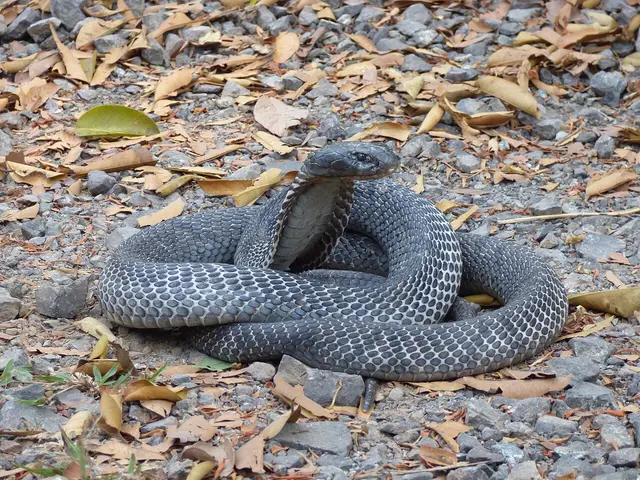
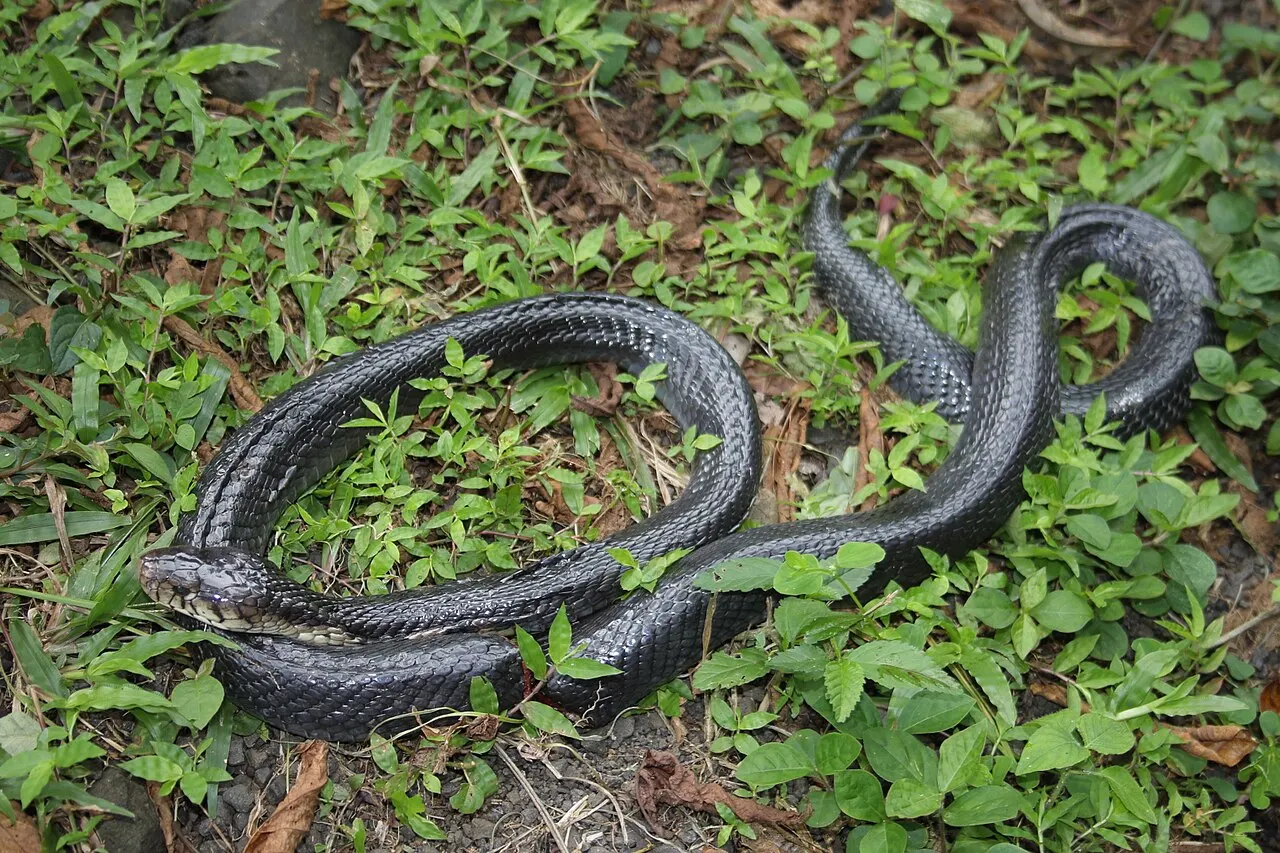
The São Tomé forest cobra (Naja peroescobari), known locally as the cobra-preta or black snake, lives only on São Tomé Island in the Gulf of Guinea. It was recognised as its own species in 2017. The IUCN rated it Endangered in 2021, with a decreasing population, mainly because of forest loss and persecution.
How to recognise it
It's a large, black cobra. It was long treated as a population of the mainland forest cobra (Naja melanoleuca), and it looks similar, but a magazine report on the discovery describes it as larger and with scales that are less white. The 2017 description separated it from the mainland snake by the pattern of colour on the belly and by how the scales under the chin touch.
The species was described by Luis Ceríaco and colleagues in the journal Zootaxa. It is named after the Portuguese explorer Pêro Escobar.
Where it lives
It is endemic to the island of São Tomé, in São Tomé and Príncipe. The IUCN assessment gives an elevation range of 10 to 800 metres, an extent of occurrence of about 1,000 square kilometres and two locations. It lists moist lowland forest and plantations as habitat, and a 2018 study describes the snake as restricted to the forested parts of the island.
The type specimen came from near Praia Inhame in the island's southwest. The IUCN notes that the snake occurs in at least one protected area.
Pins are Wikidata “endemic to” fields. Orange dots, when present, are GBIF occurrence tiles — survey bias included.
A cobra that wasn't an immigrant
For years the standard story was that Portuguese settlers brought the snake to the island to control rats, a view accepted by many islanders and conservation agencies. Ceríaco disputed that. The 2017 description argued the introduction idea was weakly supported and clashed with historical, anatomical and genetic evidence. He also found a report of a 1506 visit to the island by a Portuguese explorer that described a black, highly venomous snake there.
In 2018 a team led by Wolfgang Wüster sequenced mitochondrial DNA from 71 forest cobras across Africa and found five candidate species in the group, including the São Tomé snake. The snake is reportedly a predator of rats on the island. Little is known about its venom. The 2018 team expects each of the five species to have its own venom, which matters for antivenom.
Why it is in trouble
The Endangered rating (criterion B1ab(iii,v)) reflects a small range and a continuing decline in habitat and in the number of mature snakes. The IUCN names persecution, roads and agro-industrial farming among the threats. Wüster's team considers it the most at risk of the five, as it is restricted to the forested parts of a small island.
People kill the snake because it is venomous, and often eat it. A Smithsonian biologist quoted in a report on the discovery said the type specimen was a snake chopped in half by a local resident. While it counted as part of a widespread species, it could even have been slated for eradication as an introduced pest.
What is being done
The IUCN lists awareness and communication as the conservation action for the species. The Smithsonian biologist called clearing up the idea that the snake doesn't belong on São Tomé an important first step toward protecting it. The 2018 team said recognising the new species lets it be included in monitoring and management plans.
Sources
Written for this catalog in our own words from the sources below, checked against them on 12 November 2026. Population figures are estimates and carry the year they were made. Status and assessment year: IUCN. 2026. The IUCN Red List of Threatened Species. Version 2026-1. iucnredlist.org.