Endangered
Andaman cobra
Naja sagittifera
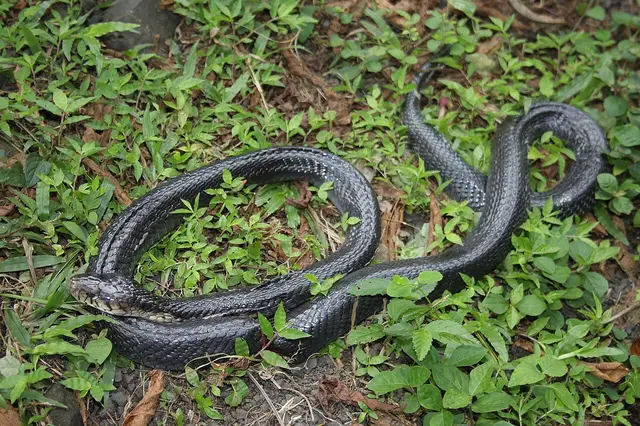
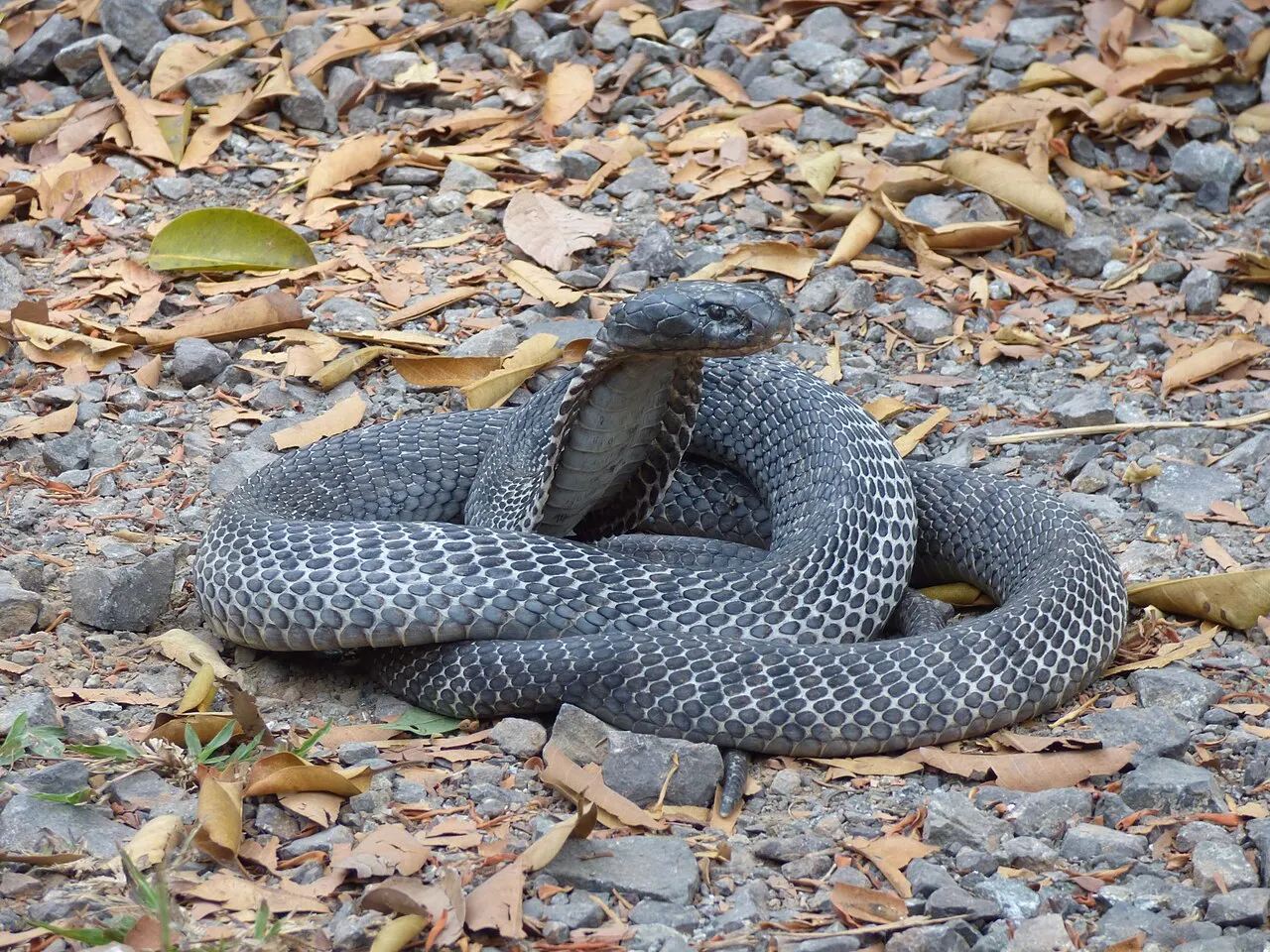
The Andaman cobra is a heavy-bodied snake found only on the Andaman Islands of India. It is rarely seen, and its venom is unusually potent in laboratory tests. The IUCN Red List classed it as Endangered in 2021, citing a small range and continuing decline.
How to recognise it
Adults reportedly average about 0.9 m long and often reach 1.5 m, with 1.8 m the longest on record. Like other cobras it spreads a hood when threatened, supported by long neck ribs. Adults are described in three looks: glossy black, light brown or cream with faint black lines, or plain grey with narrow black cross bars.
Young snakes are glossy black with 34 to 40 narrow white cross bars and a white monocle mark on the hood, with a broad black band under the neck.
Where it lives
The species is endemic to the Andaman Islands, an Indian archipelago in the Bay of Bengal. Field records come from South Andaman (Bambooflat, Wandoor and Sippighat) and Middle Andaman (Kadamtala and Mayabunder), and a juvenile has been seen on the road to Mount Harriet. Many sightings are near houses, farmland and roads.
The IUCN assessment describes lowland tropical moist forest from sea level to 500 m, and counts the species at only three locations. At least one protected area holds it.
Pins are Wikidata “endemic to” fields. Orange dots, when present, are GBIF occurrence tiles — survey bias included.
How it lives
Very little has been studied. One juvenile was seen at night in October on the road to the summit of Mount Harriet, feeding on road-killed frogs. The species lays eggs.
It can spit venom toward the eyes, but this is very rare and the aim is poorer than in the true spitting cobras.
Why it is in trouble
The Red List assessment names small-holder farming, persecution and housing development as ongoing threats and records a continuing decline. Adults have been found near houses and farmland, so people meet the snake often enough to kill it. A 2021 study by Attarde and colleagues cited estimates of 23 to 28 snakebite envenomings per 100,000 people on the islands (all snakes combined, from 2017 to 2019 health data) and suggested this cobra probably causes many of them.
The same study, in Frontiers in Pharmacology, analysed venom from one subadult snake. Its venom was about twice as potent in mice as venom from the mainland Indian cobra, and several Indian and Thai antivenoms protected the mice poorly or not at all. The researchers concluded that the islands need an antivenom made for this species.
What is being done
The species is on Appendix II of CITES. The Red List assessment lists habitat protection, protection of sites and awareness work as needed actions. No population estimate exists, and the assessment records no systematic monitoring.
Sources
Written for this catalog in our own words from the sources below, checked against them on 12 November 2026. Population figures are estimates and carry the year they were made. Status and assessment year: IUCN. 2026. The IUCN Red List of Threatened Species. Version 2026-1. iucnredlist.org.