Endangered
Marlborough Spotted Skink
Oligosoma elium
The Marlborough spotted skink (Oligosoma elium) is a small, sun-loving lizard from the northeastern South Island of New Zealand. It was described as a species only in 2017. The IUCN assessed it as Endangered in 2019, estimating 1,000 to 5,000 animals in a declining, fragmented population.
How to recognise it
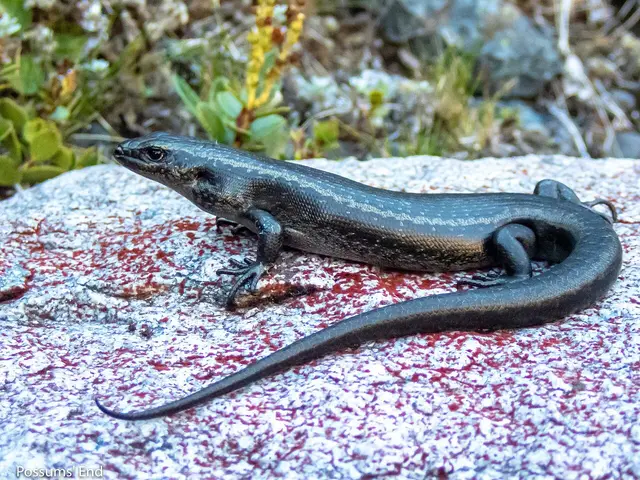
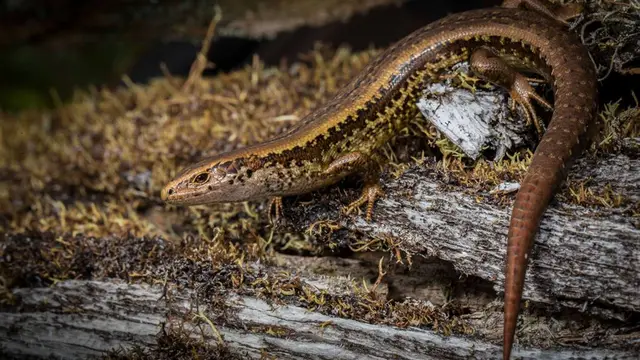
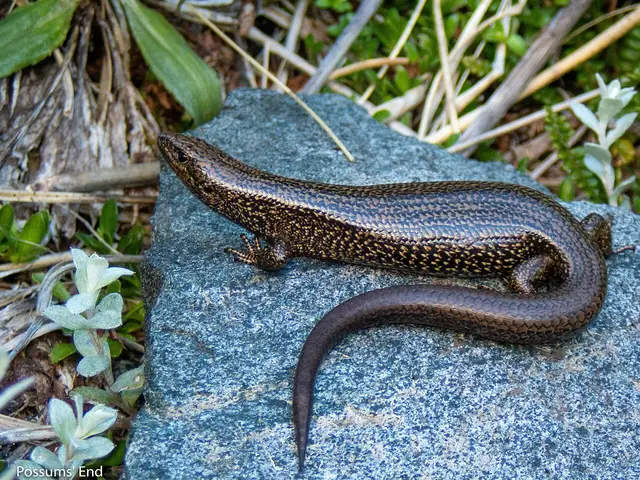
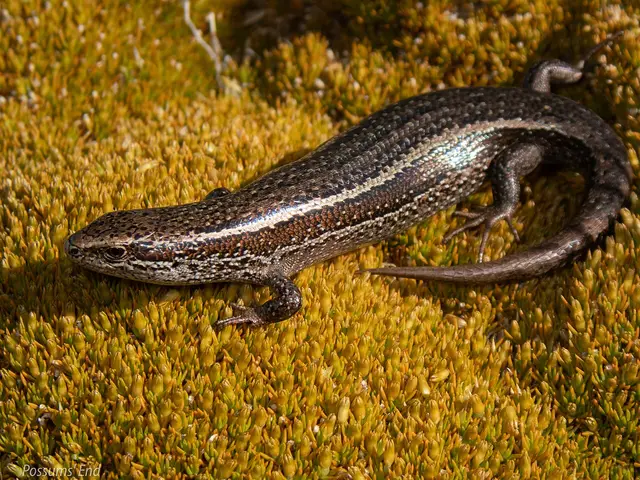
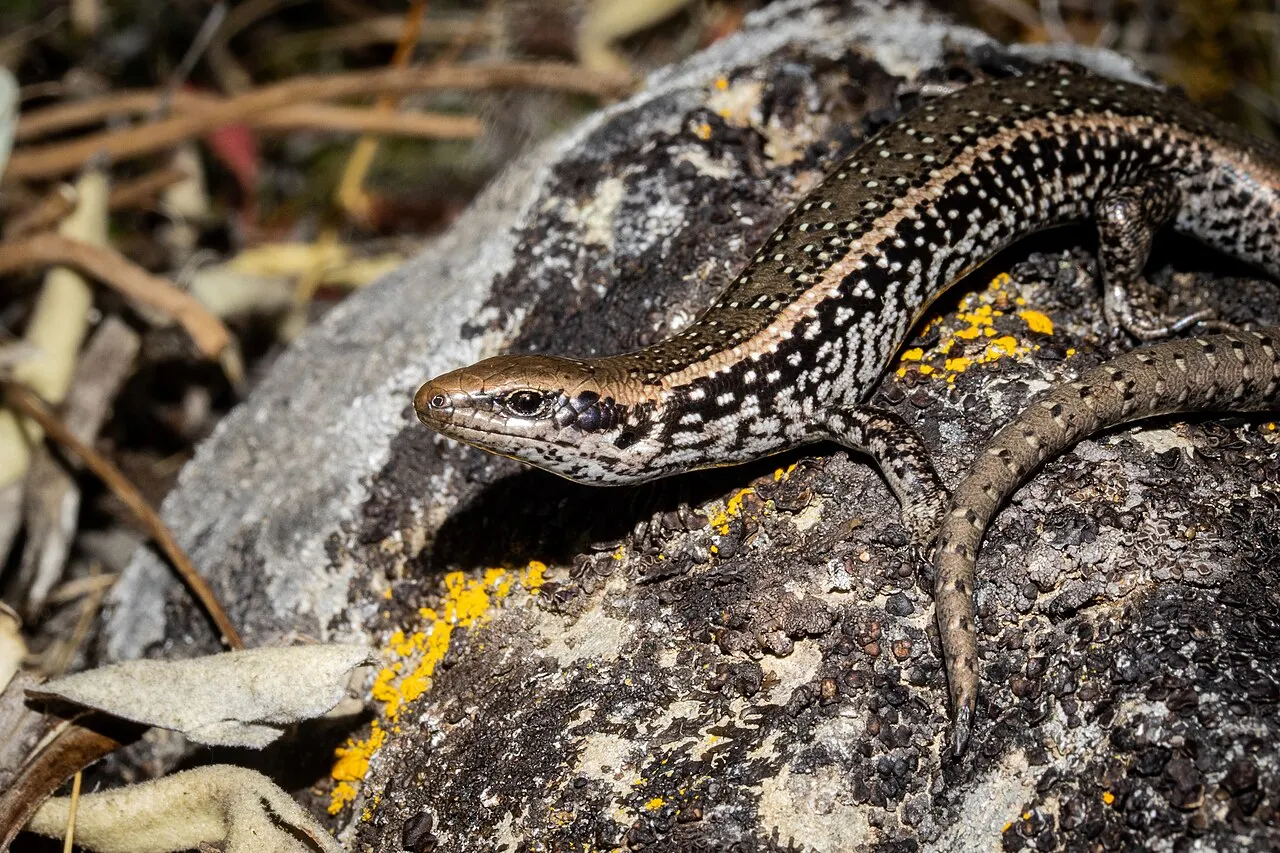
This skink grows to about 89 mm from snout to vent, with a tail a little longer than the body, and weighs at least 10 g. Colour varies: pale green, grey or brown, with lighter dots and dark speckles along the back. Cream stripes on the sides often break up toward the tail, the flanks are dark with pale flecks, and the belly is grey, sometimes tinged pink.
It looks very like its relatives. In 2017 Sabine Melzer, Trent Bell and Geoff Patterson combined genetics and body measurements to split the old spotted skink into four species, and the Marlborough animals became Oligosoma elium. Before that they were treated as Oligosoma lineoocellatum or called the 'South Marlborough' form.
Where it lives
The skink is restricted to Marlborough and northern Canterbury, from around Ward in the north to Hawarden in the south. A population also lives on Motunau Island. The IUCN puts the area it occupies at about 124 square kilometres, within a wider range of roughly 9,280 square kilometres, and records it from sea level up to 1,500 m.
Its habitat is open and sunny: temperate grassland and shrubland, tussock, rock piles and scree. The IUCN says the population is severely fragmented.
Pins are Wikidata “endemic to” fields. Orange dots, when present, are GBIF occurrence tiles — survey bias included.
How it lives
It is active by day, on the ground, and spends a lot of time basking. It shelters under rocks and logs or in dense vegetation. It eats invertebrates, and also takes berries, fruit and nectar from native plants.
It gives birth to live young. Breeding is largely unknown, though it is likely similar to the Canterbury spotted skink, with 1 to 3 young born between February and March. Lifespan and social life are not known.
Why it is in trouble
The IUCN records a continuing decline in the population and in the area of its habitat. A New Zealand reptile society profile names habitat modification and predation by rodents, mustelids, hedgehogs and cats as the cause of increasing rarity. The 2017 description likewise gives invasive predatory mammals and land-use change as the threats. The IUCN also lists earthquakes as a past event that could return.
The species was only recognised in 2017. Before that, the animals were treated as part of the wider spotted skink complex.
What is being done
Part of its range lies in protected land, and the IUCN lists control of invasive species as a conservation action in place. New Zealand classes it as Nationally Endangered. The reptile society profile states that the species is not currently managed, and the assessment records no recovery plan.
Sources
Written for this catalog in our own words from the sources below, checked against them on 12 November 2026. Population figures are estimates and carry the year they were made. Status and assessment year: IUCN. 2026. The IUCN Red List of Threatened Species. Version 2026-1. iucnredlist.org.