Critically Endangered
Tropidophis caymanensis
Tropidophis caymanensis
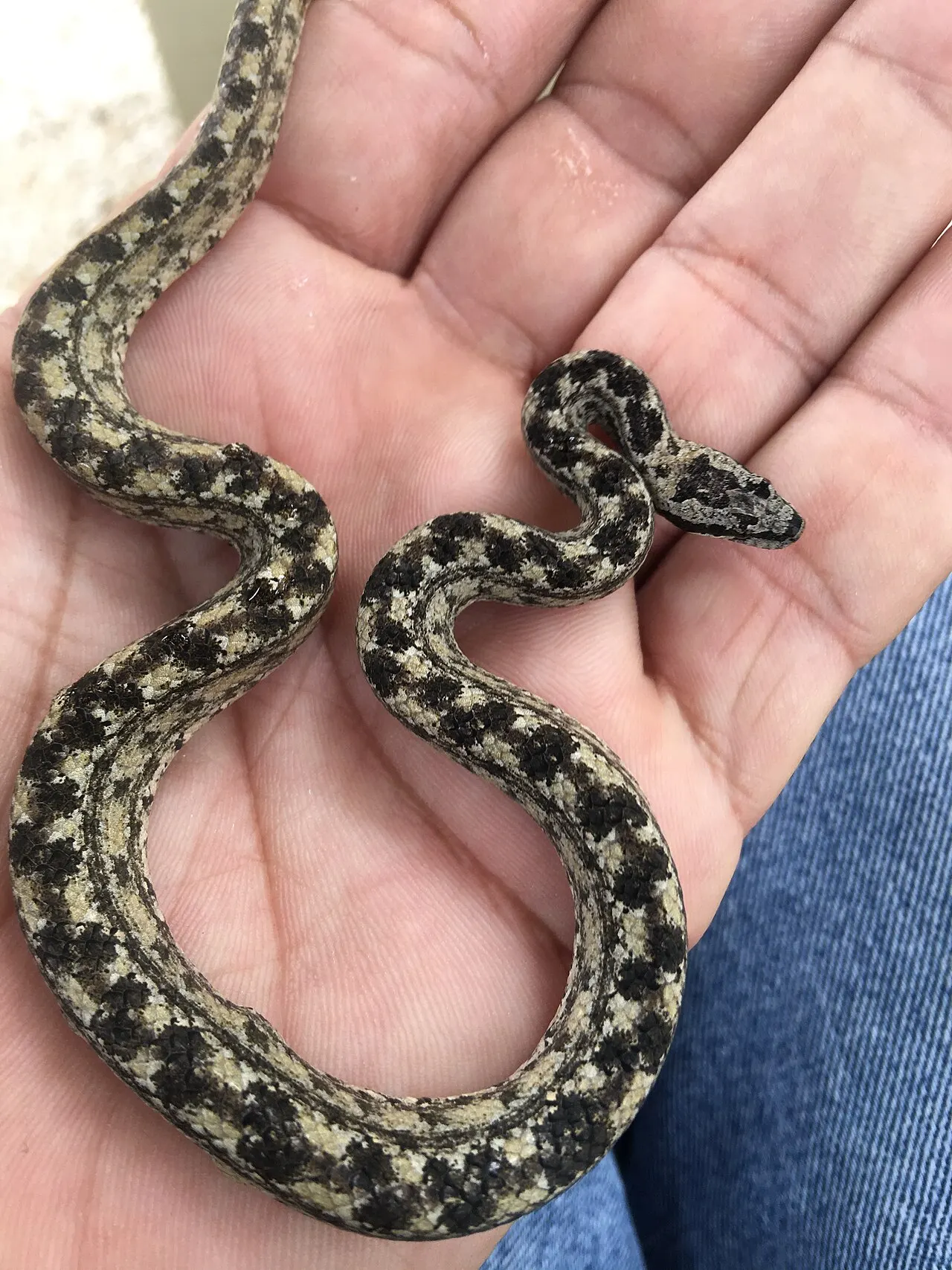
The Grand Cayman ground boa (Tropidophis caymanensis) is a small snake found only on Grand Cayman. The IUCN Red List rated it Critically Endangered in 2019 because it occupies one small area of low-lying forest that is being built over. Cayman ground boas are known locally as lazy snakes.
How to recognise it
The three ground boas of the Cayman Islands are all small, usually under 50 cm (about 20 inches) in total length. Ground boas as a group (genus Tropidophis) lack the heat-sensing pits of true boas and pythons, but carry tiny vestiges of hind limbs, visible as a pair of spurs near the vent.
On the Cayman Islands the tip of the tail is white to yellow, in sharp contrast to the darker body. A snake lying in wait wiggles it, which may draw in an anole or tree frog that mistakes it for food. Many ground boas also change colour on a daily cycle, lighter at night and darker by day, which is rare among snakes.
Where it lives
Three ground boas live in the Cayman Islands, one on each of the main islands. Until fairly recently they were treated as subspecies of one species. Tropidophis caymanensis is the Grand Cayman one, and the other two, from Cayman Brac and Little Cayman, are now ranked as their own species.
The IUCN estimates its entire extent of occurrence at just 75 square kilometres, treats it as a single location, and gives an elevation range of 3 to 18 metres above sea level. Its habitats are dry forest and moist lowland forest. A 2004 profile of the Cayman ground boas found them from beaches to dry forest, in leaf litter, rotting stumps, cracks in house walls, and under palm fronds, rocks, limestone slabs and logs.
Pins are Wikidata “endemic to” fields. Orange dots, when present, are GBIF occurrence tiles — survey bias included.
How it lives
Details come mostly from the 2004 profile of the three Cayman species together. They are mainly active at night, and on Grand Cayman they have been found especially active late in the summer after rain. They seem to feed mainly on Anolis lizards and Cuban tree frogs. Ground boas give birth to live young.
The local name, lazy snake, comes from the habit of balling up when first picked up instead of fleeing, a behaviour common in the genus and most often shown by juveniles. A disturbed ground boa may also ooze blood from the eyes and mouth.
Why it is in trouble
The IUCN lists housing and commercial development as threats, with conversion of its forest habitat as the main stress, and records a continuing decline in the area it occupies. It also lists species mortality and competition among the stresses, and the population trend is unknown.
The assessment gives no estimate of how many snakes remain. The snake is not known to occur inside a protected area.
What is being done
All ground boas are on CITES Appendix II, which controls international trade, though they are rarely seen in the pet trade. The IUCN assessment records no species-specific conservation actions, and says more research is needed on its exact range, population size, trend and threats.
Sources
Written for this catalog in our own words from the sources below, checked against them on 12 November 2026. Population figures are estimates and carry the year they were made. Status and assessment year: IUCN. 2026. The IUCN Red List of Threatened Species. Version 2026-1. iucnredlist.org.




