Endangered
Narrow-banded Kanaky Skink
Kanakysaurus viviparus
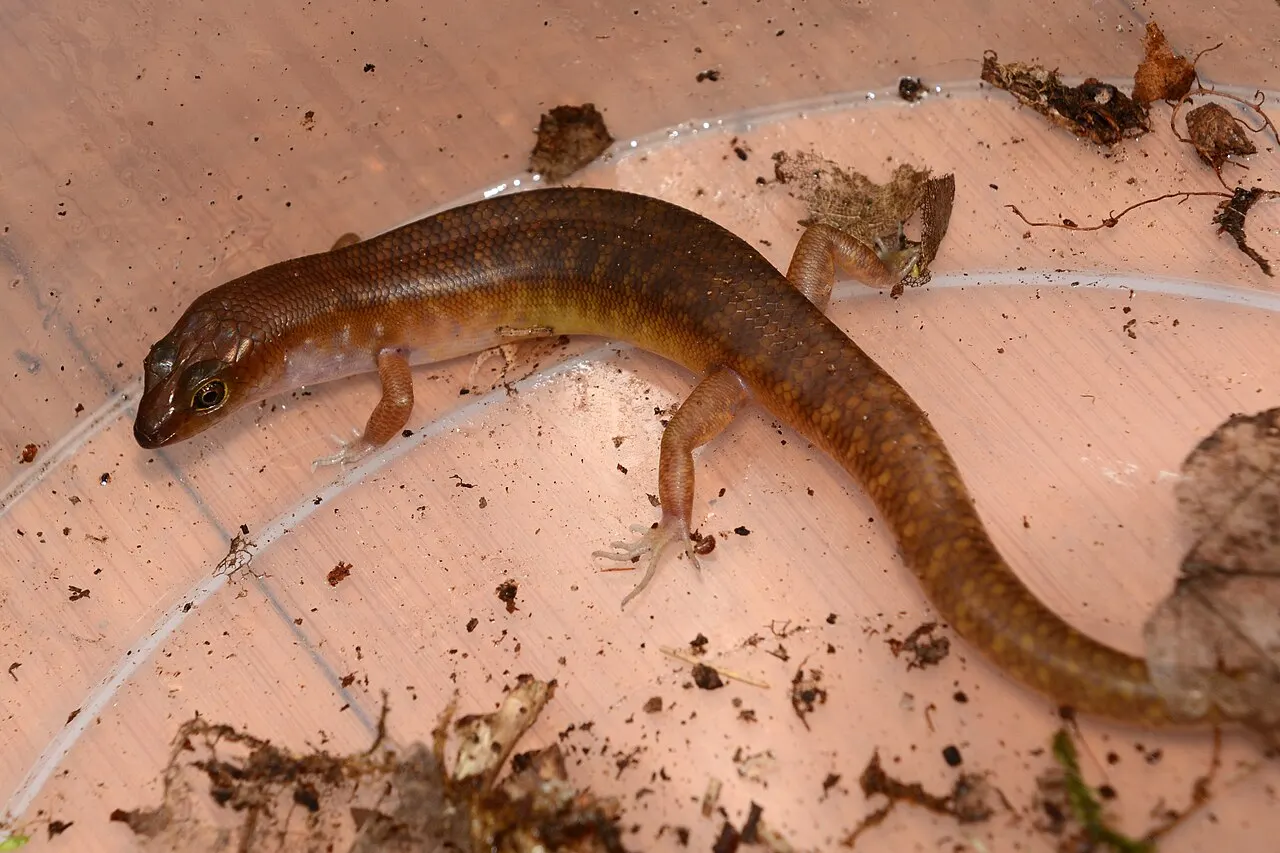
The narrow-banded Kanaky skink (Kanakysaurus viviparus) is a small live-bearing lizard found only in the far north of New Caledonia, on a few sites on the main island and in the Belep Islands. The IUCN Red List rated it Endangered in 2021, and its population is falling.
What it is
Kanakysaurus viviparus is a skink (family Scincidae) and the type species of the genus Kanakysaurus. Sadlier, Bauer, Smith and Whitaker described it in 2004 from specimens collected at Rivière Néhoué in Province Nord. The genus name draws on Kanaky, the Melanesian name for New Caledonia.
As the species name says, it gives birth to live young rather than laying eggs. A 2009 paper describing a second species, Kanakysaurus zebratus, confirmed live birth for that species and for the genus as a whole. It found the two lizards similar in overall appearance, but distinguishable by scale pattern and colour.
Where it lives
The range is tiny. Records come from Rivière Néhoué and the Dôme de Tiébaghi near Koumac on the main island, and from Île Art and Île Pott in the Belep Islands. The 2009 paper added a population at Sommet Poum.
The Tiébaghi animals are a puzzle. They look most like K. viviparus, but DNA from part of the population groups with K. viviparus and part with K. zebratus.
The Red List assessment counts four locations, with an extent of occurrence of about 485 square kilometres and an area actually occupied of about 44 square kilometres. It records the skink in lowland moist forest and moist shrubland, up to about 500 metres above sea level.
Pins are Wikidata “endemic to” fields. Orange dots, when present, are GBIF occurrence tiles — survey bias included.
Why it is in trouble
The 2021 assessment records a continuing decline in the area the skink occupies and in its numbers. Threats listed include more frequent and intense fires, mining and quarrying, and problem species that compete with it or cause deaths. Habitat is being converted and degraded as a result.
No population size has been published. The assessment records that the lizard does not occur in any protected area.
What is being done
The Red List entry lists two actions as needed: protecting sites and controlling invasive or problem species. No protected area is recorded for the species. Better data on how many skinks there are, and how that number is changing, would also help.
Sources
Written for this catalog in our own words from the sources below, checked against them on 12 November 2026. Population figures are estimates and carry the year they were made. Status and assessment year: IUCN. 2026. The IUCN Red List of Threatened Species. Version 2026-1. iucnredlist.org.




