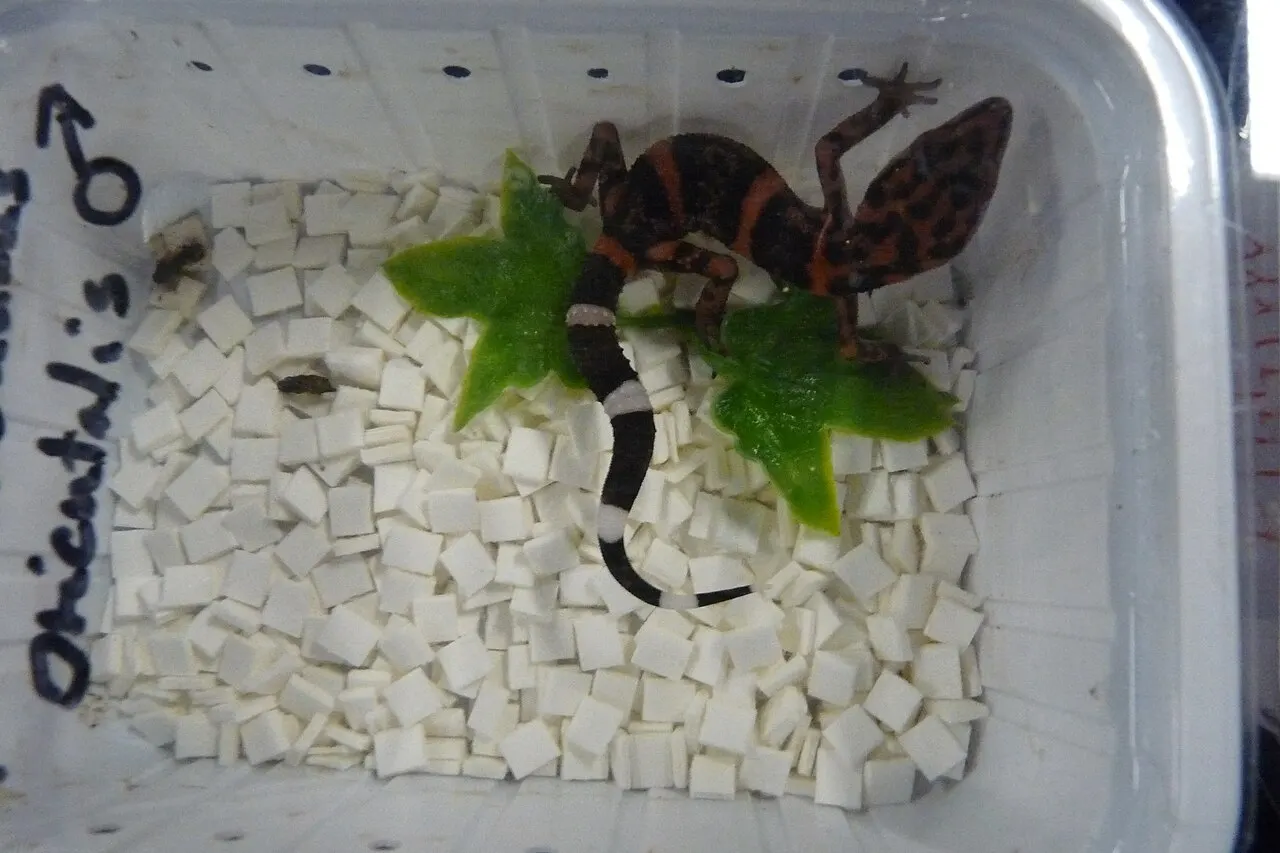
Endangered
Spotted ground gecko
Goniurosaurus orientalis
The spotted ground gecko (Goniurosaurus orientalis), also called the Japanese cave gecko, is a red-eyed, night-active gecko from a few small islands in Japan's Okinawa group. The IUCN Red List assessed it as Endangered in 2017. Its range is tiny, its habitat is shrinking, and exotic pet keepers want it.
How to recognise it
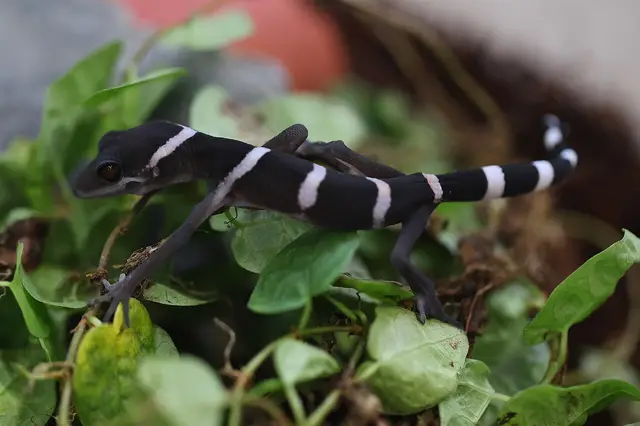
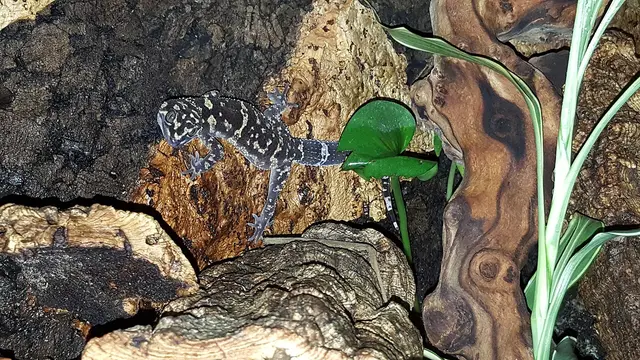
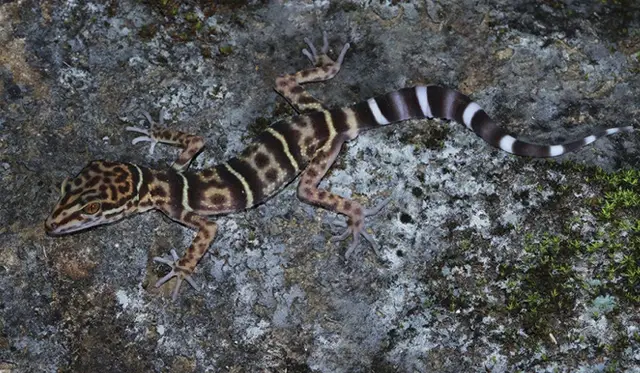
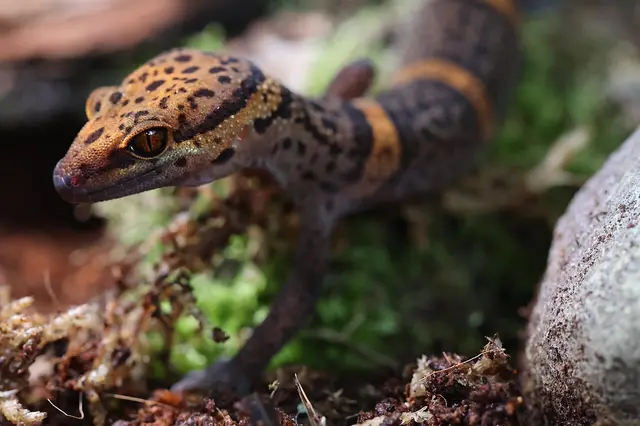
This ground-living gecko grows to about 16 cm. The body is dark brown or black with an orange or red pattern, and the eyes are deep red. Like other members of its family, the Eublepharidae, it has fully working eyelids, which most geckos lack.
It was described by Maki in 1931. For many years it was treated as a subspecies of Kuroiwa's ground gecko (Goniurosaurus kuroiwae). A 2024 paper by Kurita and Toda is cited by the Reptile Database for the name Goniurosaurus orientalis, which that database now lists as a species in its own right.
Where it lives
It is endemic to the Ryukyu Islands of southern Japan. The type locality is Tonaki Island, and it is also found on Tokashiki, Aka and Ie, all close to Okinawa's main island. The Reptile Database also lists Kume and Iheya, so sources disagree on the exact range.
The IUCN records it in subtropical moist lowland forest and on rocky ground such as inland cliffs. Its estimated area of occupancy is only about 45 square km, within an extent of occurrence of roughly 1,600 square km.
Pins are Wikidata “endemic to” fields. Orange dots, when present, are GBIF occurrence tiles — survey bias included.
How it lives
The best field study was made on Tokashiki in September 1999. Marked geckos were watched in 30-minute sessions. They were active at night and moved on the ground, and some climbed trees to about 1.8 m. On average a gecko was moving 23 percent of the time, though individuals ranged from staying completely still to moving for up to 84 percent of a session. The researchers classed it as a wide forager.
It is reportedly insectivorous, like most of its family, and it lays eggs. Little else has been published about its diet or breeding in the wild.
Why it is in trouble
The IUCN lists the population as decreasing and severely fragmented, with habitat area still declining. Roads and railways are named as an ongoing threat. The criteria behind the Endangered listing, B1ab(iii)+2ab(iii), describe a small range split into patches where habitat quality is falling.
Collection for the pet trade is a second worry. It has reportedly grown popular with exotic lizard keepers. TRAFFIC reported in 2021 that six Japanese cave gecko species, this one included, were listed on CITES Appendix III and protected by Japanese law. Its 2018 report had found them in trade in Europe and the United States, and it described their restricted ranges as making them vulnerable to exploitation.
Sources
Written for this catalog in our own words from the sources below, checked against them on 12 November 2026. Population figures are estimates and carry the year they were made. Status and assessment year: IUCN. 2026. The IUCN Red List of Threatened Species. Version 2026-1. iucnredlist.org.