Critically Endangered
Yamashina's Ground Gecko
Goniurosaurus yamashinae
Yamashina's ground gecko (Goniurosaurus yamashinae) is a small eyelid gecko found only on Kume Island in Japan's Ryukyu Islands. The IUCN rated it Critically Endangered in 2017, with a decreasing population. Japan's 2026 Red Databook lists it as Endangered. Road building, farmland development and illegal collecting threaten it.
How to recognise it
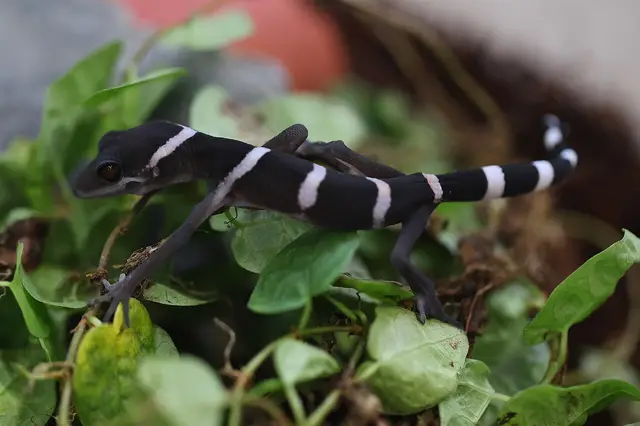
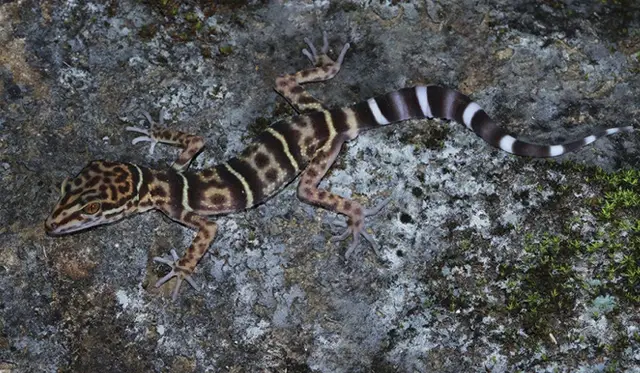
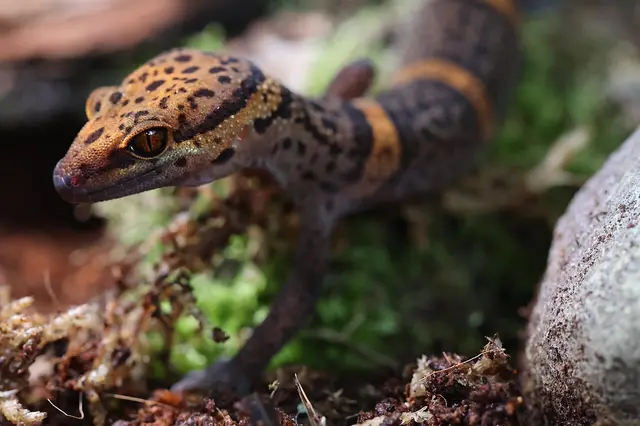
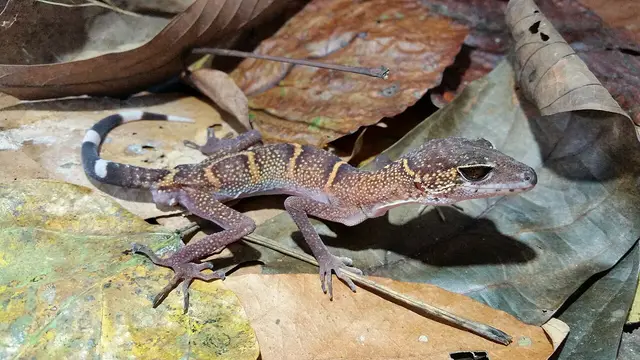
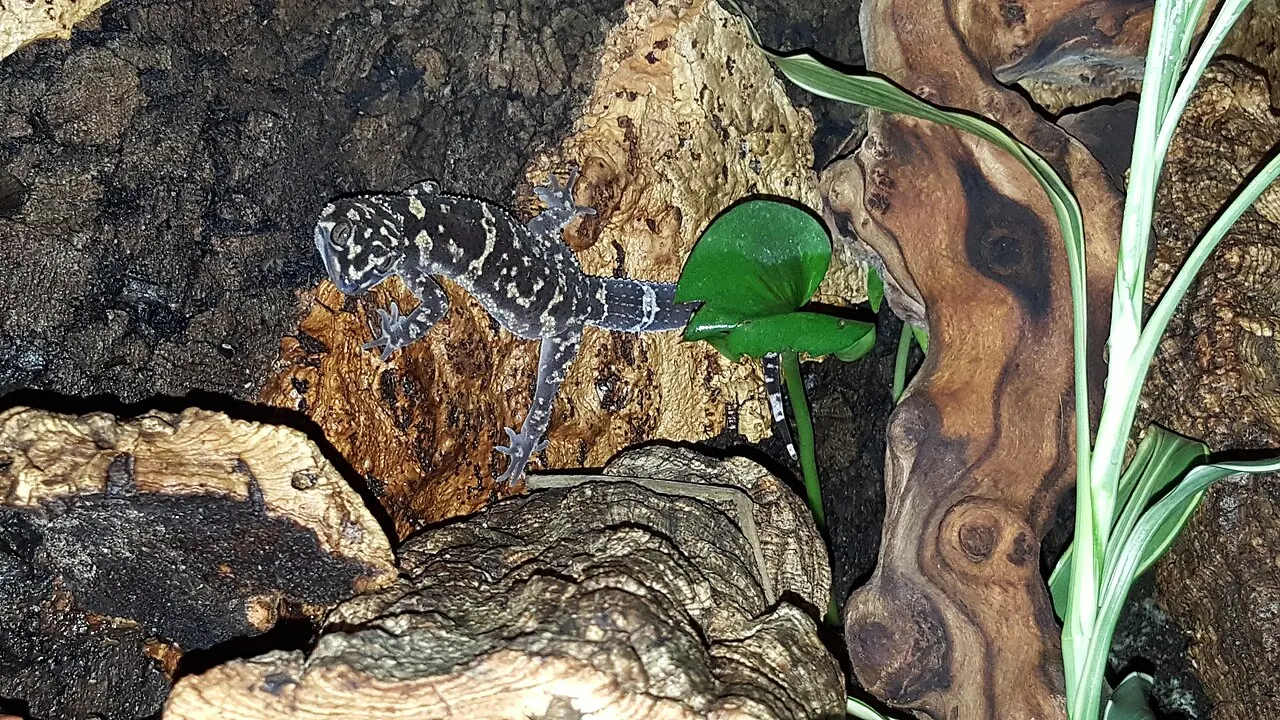
Adults measure about 75 to 85 mm from snout to vent. The gecko is slimmer than the related Iheya ground gecko, and it has four yellowish-cream crossbands on its back with small irregular spots between them. Its best field mark is the eye. Every other Japanese ground gecko has reddish irises, but this one has yellowish-brown irises.
Where it lives
The gecko is endemic to Kume Island, in the Okinawa group, and is known from nowhere else. The IUCN counts one location and describes the population as severely fragmented. Its habitat is lowland moist forest, and the assessment also records it in arable land.
Japan's 2026 Red Databook says it lives mainly in natural evergreen broadleaf forest and well-regrown secondary forest, sometimes near fields, and has also been found in caves. It describes two separate ranges, one around Mount Uegusuku in the north and one in the Aara-dake mountains in the south. Little land between them suits the gecko, so the two groups probably do not mix.
Pins are Wikidata “endemic to” fields. Orange dots, when present, are GBIF occurrence tiles — survey bias included.
How it lives
It is active at night, and animals have been seen out between April and September. It lays eggs. Females carrying eggs have been found from mid-June to mid-July, and a clutch is two eggs. The breeding season, how many clutches a female lays in a year and the generation length are unknown. Like its relatives, it is thought to eat small ground-dwelling invertebrates, though no direct diet data exist.
No one has published a population count. The Red Databook says there are too few data for an estimate but infers a decline, because suitable habitat is shrinking.
Naming and relatives
Y. Okada described it in 1936 as Gymnodactylus yamashinae, naming it for Marquis Yoshimaro Yamashina, who sent out the expedition. The original type specimen was reportedly destroyed during World War II. For decades it was ranked as a subspecies of Goniurosaurus kuroiwae, and some authorities still list it that way. The IUCN and Japan's Red Databook treat it as a full species.
Why it is in trouble
Japan's Red Databook says forest road building and farmland improvement have shrunk and broken up the habitat, and it calls this the largest cause of decline. Illegal collecting has also happened repeatedly, with prosecutions in recent years. The IUCN lists roads and railroads and intentional use of the species among its threats, and records a continuing decline in the area it occupies.
A 2019 study by Janssen and Shepherd in Current Herpetology argued that trade in endangered Nansei Islands reptiles and amphibians needs more protection.
What is being done
Japan lists the gecko as a nationally rare species of wild fauna and flora, a legal designation under national law, and it is a natural monument of Okinawa Prefecture. Its Japanese rating has moved over time. It was Endangered in the second edition of the national list, Critically Endangered through the third and fourth editions, and Endangered again in 2026 under criterion B2ab, meaning a small, fragmented range and continuing decline. The IUCN assessment lists site and area protection and management among its conservation actions.
Sources
Written for this catalog in our own words from the sources below, checked against them on 12 November 2026. Population figures are estimates and carry the year they were made. Status and assessment year: IUCN. 2026. The IUCN Red List of Threatened Species. Version 2026-1. iucnredlist.org.