Endangered
Bawangling Leopard gecko
Goniurosaurus bawanglingensis
The Bawangling cave gecko (Goniurosaurus bawanglingensis) is a banded, nocturnal ground gecko found only in the hills of western Hainan Island, China. The IUCN Red List assessed it as Endangered in 2019, with a tiny range and a falling population. International demand from the pet trade is a main concern.
How to recognise it
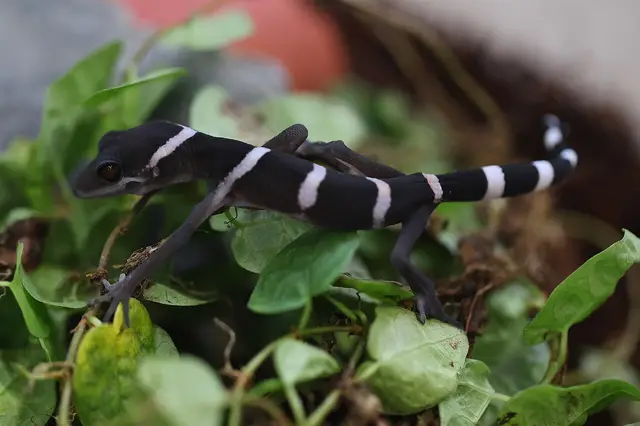
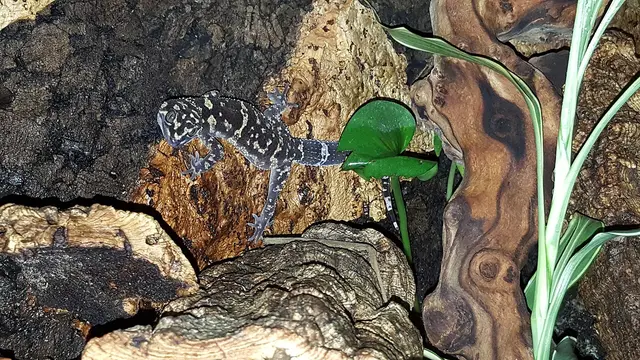
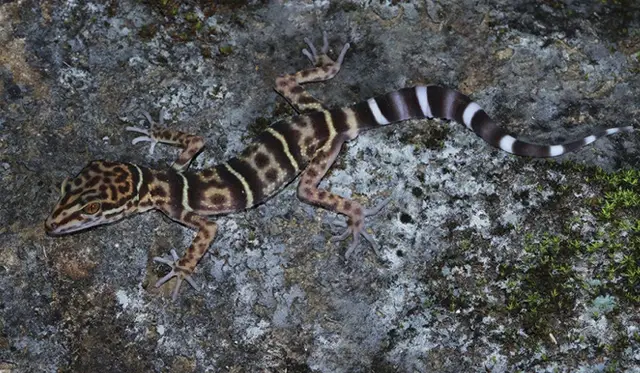
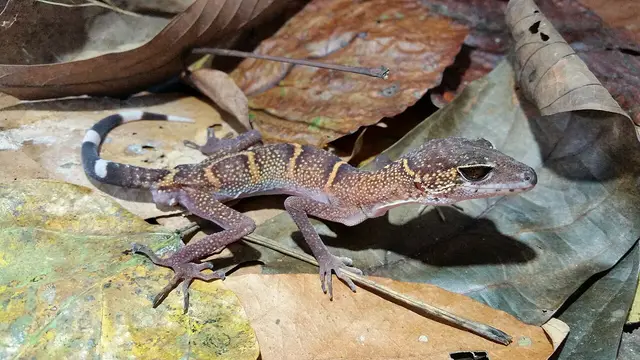
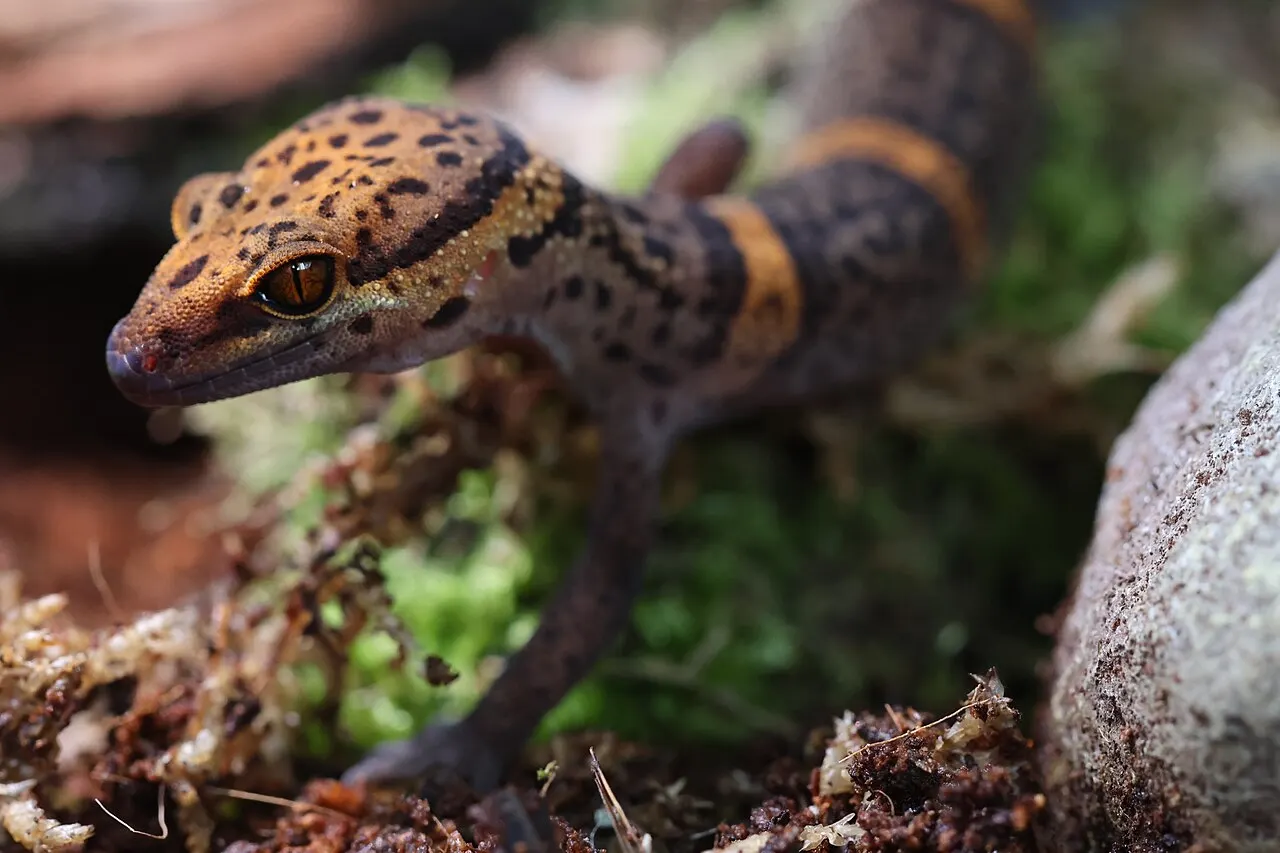
This is a medium-sized, slender gecko. Adult males measure about 84 to 100 mm from snout to vent, and adult females about 80 to 95 mm, not counting the tail. Adults are brownish-yellow with small dark brown blotches and five dark transverse bands, including a rounded loop on the neck. The iris is reddish-orange to dark reddish-brown.
Hatchlings and juveniles look different, being dark yellow-brown to dark brown with no blotches. Adult males carry 36 to 46 pores in front of the vent, and females have none. It lays eggs rather than giving birth to live young.
Where it lives
It is endemic to Hainan. It was described in 2002 from near Bawangling in the Bawangling National Nature Reserve, in the southwest of the island, and is named after that reserve. A 2025 taxonomic revision lists records from the Bawangling area and Baomeiling Provincial Nature Reserve in Changjiang, the Jianfengling area in Ledong, Nanfeng town in Danzhou, and Jiangbian village in Dongfang, at elevations of 400 to 750 m.
The IUCN assessment counts five locations and estimates the extent of occurrence at only about 45 square kilometres. Its habitat is listed as tropical moist lowland forest. Cave geckos of this genus generally favour cool, damp ground near water, crevices in rock and the mouths of caves, but detailed field studies of this species are scarce.
Pins are Wikidata “endemic to” fields. Orange dots, when present, are GBIF occurrence tiles — survey bias included.
Place in the family tree
Genetic work in the 2025 revision places it in the Goniurosaurus lichtenfelderi group, one of four valid species there, and as the earliest branch of that group, which split from the others roughly 14.7 million years ago. That revision also reassigned an old 1964 record of the leopard gecko (Eublepharis macularius) from Jiangbian village to this species, based on the photograph and the place.
Why it is in trouble
The 2019 assessment records a decreasing population and a continuing decline in the area it occupies. It names collection for the pet trade as an ongoing threat, with international trade involved, along with the accidental effects of harvest and the spread of farmland. The scale of each threat is listed as unknown.
Many Goniurosaurus species have small ranges, which leaves wild populations open to over-collection and habitat loss. In China, cave geckos have also been taken for traditional medicine.
What is being done
Part of its range lies inside protected areas, including the reserve where it was first found. The IUCN lists harvest management as an action needed.
At the 2019 CITES conference, member countries adopted a proposal from China, the EU and Viet Nam to place all Goniurosaurus species from China and Viet Nam in Appendix II, which covers this Hainan species. The listing controls international trade in wild-caught animals.
Sources
Written for this catalog in our own words from the sources below, checked against them on 12 November 2026. Population figures are estimates and carry the year they were made. Status and assessment year: IUCN. 2026. The IUCN Red List of Threatened Species. Version 2026-1. iucnredlist.org.
- IUCN Red List assessment, Goniurosaurus bawanglingensis (2019)
- Reptile Database, Goniurosaurus bawanglingensis
- Qi et al. 2025, Integrative taxonomic revision of the Goniurosaurus lichtenfelderi group, Vertebrate Zoology 75
- Reptiles Magazine, Keeping and breeding Goniurosaurus cave geckos
- Goniurosaurus bawanglingensis (encyclopedia article)
- US Fish and Wildlife Service, CoP18 species proposal outcomes