Critically Endangered
Huu Lien Leopard Gecko
Goniurosaurus huuliensis
The Huu Lien tiger gecko (Goniurosaurus huuliensis) is a slender, banded lizard from limestone hills in northern Vietnam. It is the largest of its genus. The IUCN Red List rated it Critically Endangered in 2018, and a 2022 field study estimated no more than a few thousand remain.
How to recognise it
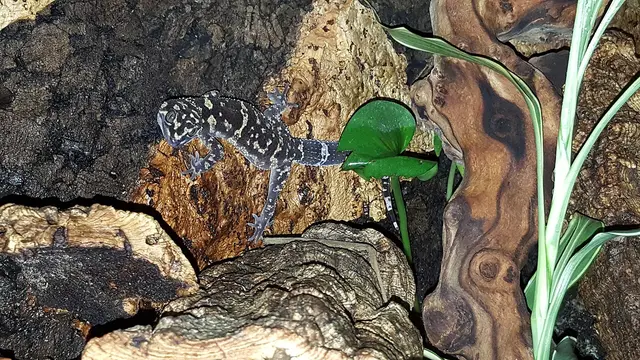
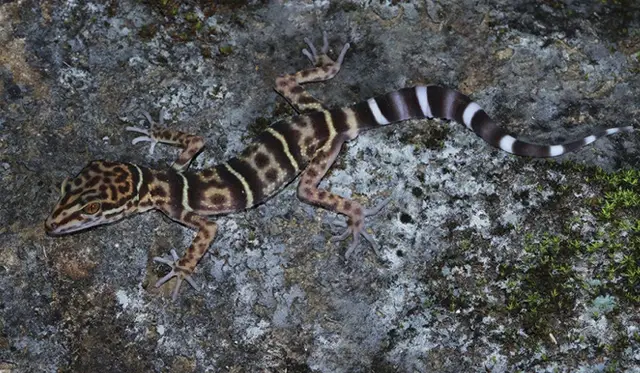
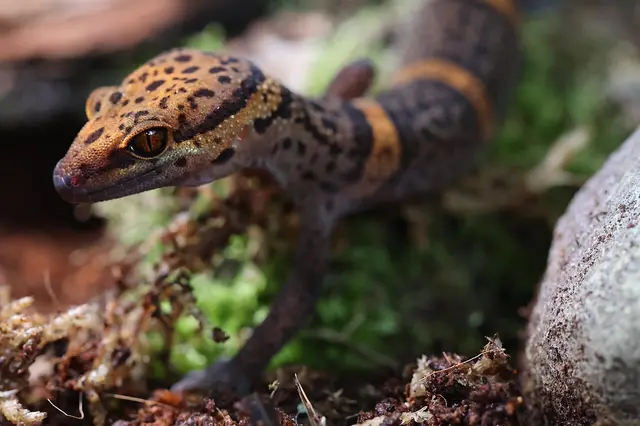
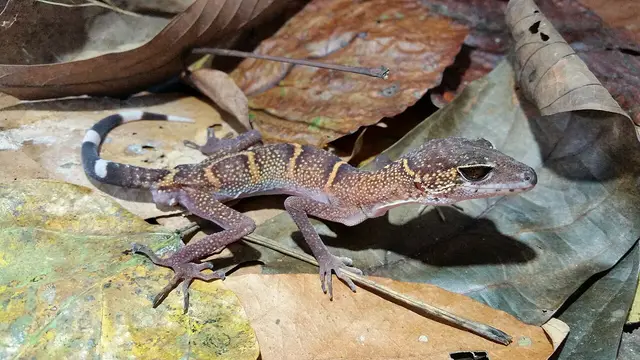
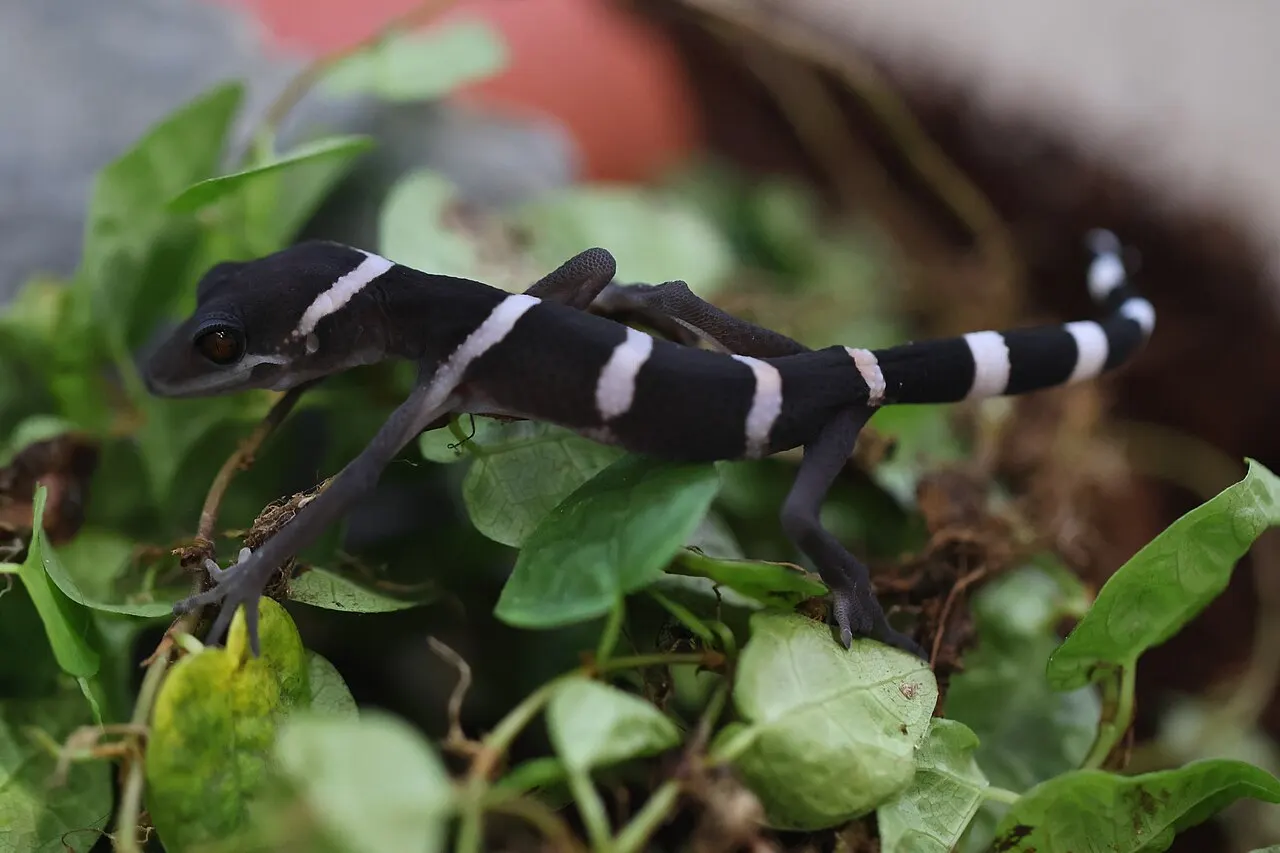
This is a long-limbed, graceful gecko with a triangular head set off from a slim neck. Adults measure 9.7 to 13.5 cm in head and body length, which makes it the biggest tiger gecko in the genus.
The back is grey to dark brown, crossed by usually five yellow to orange-brown bands, including a V-shaped band at the neck, three between the front and hind legs and one at the base of the tail. The tail is dark with 3 to 6 white bands. The belly is matt white and the eye is a strong red-brown. Males can be told by a row of 25 to 30 pores in front of the vent.
Where it lives
The gecko was described in 2008 from Huu Lien Nature Reserve in Lang Son Province. More recently it has also turned up in neighbouring Thai Nguyen Province. The IUCN assessment counts a single location, and surveys have found it between 176 and 500 m above sea level.
It is tied to isolated limestone (karst) hills covered in evergreen forest, where the air is humid, temperatures stay fairly even and there are dry rocks to sit on. Field teams found most animals close to large caves.
Pins are Wikidata “endemic to” fields. Orange dots, when present, are GBIF occurrence tiles — survey bias included.
How it lives
Tiger geckos are nocturnal. In one study most Huu Lien geckos were seen between 8 p.m. and 3 a.m., with activity peaking from 9 p.m. to 1 a.m. They were usually sitting on dry rock about 70 cm above the ground. By day they tuck into crevices in caves or karst boulders.
The species lays eggs. At Cologne Zoo, clutches are usually two soft-shelled eggs, laid mostly between June and September. Lifespan in the wild is unknown, but 15 to 20 years is the working estimate, and the oldest geckos at Cologne Zoo were still breeding at about ten years old in 2025.
Why it is in trouble
A mark and recapture study run between 2019 and 2021 estimated a maximum of 1,447 geckos in suitable habitat, possibly up to 2,855 if all karst within the range is occupied. Average density was only 6.4 animals per kilometre of survey route. Long-term survival of a species is thought to need roughly 3,000 to 7,000 individuals, so both figures fall short.
The pressures are limestone quarrying, loss and fragmentation of forest, and collection for the international pet trade. Climate change is also expected to shrink suitable habitat. The IUCN lists the population trend as unknown, but records a continuing decline in the area it occupies.
What is being done
The species has been on CITES Appendix II, and on Vietnam's protected species list (Group IIB), since 2019. Part of its range lies inside Huu Lien Nature Reserve, though the 2022 study estimated that only about 15% of the wild population lives there. It called for a dedicated species and habitat conservation area, more ranger patrols and community education.
A conservation breeding network of zoos and research institutes is being built with Vietnamese partners, including facilities at the Melinh Biodiversity Station, so a reserve population exists if wild numbers keep falling.
Sources
Written for this catalog in our own words from the sources below, checked against them on 12 November 2026. Population figures are estimates and carry the year they were made. Status and assessment year: IUCN. 2026. The IUCN Red List of Threatened Species. Version 2026-1. iucnredlist.org.