Endangered
Erythrolamprus triscalis
Erythrolamprus triscalis
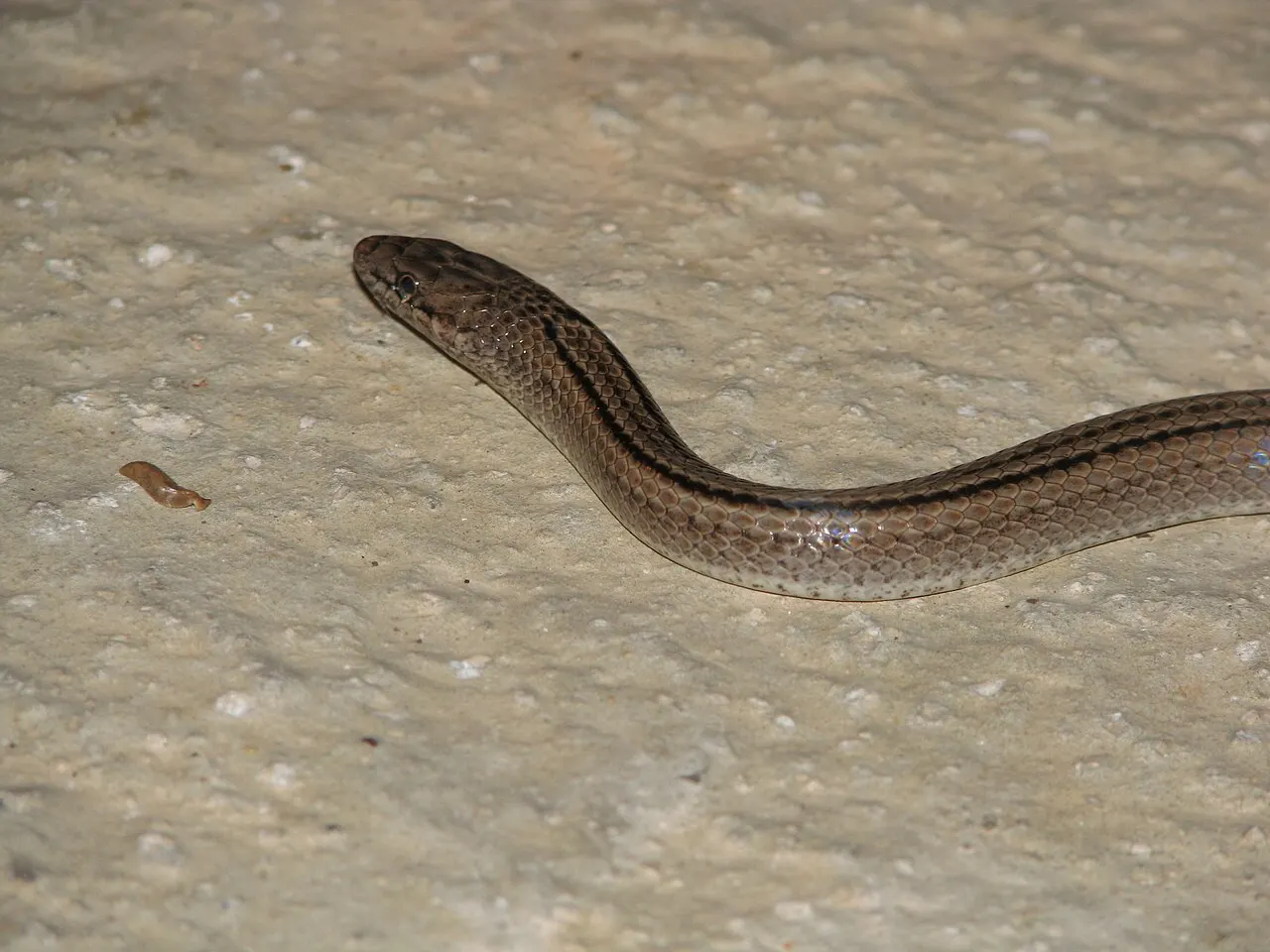
The three-scaled ground snake (Erythrolamprus triscalis) lives on the Caribbean island of Curaçao and nowhere else that is firmly documented. The IUCN Red List rated it Endangered in 2016. It is an egg-laying snake whose range is squeezed by housing development and by people killing snakes.
How to recognise it
It's a snake with tan or light brown colouring, marked with darker brown lines. It belongs to a genus often called false coral snakes, and many members of that genus are believed to have colours that mimic venomous coral snakes.
Linnaeus described it in 1758 under the name Coluber triscalis. The original specimen's locality was recorded only as "Indiis", and the type specimen is thought to be lost, which is why the snake's true range was long muddied. Records from mainland South America are considered doubtful. Its name in Papiamento is Colebra di Kòrsou.
Where it lives
The snake is known from Curaçao, an island in the Kingdom of the Netherlands in the southern Caribbean. The 2016 Red List assessment places it in dry tropical shrubland and dry tropical forest, and counts it at between one and four locations. At least one of those lies inside a protected area.
Pins are Wikidata “endemic to” fields. Orange dots, when present, are GBIF occurrence tiles — survey bias included.
How it lives
It lays eggs. Its diet is reported to include large insects, mice, small rats and lizards, which it constricts before swallowing whole. After a big meal it sometimes stays immobile for up to two weeks. Detailed studies of its behaviour on Curaçao appear to be scarce, and the Red List lists its population trend as unknown.
Why it is in trouble
The 2016 assessment records the area it occupies as still shrinking. Its listed threats are housing and urban development, which replaces dry scrub and woodland, persecution (people killing snakes), and an unspecified species. Habitat conversion, habitat degradation, deaths and competition are listed as the stresses these cause. The Endangered rating rests on criterion B1ab(iii): a small range, few locations and ongoing habitat decline.
What is being done
The assessment lists awareness and communication work and national-level action as responses. The main safeguard recorded is that part of its range lies within a protected area.
Sources
Written for this catalog in our own words from the sources below, checked against them on 12 November 2026. Population figures are estimates and carry the year they were made. Status and assessment year: IUCN. 2026. The IUCN Red List of Threatened Species. Version 2026-1. iucnredlist.org.




