Critically Endangered
Nuñez' Tree Iguana
Liolaemus curis
Liolaemus curis, known in Chile as the lagarto negro or black lizard, is a rock-dwelling lizard found only in the high Andes of the O'Higgins Region. The 2017 Red List assessment rates it Critically Endangered, with a tiny occupied area and a declining population.
How to recognise it
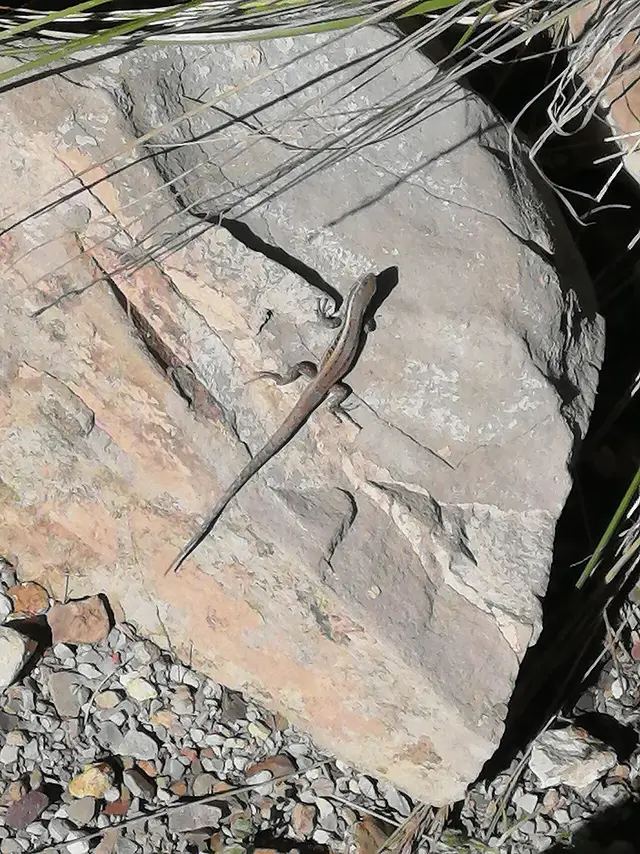
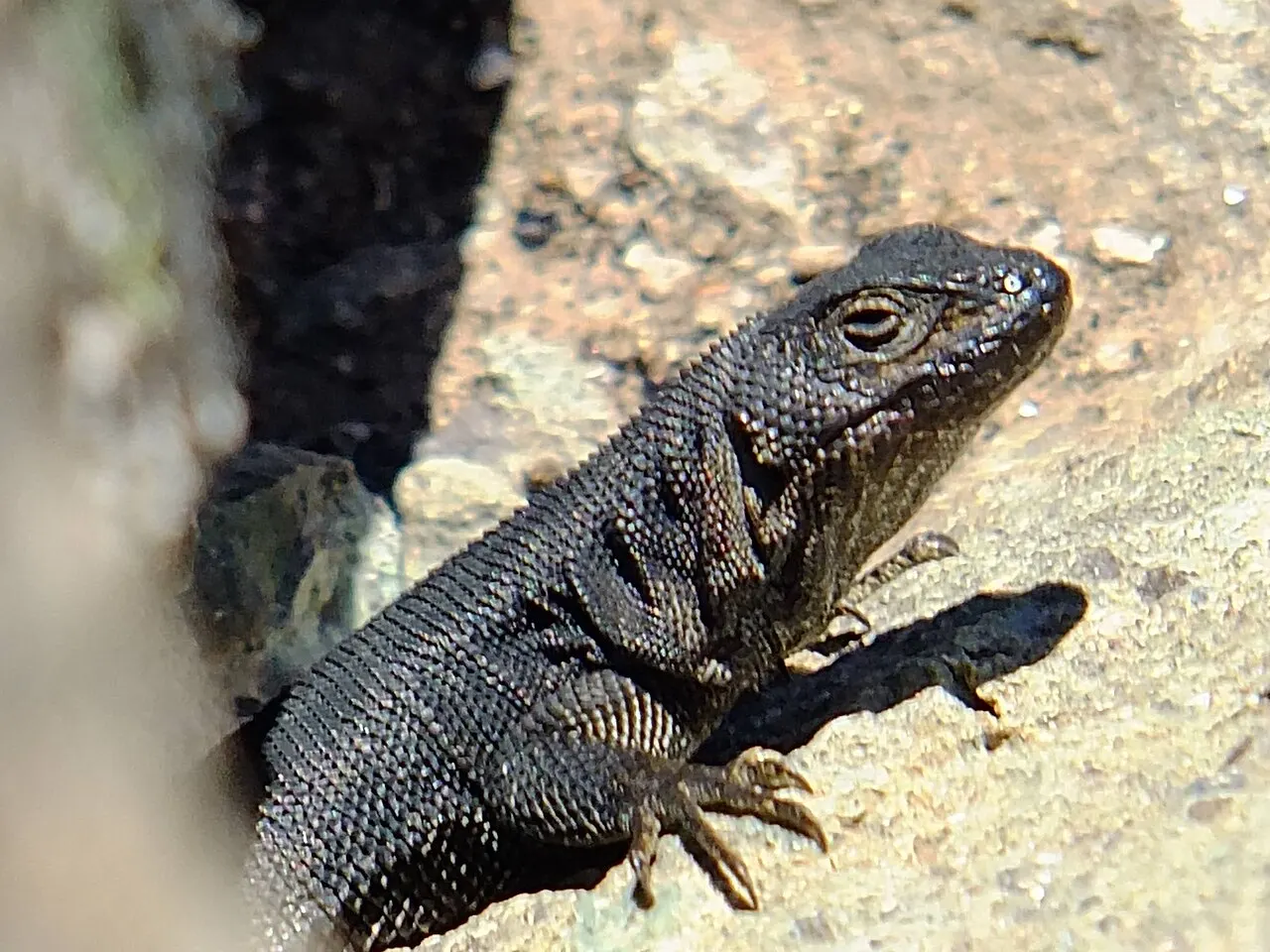
It is a large lizard for its group, reported at about 87 mm from snout to vent in the 1985 species description. Adults are dark overall, though the pattern varies: the back carries two rows of short, dark brown or blackish bars, and the stripe along the spine is paler than the rest of the back. Some adults are blackish across almost the whole back.
The scales are small and keeled. Males have between none and two pores in front of the vent. The species name comes from kurü, a Mapudungun word for black.
Where it lives
The type locality is the Termas del Flaco area and the Las Damas river, in mountains inland from San Fernando. It lives on slopes both north and south of the Las Damas river, which joins the Azufre river to form the Tinguiririca. Some accounts list it along the Tinguiririca, but a 2015 paper in the Boletin del Museo Nacional de Historia Natural says it does not actually occur on that river's banks.
Earlier records put it between about 1,520 and 2,100 metres. The Red List gives 1,520 to 3,000 metres. A later find at the Los Humos stream lay 14 kilometres north of the type locality, and in the 2015 paper a survey team found it at 2,600 metres beside Laguna San Jose, 28 kilometres north of the type locality. The habitat there was low high-altitude scrub on steep, rocky slopes with medium-sized rocks. The Universidad Glacier lies further north, and surveys beyond it have not turned up the species.
Pins are Wikidata “endemic to” fields. Orange dots, when present, are GBIF occurrence tiles — survey bias included.
How it lives
It is shy, fleeing from people at about 4 metres. Activity peaks twice a day, around midday and again near 17:00. It lives among rocks of varied size, eats insects and gives birth to live young, with five in a litter reported.
Why it is in trouble
The Red List assessment estimates the area where it is found at about 8 square kilometres, within an extent of about 10 square kilometres, and treats all of it as a single location. The occupied area is shrinking. The one threat recorded is renewable energy development, which the assessors rate as affecting the whole population and causing very rapid declines. The 2015 paper names hydroelectric projects on small streams feeding the Cachapoal and Tinguiririca rivers, which involve moving and removing the rocky ground the lizard depends on.
The Red List records no protected area within its range.
What is being done
The assessment lists species recovery, captive breeding and benign introduction among the actions needed, and calls for research toward a species recovery plan. Chile had already classed the lizard as Critically Endangered under its own regulation in 2014. After recording the northern extension, the 2015 paper suggested that Chile's scientific committees review whether that classification still fits, while naming hydropower as the main threat to weigh.
Sources
Written for this catalog in our own words from the sources below, checked against them on 12 November 2026. Population figures are estimates and carry the year they were made. Status and assessment year: IUCN. 2026. The IUCN Red List of Threatened Species. Version 2026-1. iucnredlist.org.