Endangered
Mackenzie Skink
Oligosoma prasinum
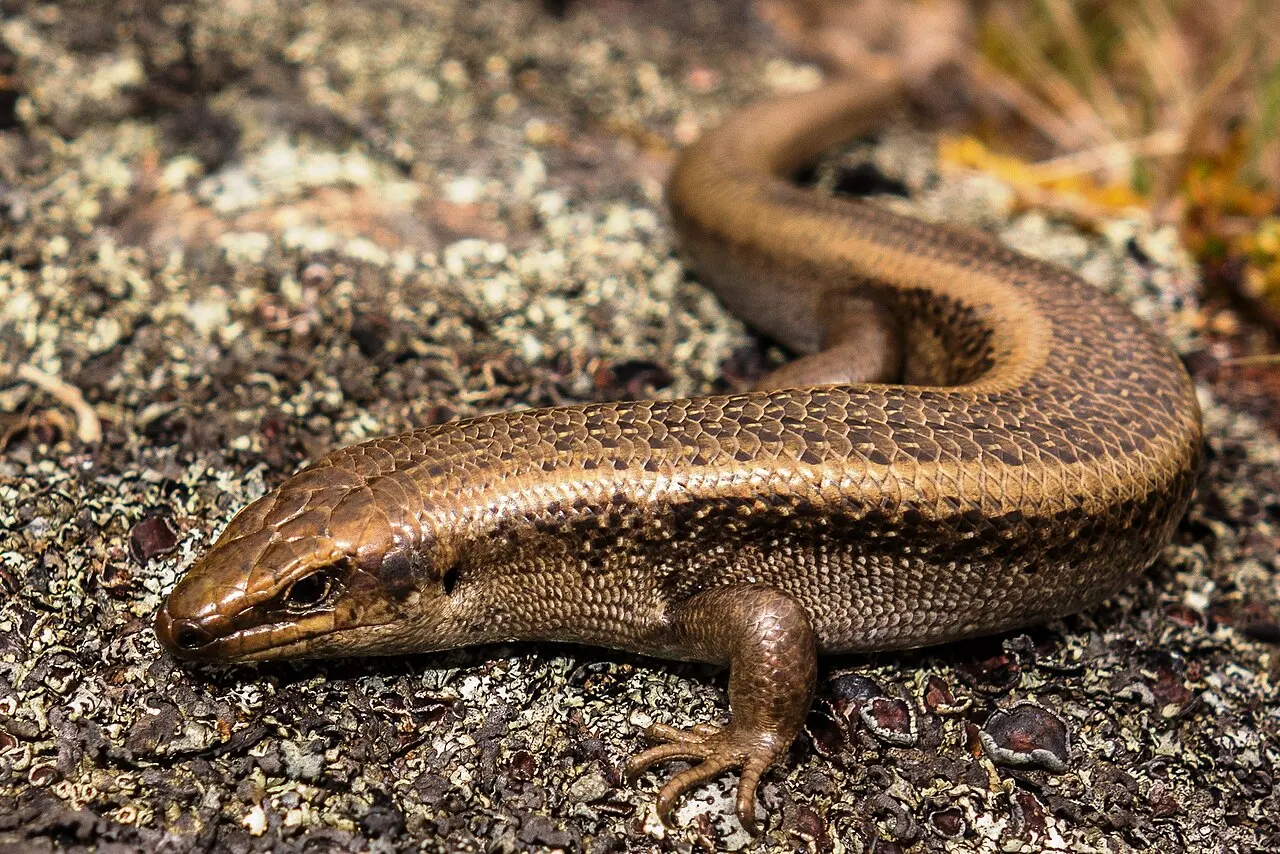
The Mackenzie skink (Oligosoma prasinum) is a large, olive-green lizard found only in the Mackenzie Basin on New Zealand's South Island. It was formally described in 2017. The IUCN Red List classes it as Endangered (assessed 2018, published 2019), with a decreasing population and a small, fragmented range.
How to recognise it
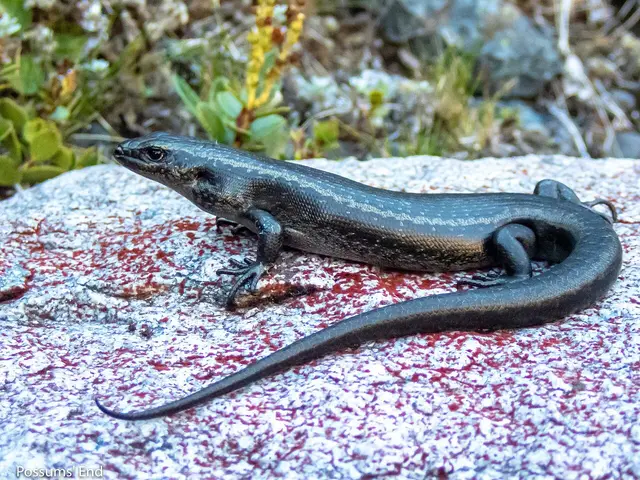
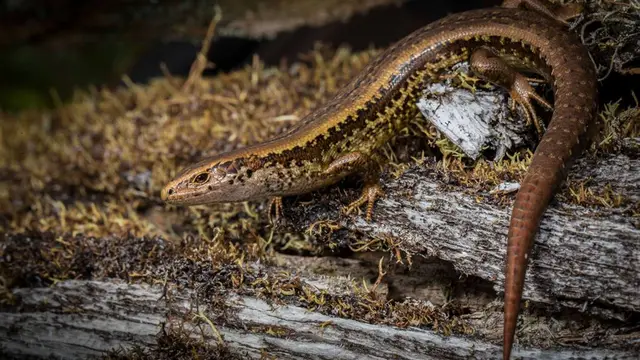
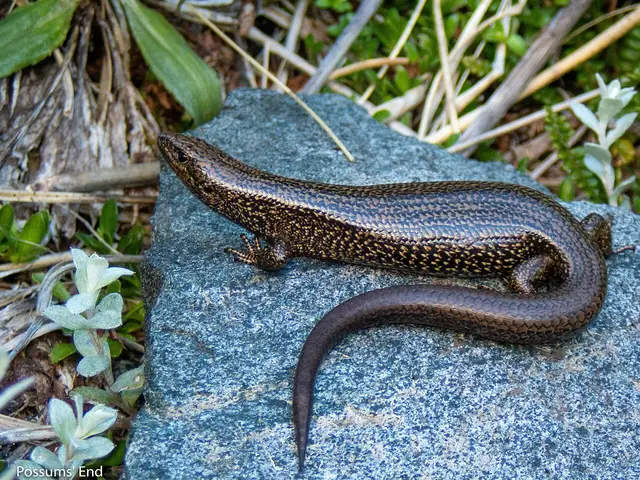
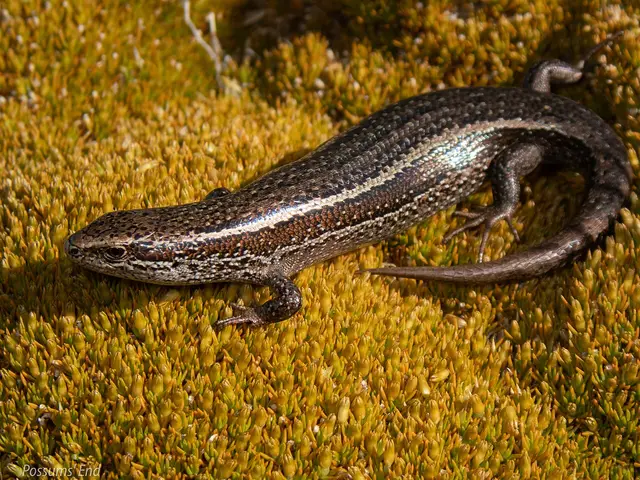
This is a big skink by New Zealand standards. The largest specimen measured in the 2017 description had a snout-to-vent length of 94 mm, and the tail is longer than the body. The back is grey-green, olive or brown, usually olive green with light and dark flecks and pale dots (ocelli), and with no stripe down the middle. Pale and brown stripes run along the sides. The belly is grey, sometimes flushed pink.
Separating it from relatives comes down mainly to scale counts, a job for specialists. It usually has more than 24 lamellae under the toes and can have fewer than six upper eyelid scales, and it is less heavily built than the related Oligosoma elium. The tail is usually unmarked or lightly speckled, and the side stripes grow faint toward its base.
Where it lives
The species is known from the Mackenzie Basin, a high, dry inland basin of the South Island. The type specimens come from Mount Hay near Tekapo. Its range runs roughly from the Rangitata River to Lake Pukaki, and it may reach further south in Canterbury, though survey work would be needed to confirm that. The IUCN estimated its extent of occurrence at 1,561 square kilometres.
It is active by day and lives on the ground in open, sunny places: temperate grassland, tussock, rock piles and scree. It shelters under rocks, logs and dense plants.
Pins are Wikidata “endemic to” fields. Orange dots, when present, are GBIF occurrence tiles — survey bias included.
How it lives
Mackenzie skinks eat invertebrates, berries and other fruit, and nectar from native plants. They give birth to live young. Breeding details haven't been studied for this species, but its relative the Canterbury spotted skink has one to three young between February and March, and the Mackenzie skink is thought to be similar. Mites have been recorded on wild animals.
Why it is in trouble
Until 2017 these lizards were treated as part of the spotted skink complex. The IUCN lists the population as decreasing and severely fragmented, with habitat still shrinking. Habitat modification and predation by introduced mammals, including rodents, mustelids (the weasel family), hedgehogs and cats, are the concerns named by the New Zealand Herpetological Society.
The IUCN assessment records no recovery plan, no systematic monitoring scheme, no protected-area occurrence and no captive population, and lists invasive species control as a needed action. New Zealand's own threat classification, separate from the Red List, rates the skink Nationally Vulnerable, and the Herpetological Society states that it is not currently being managed.
Sources
Written for this catalog in our own words from the sources below, checked against them on 12 November 2026. Population figures are estimates and carry the year they were made. Status and assessment year: IUCN. 2026. The IUCN Red List of Threatened Species. Version 2026-1. iucnredlist.org.