Endangered
Leiocephalus varius
Leiocephalus varius
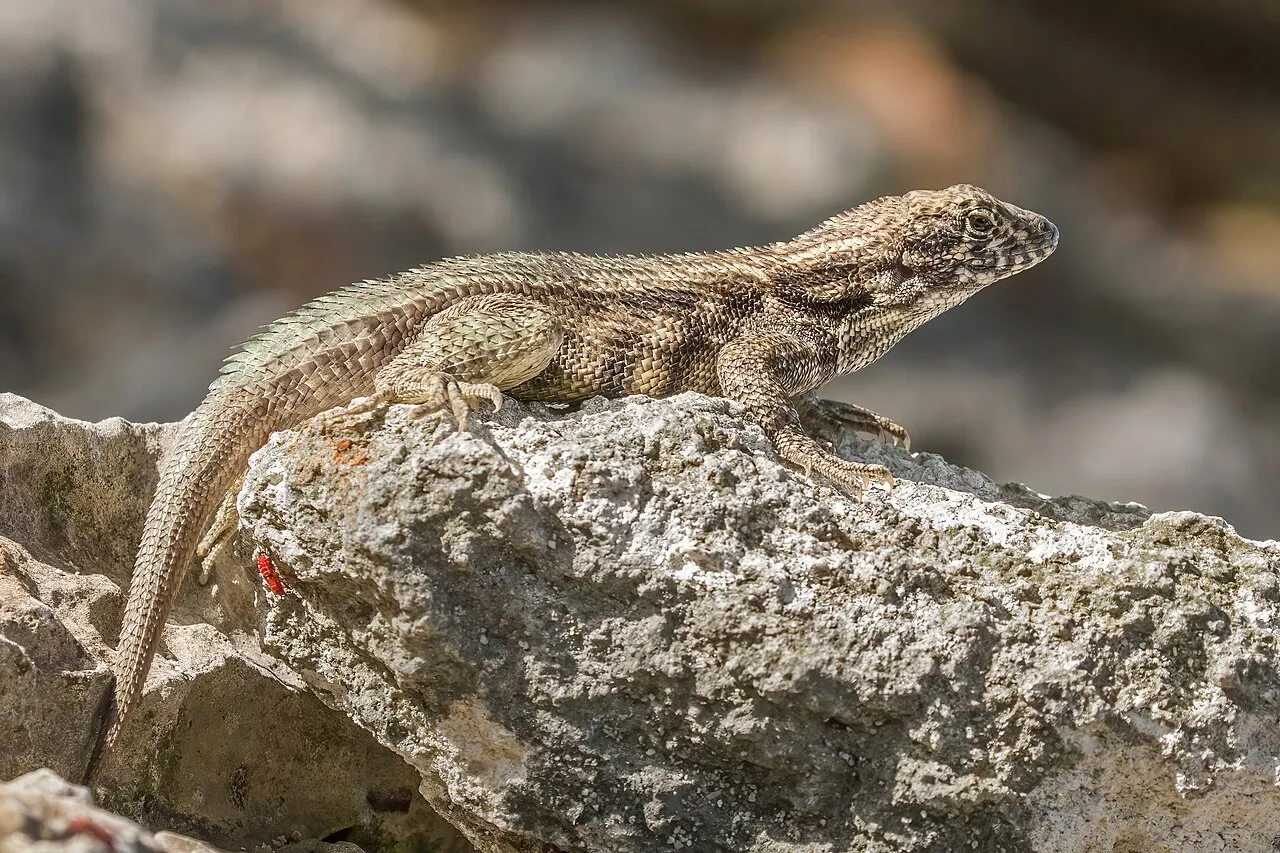
The Cayman curly-tailed lizard (Leiocephalus varius) is a sun-loving lizard of the Cayman Islands that carries its banded tail curled over its back. The IUCN Red List rated it Endangered in 2021 and records a declining population. It has also been introduced to Honduras.
How to recognise it
The long, banded tail, often curled up over the back, gives the group its name. Males reach roughly 130 mm from snout to vent and females are smaller. The body is brownish, greenish grey with bars and mottling, the underside is pale yellow, and the skin looks glossy but feels rough. Fully grown males have a bulkier head than females and a throat fan, though the fan is seldom seen.
Samuel Garman described it in 1887, with Grand Cayman as the type locality. For years it was treated as a subspecies of the saw-scaled curlytail (Leiocephalus carinatus), and some sources still do so. The Latin name varius means "different".
Where it lives
Its native range is the Cayman Islands. The Red List assessment gives three to five locations and lists habitats of dry tropical forest, rocky areas and rocky shoreline. A Cayman wildlife conservation page describes it in gardens and on beaches, including built-up areas, usually close to the shore with rocks nearby for cover.
The Reptile Database records an introduced population in Honduras, and the Red List assessment includes the Honduran Caribbean islands.
Pins are Wikidata “endemic to” fields. Orange dots, when present, are GBIF occurrence tiles — survey bias included.
How it lives
It warms itself in the sun by day before hunting insects, and buries itself in sand to sleep at night. Females lay small batches of eggs, perhaps three, usually stuck to rocky surfaces, and may lay more than once in a season. Hatchlings turn up in July, August and September and have a bright orange throat that fades within three or four days. Animals fed by people can become very tame, and prefer high-protein food such as egg, cheese or meat.
Why it is in trouble
The Red List assessment gives the population trend as decreasing and the rating criterion as B1ab(v), a restricted range with a continuing decline in the number of mature animals. It names housing and urban development and a named species as threats. The Cayman wildlife page says housecats are a particular danger to the lizard. No population size has been published.
Sources
Written for this catalog in our own words from the sources below, checked against them on 12 November 2026. Population figures are estimates and carry the year they were made. Status and assessment year: IUCN. 2026. The IUCN Red List of Threatened Species. Version 2026-1. iucnredlist.org.




