Endangered
Brookesia peyrierasi
Brookesia peyrierasi
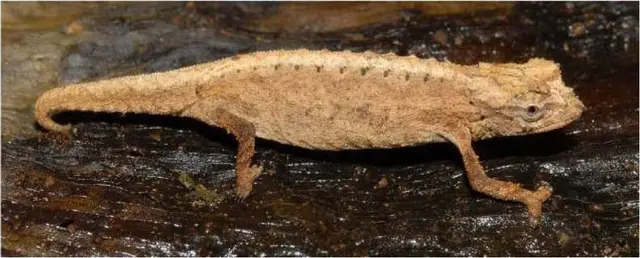
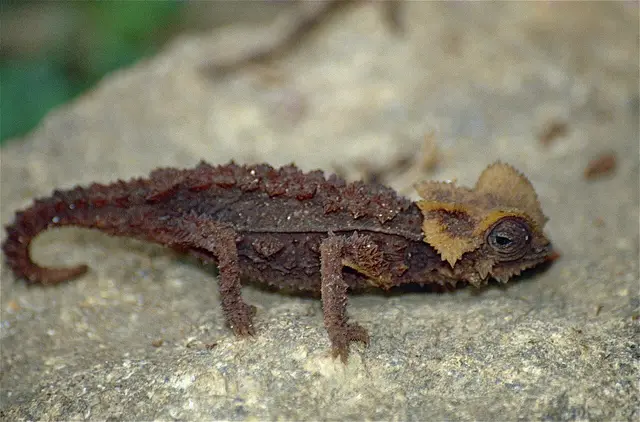
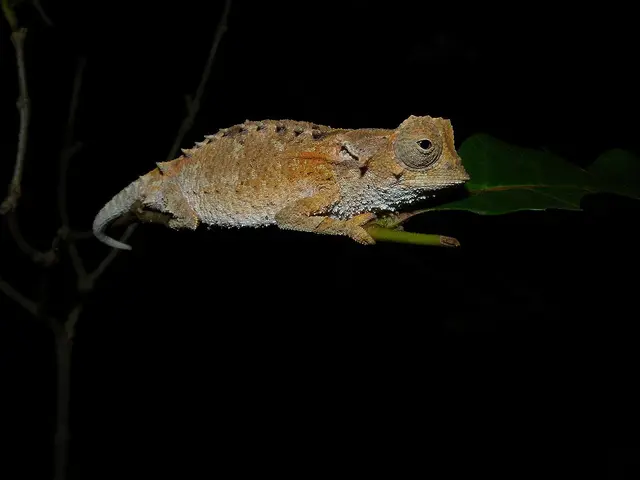
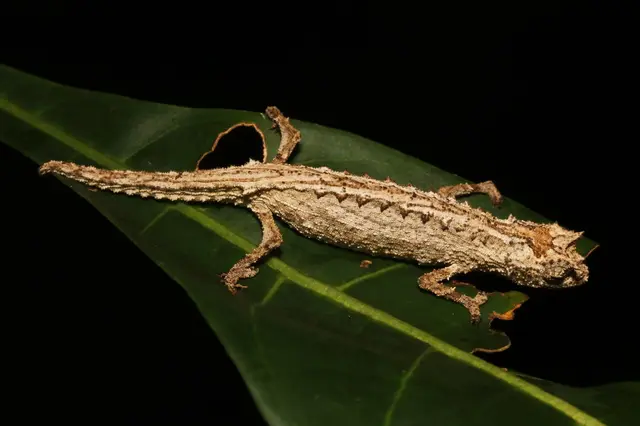
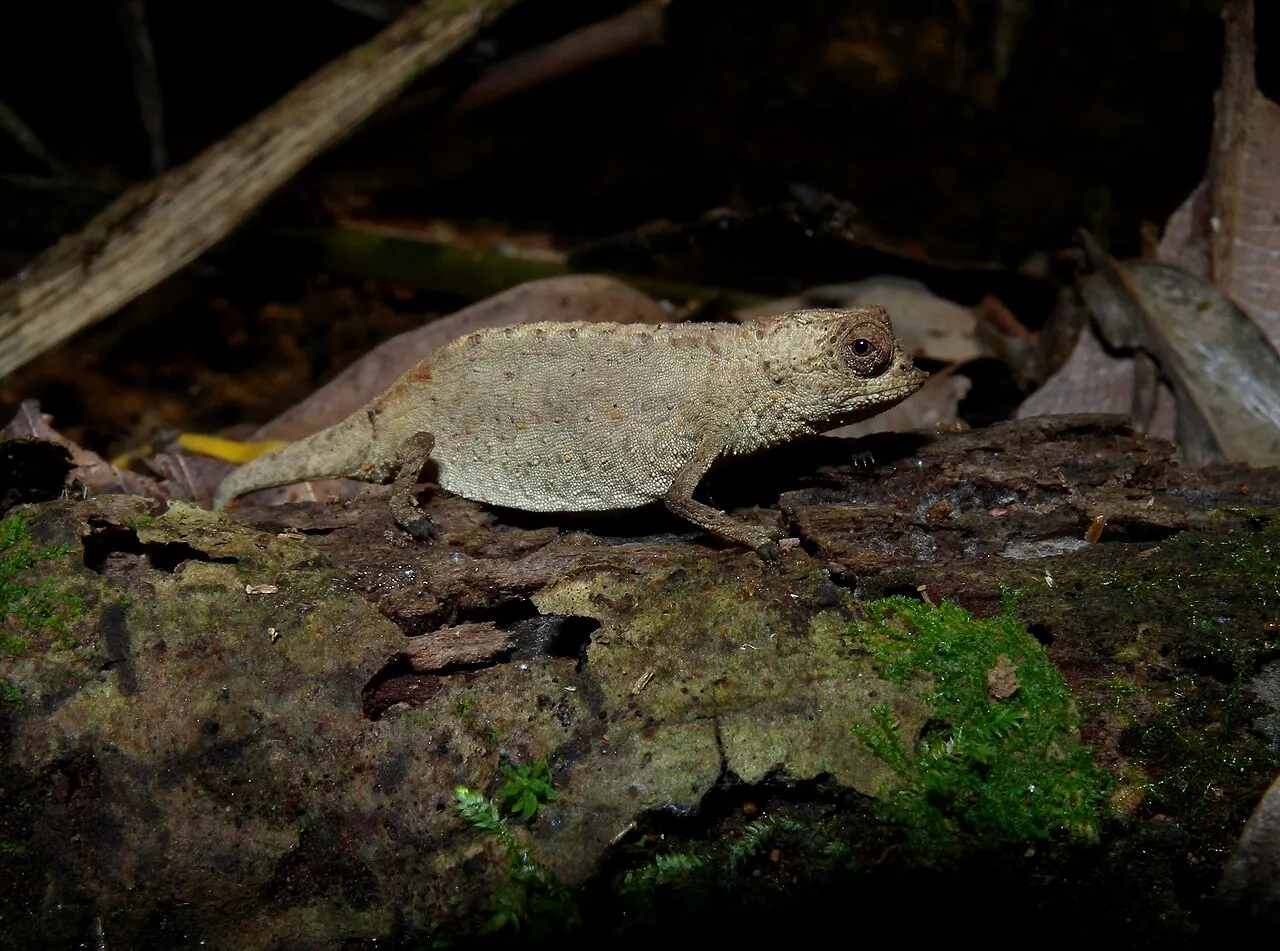
Peyrieras's pygmy chameleon (Brookesia peyrierasi) is a tiny rainforest chameleon from north-eastern Madagascar. The IUCN assessed it as Endangered in 2014, after an earlier Vulnerable listing in 2011, because its forest is shrinking and fragmented. Adults measure only about 4 centimetres and live on the forest floor.
How to recognise it
This is a dwarf among chameleons. Total length, tail included, is usually 32 to 44 millimetres, and males average about 40 millimetres, with females a little smaller. Both sexes are a bright beige.
Unlike many relatives it has no crest down the back, only enlarged scales along each side of the spine where a crest would sit. Males carry a small bony projection above the eye, and some animals have a tiny bump on the hip. A 1999 study in the Journal of Zoology separated it from the similar Brookesia minima and Brookesia tuberculata using details of the hemipenes, head crests and tiny spines above the eyes.
Where it lives
It is endemic to the north-east coast of Madagascar. The type locality is Nosy Mangabe, a forested island in Antongil Bay that is part of Masoala National Park, and records also exist from the Maroansetra area and Anandrivola. The IUCN puts its extent of occurrence at roughly 3,774 square kilometres.
Animals reported from the Makira massif may belong to a different species, so the limits of its range are not settled. The first specimen was found in 1969 by the French entomologist Andre Peyrieras in the Fantanendra forest, just north of Maroantsetra. Brygoo and Domergue described and named it for him in the mid 1970s. A 1995 revision folded it into B. minima, and the 1999 study restored it as a species.
Pins are Wikidata “endemic to” fields. Orange dots, when present, are GBIF occurrence tiles — survey bias included.
How it lives
It lives in lowland rainforest that stays very humid all year. It favours mossy ground between fallen leaves and dead wood, especially around the bases of big trees. It lays eggs. Little else about its daily life is documented.
Why it is in trouble
The 2014 assessment (criterion B1ab(iii)) records a decreasing population in a fragmented range, with the forest area still shrinking. The listed pressures are small-holder farming, shifting agriculture, mining and quarrying, and unintended harm from small-scale harvesting. The severity and scope of each were rated unknown, so how fast numbers are really falling is unclear.
What is being done
It occurs in at least one protected area, and the IUCN lists site management and habitat protection as the needed actions. At the time of the assessment there was no recovery plan and no systematic monitoring scheme. International trade is regulated. A chameleon specialist site reports that the CITES export quota was 150 animals a year for 2014 to 2016, 250 in 2017, and zero from 2018 onward.
Sources
Written for this catalog in our own words from the sources below, checked against them on 12 November 2026. Population figures are estimates and carry the year they were made. Status and assessment year: IUCN. 2026. The IUCN Red List of Threatened Species. Version 2026-1. iucnredlist.org.