Endangered
Quince monitor
Varanus melinus
The quince monitor (Varanus melinus) is a bright yellow monitor lizard from the Maluku islands of Indonesia, most likely the Sula Islands. The IUCN Red List assessed it as Endangered in 2021, with its numbers decreasing. Its striking colour has made it a target for collectors.
How to recognise it
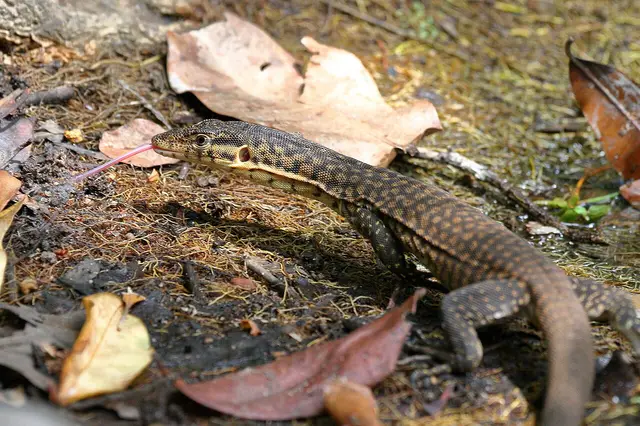
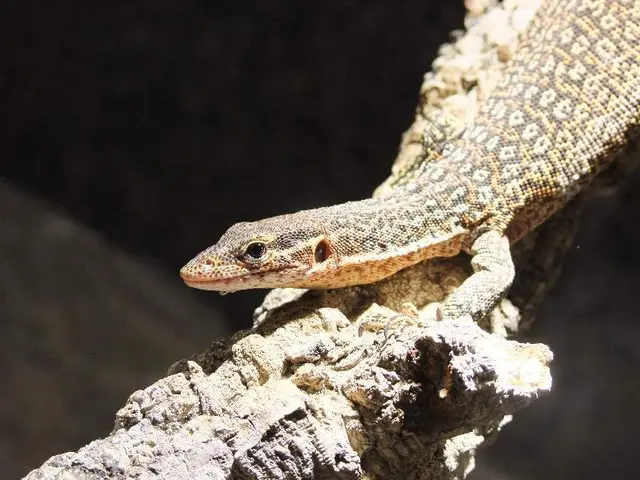
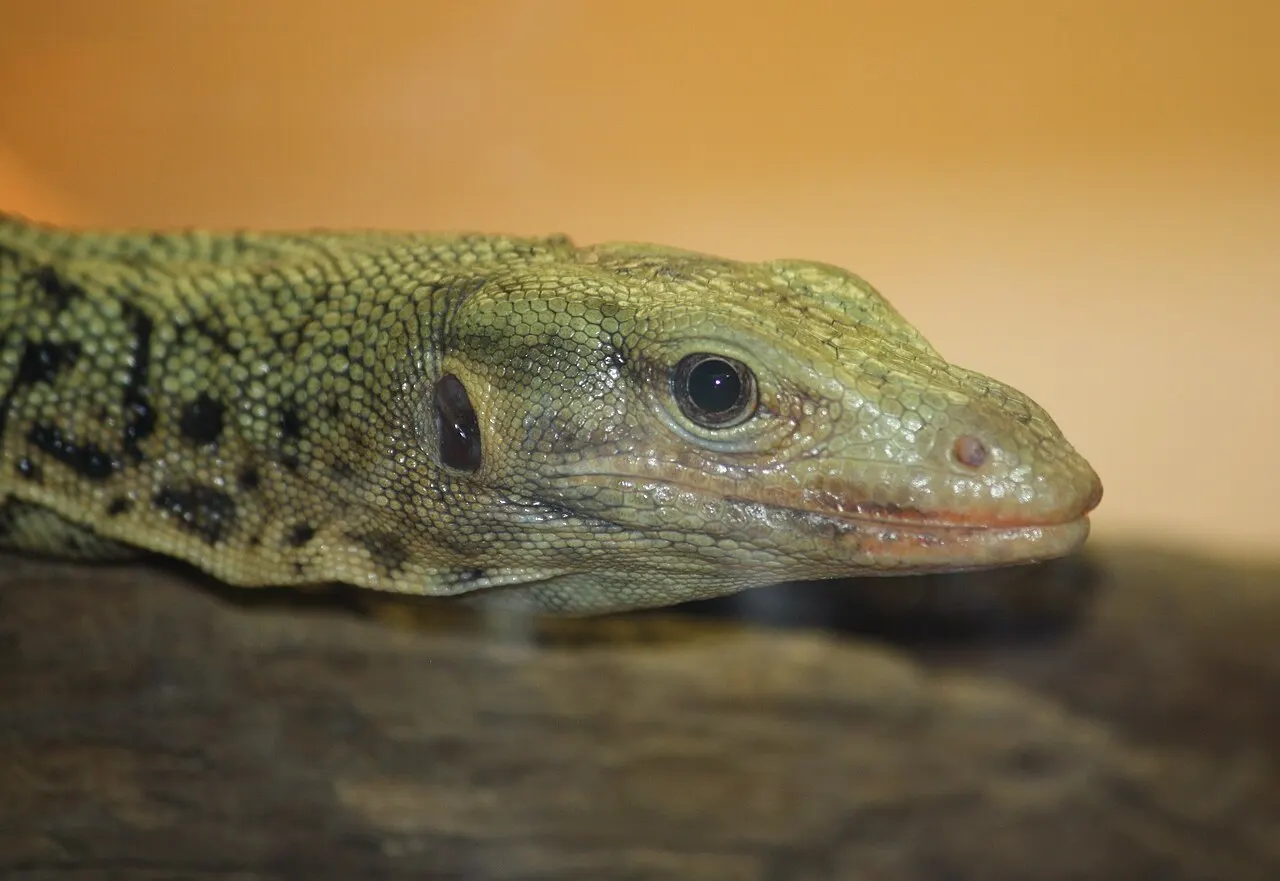
This is a medium-sized monitor, usually 80 to 120 cm long including the tail. A 20-year-old male in Cologne Zoo reached 129 cm. The head, legs, back and tail are a vivid yellow, with black marking across the lower neck and a tail banded in yellow and black. The bands fade over the last third of the tail.
Young animals are darker and turn brighter yellow as they age. The tongue is light pink. It belongs to the mangrove monitor group (subgenus Euprepiosaurus) and is a close relative of the mangrove monitor, Varanus indicus, but its yellow ground colour sets it apart. It was formally described in 1997 by Wolfgang Bohme and Thomas Ziegler, and it lays eggs.
Where it lives
The species is endemic to Indonesia. It is thought to be restricted to the Sula Islands of North Maluku, and it has reportedly been recorded on the Banggai Islands too, though that is not firmly established. An early report of Obi as its home came about because Obi was only a stop on the wildlife trade route. The reptile database still lists Obi as the type locality, so the older record has not entirely disappeared from the literature.
The IUCN counts just two locations. It records the lizard from sea level up to 1,100 m, in swamp forest and in mangrove vegetation above the high tide line. Quince monitors are terrestrial, and the assessment treats them as non-migratory.
Pins are Wikidata “endemic to” fields. Orange dots, when present, are GBIF occurrence tiles — survey bias included.
Why it is in trouble
The 2021 assessment, under criterion B1ab(iii,v), judges the range small and the habitat and population still declining. Small-holder farming converts and degrades its forest, and animals are taken directly, both on purpose and by accident during local subsistence harvest.
Collection for the pet trade is the concern most often raised. Germany put a proposal to a CITES conference of the parties to move the species from Appendix II to Appendix I, arguing that its range was very restricted. It is still listed in Appendix II today, which regulates but does not ban international trade. The IUCN assessment gives no population estimate.
What is being done
The IUCN lists resource and habitat protection as the action needed, and records that the lizard is not known to occur in any protected area. On 8 March 2025, Maluku's natural resources conservation agency (BKSDA) released 15 quince monitors into a village forest in Waibau, Sanana District, Sula Islands, after moving them from its Ternate office by boat. The agency said it will continue patrols, work with law enforcement against illegal wildlife trade, and step up education in nearby communities.
Sources
Written for this catalog in our own words from the sources below, checked against them on 12 November 2026. Population figures are estimates and carry the year they were made. Status and assessment year: IUCN. 2026. The IUCN Red List of Threatened Species. Version 2026-1. iucnredlist.org.