Endangered
Peacock monitor
Varanus auffenbergi
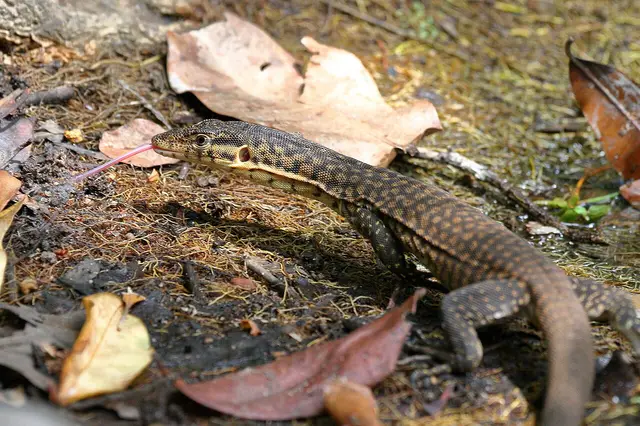
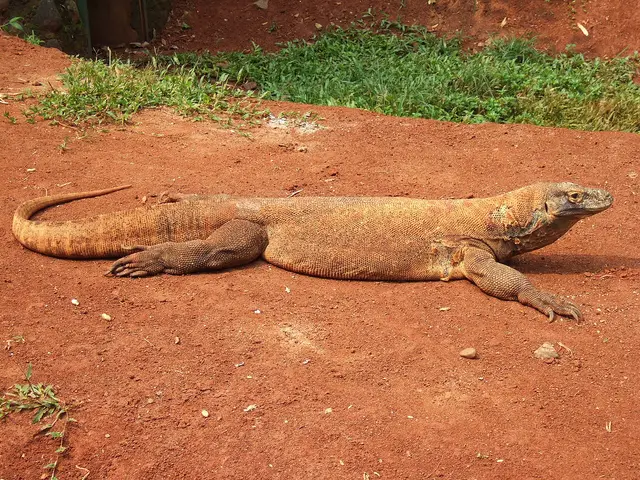
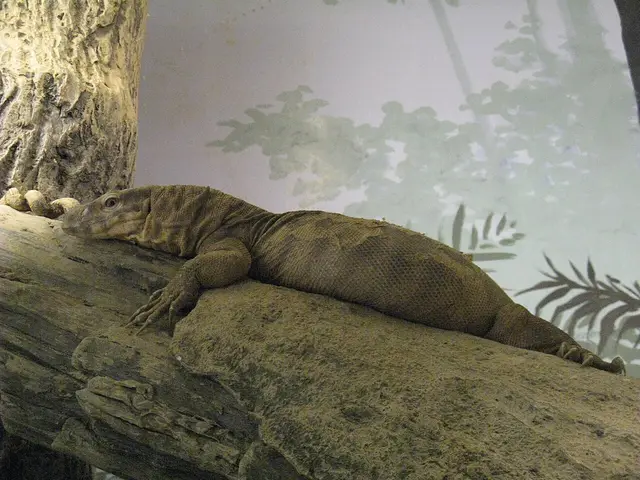
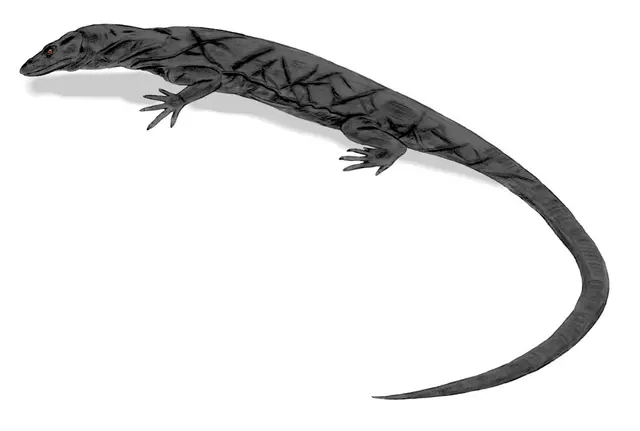
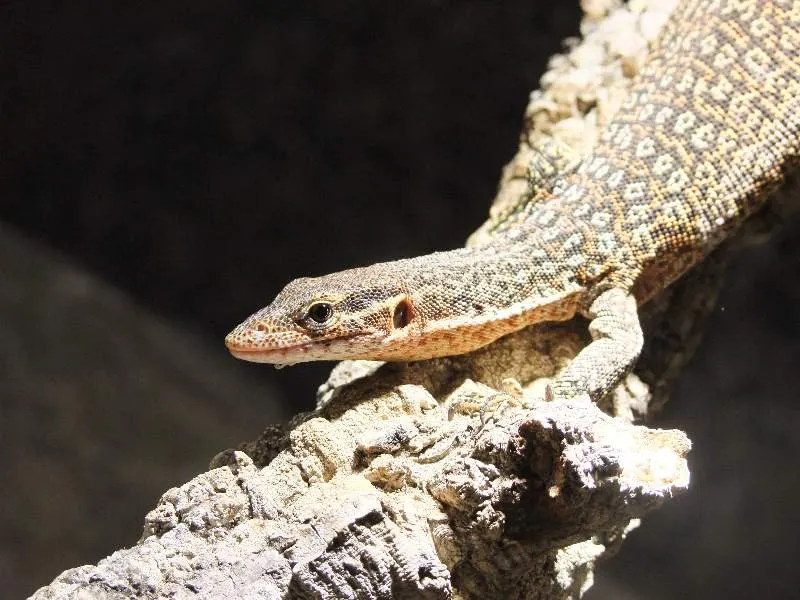
The peacock monitor (Varanus auffenbergi), also called Auffenberg's monitor, is a small monitor lizard found only on Rote Island in Indonesia. The IUCN Red List rates it Endangered (2021 assessment, population decreasing), with a very small range and a pet trade that draws on wild animals.
How to recognise it
It's a small monitor, usually about 60 cm long. The back is dark gray, marked with many blue-gray eye-like spots with lighter blue to gray centres. It looks much like the Timor monitor, but its spots are blue-gray where the Timor monitor's are cream, and the underside colours and patterns differ. The markings fade as the animal matures. It was formally described by Sprackland in 1999 and named for the herpetologist Walter Auffenberg.
Where it lives
Rote is a dry island of about 1,280 square kilometres in the Lesser Sunda Islands, southwest of Timor. It is covered mostly by grassland and palms, with some savanna, acacia and forest. Most rain falls between November and March, and in the long dry season many streams dry up.
The IUCN gives the monitor's extent of occurrence as about 1,200 square kilometres, at elevations up to about 400 m, and counts 1 to 4 locations. Its listed habitats are plantations and urban areas, which suggests it copes with some human-modified land. In the wild it climbs palm trunks and basks in the crowns.
Pins are Wikidata “endemic to” fields. Orange dots, when present, are GBIF occurrence tiles — survey bias included.
How it lives
It lays eggs and is described as calmer and shyer than many monitors, a trait that reportedly carries over in captivity. Beyond that, its diet, breeding season and daily habits in the wild are poorly documented.
Why it is in trouble
The IUCN assessed it as Endangered in 2021 under criterion B1ab(v): a small range, very few locations and a continuing decline in numbers. The one threat listed is intentional taking of the animals, and the species is recorded as used in the pet and display trade. The assessment says it does not occur in any protected area, and no population count has been published.
Some older web pages still give a Data Deficient status, which is out of date.
What is being done
Trade management and harvest management are the actions the IUCN lists, and the record notes the species is covered by international legislation and trade controls. Research needs include population size, distribution and trends, trade trends and taxonomy.
Sources
Written for this catalog in our own words from the sources below, checked against them on 12 November 2026. Population figures are estimates and carry the year they were made. Status and assessment year: IUCN. 2026. The IUCN Red List of Threatened Species. Version 2026-1. iucnredlist.org.