Endangered
Jamaican Sharp-nosed Geckolet
Sphaerodactylus oxyrhinus
The Jamaican sharp-nosed geckolet (Sphaerodactylus oxyrhinus) is a tiny forest lizard found only on the island of Jamaica. The IUCN Red List assessed it as Endangered in 2016. Its range is small, it appears to depend on bromeliads, and farming is eating into its forest.
How to recognise it
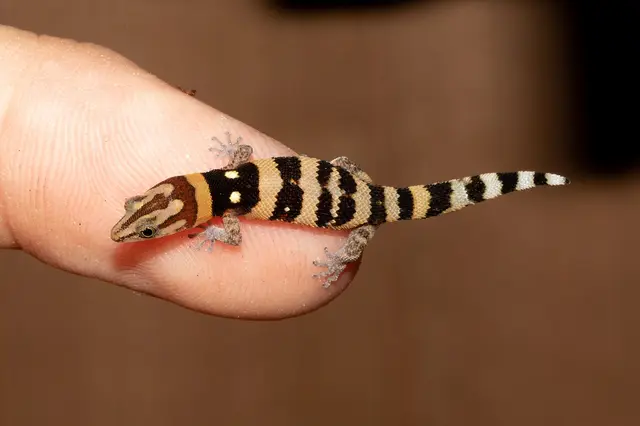
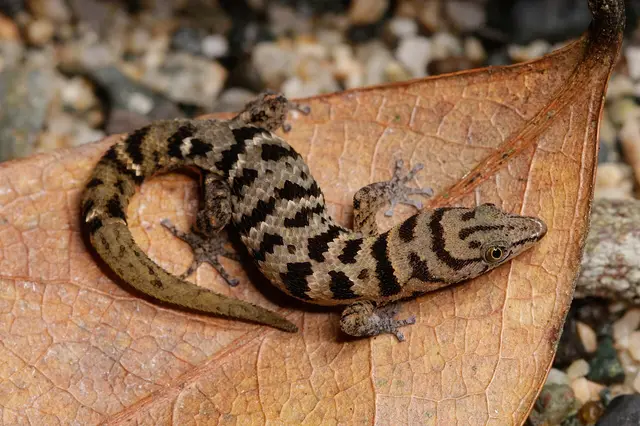
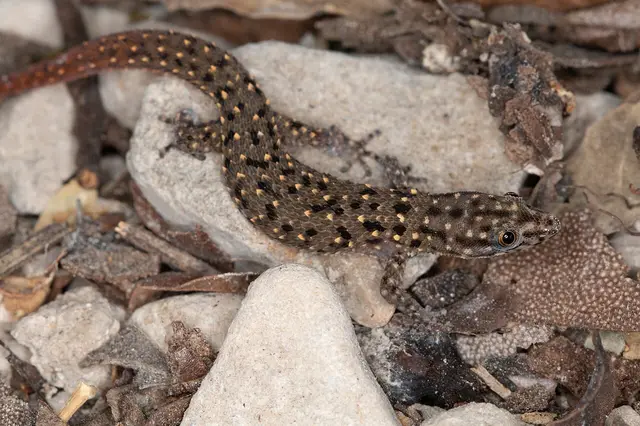
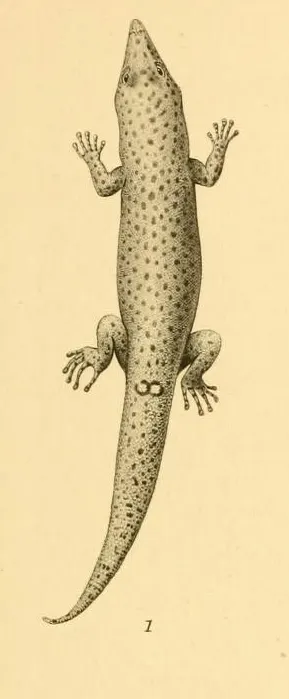
It's one of the dwarf geckos, a group of very small lizards in the family Sphaerodactylidae. This one reaches a snout-to-vent length of just over 30 mm. A website on the Cockpit Country's wildlife describes it as colourful, with a bluish head, a yellowish body mottled with brown, an orange tail and bright yellow eyes.
Philip Henry Gosse described the species in 1850. A lizard once treated as its subspecies, S. dacnicolor, is now generally regarded as a separate species, so older accounts can blur the two.
Where it lives
It's endemic to Jamaica. The Reptile Database gives the range as western Jamaica, with the type locality in St. Elizabeth Parish. The Cockpit Country website says the animal also occurs in the northeast of the island, though that may reflect the older, wider concept of the species.
The IUCN treats the whole population as a single location, with a total range of about 354 square km, between roughly 60 and 557 m above sea level. Its habitat is moist lowland forest, and it occurs in at least one protected area.
Pins are Wikidata “endemic to” fields. Orange dots, when present, are GBIF occurrence tiles — survey bias included.
How it lives
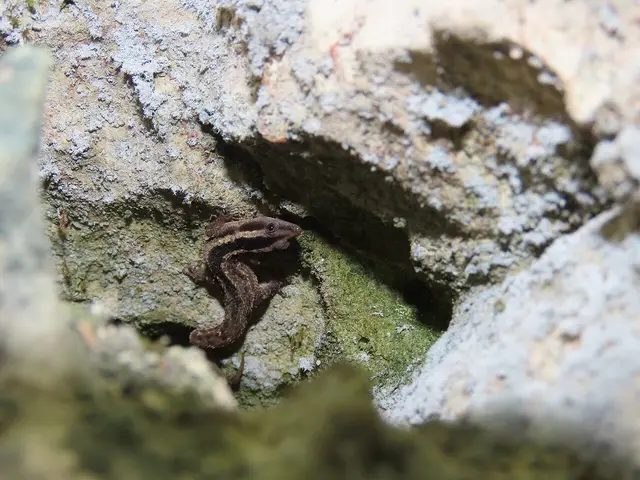
Little has been written about its life. The Cockpit Country website says it is rarely found anywhere other than in bromeliads, the water-holding plants that grow on trees. It lays eggs.
Why it is in trouble
The IUCN names small-holder farming as the threat, through conversion and degradation of its forest. It rates the population trend as decreasing and the area of habitat as continuing to shrink. No population size has been published.
What is being done
The assessment lists site management and national-level action as the conservation measures needed, and records that the lizard lives inside at least one protected area. No recovery plan or monitoring programme for the species is documented.
Sources
Written for this catalog in our own words from the sources below, checked against them on 12 November 2026. Population figures are estimates and carry the year they were made. Status and assessment year: IUCN. 2026. The IUCN Red List of Threatened Species. Version 2026-1. iucnredlist.org.