Endangered
Linhares Whiptail
Ameivula nativo
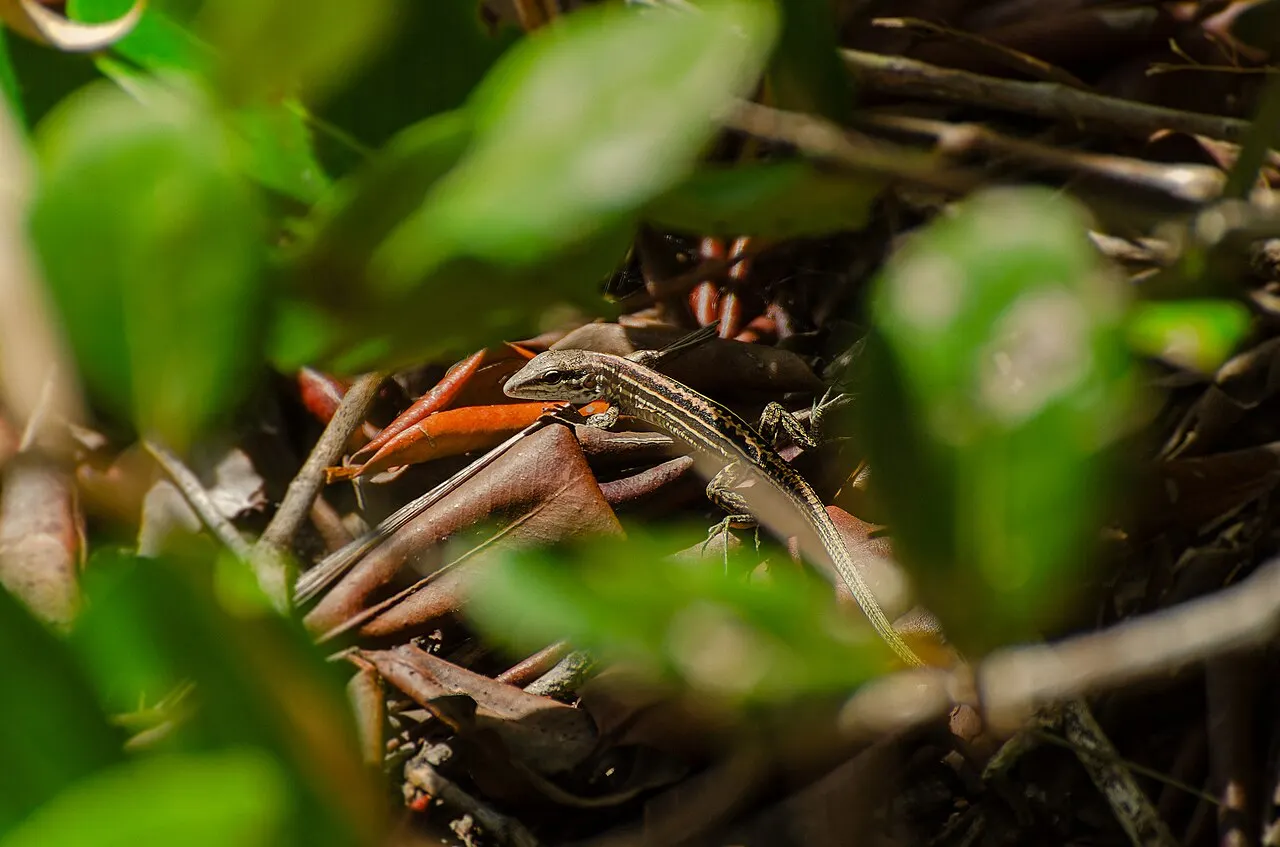
Ameivula nativo, the Linhares whiptail, is a small striped lizard from the coastal plains of eastern Brazil, in Espirito Santo and Bahia. It is parthenogenetic, so every animal is female and reproduces without mating. The IUCN rated it Endangered in 2021, mainly because its sandy shrubland habitat is being built over.
How to recognise it
It's a small teiid lizard, with adults measuring 60 to 70 millimetres from snout to vent. The diagnosis describes two vivid white stripes on each side of the back, a deep black field between them, and a faint salmon-coloured stripe down the middle. The related Ameivula ocellifera has light blue spots and no mid-dorsal stripe, which helps tell the two apart.
Where it lives
The type locality is in the Reserva Florestal of the Vale do Rio Doce company near Linhares, in Espirito Santo, at a spot known locally as the Nativo do Paraju. The species name comes from the local term for the habitat, campo nativo, a small fragment of coastal restinga. The IUCN lists it from Bahia and Espirito Santo, in subtropical or tropical moist shrubland, and records that it occurs in at least one protected area.
A recent study of campo nativo habitat near Linhares found species that occurred only there, this lizard among them.
Pins are Wikidata “endemic to” fields. Orange dots, when present, are GBIF occurrence tiles — survey bias included.
How it lives
The population is parthenogenetic, meaning females reproduce without fertilisation, so no males exist. The Reptile Database notes the species may be a hybrid between two related whiptails, ocellifer and abaetensis, though it cannot be assigned to any species group with certainty. A review of 31 years of sandy coastal plain surveys says the species has an extended reproductive season and tends to reproduce once or twice a year. The IUCN gives a generation length of about 3 years.
Why it is in trouble
The Red List assessment (criterion A2c) names housing and urban development as the threat, which converts its shrubland habitat. The population trend is recorded as unknown, so the Endangered listing rests on habitat loss rather than on counted declines.
What is being done
The IUCN lists site and area protection and management, habitat protection, habitat restoration and awareness work as the actions needed. Brazilian researchers treat it as an endemic and endangered coastal plain species.
Sources
Written for this catalog in our own words from the sources below, checked against them on 12 November 2026. Population figures are estimates and carry the year they were made. Status and assessment year: IUCN. 2026. The IUCN Red List of Threatened Species. Version 2026-1. iucnredlist.org.




