Endangered
Mangshan pit viper
Mangshan pit viper
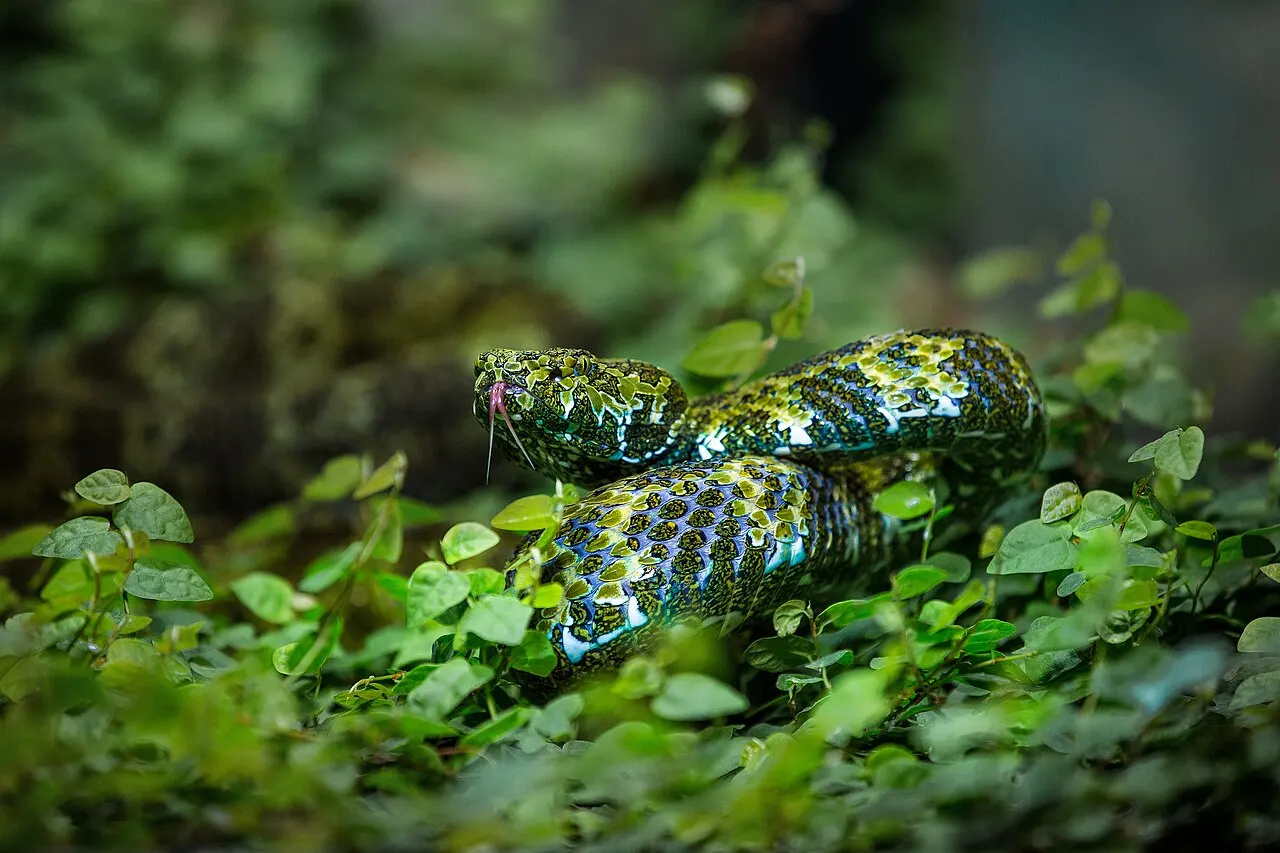
The Mangshan pit viper is a heavy, venomous snake from the mountain forests of Hunan and Guangdong in southern China, first described in 1990. It reaches about 2 m in length. The IUCN Red List rated it Endangered in 2022 because collecting has thinned a very small wild population.
How to recognise it
This is one of the largest pit vipers in Asia. Adults reach about 2 m and weigh roughly 2 to 5 kg, depending on the source. The tail ends in a white tip, which the snake reportedly wriggles like a grub to draw in prey, a trick known as caudal luring.
The venom is described as extremely toxic. It disrupts blood clotting and damages muscle and can kill a person if untreated.
Where it lives
The species is endemic to China and is known from Hunan and Guangdong. It was first found on Mount Mang (Mangshan) in Yizhang County, Hunan, in 1989, and that is its type locality. It lives in montane subtropical forest at roughly 800 to 1,300 m, reportedly sometimes using limestone caves, in a climate where winters come close to freezing.
The IUCN counts two locations and an extent of occurrence of about 300 square kilometres. A survey from 2007 to 2010, published in Oryx, found only eight snakes in the field and documented the illegal harvest of more than 30. It estimated the total population at 462 snakes in about 105 square kilometres of the Nanling Mountains.
Pins are Wikidata “endemic to” fields. Orange dots, when present, are GBIF occurrence tiles — survey bias included.
How it lives
It is mainly nocturnal and hunts by ambush, reportedly often lying beside animal trails or along lichen-covered logs. Frogs, birds, insects and small mammals have all been recorded as prey.
Unlike most vipers, it lays eggs. Clutches of 13 to 21 eggs are reported, and the female reportedly stays with them until they hatch.
Why it is in trouble
Collecting is the main pressure. The snake is sought for the international pet trade and as a local delicacy, and the IUCN rates this ongoing harvest as medium in impact, with a decreasing population. Large-scale accidental capture in earlier decades is also listed as a past cause of loss.
The Oryx study reported that the black-market price of a 2 to 4 kg snake rose from about USD 30 in 1990 to USD 7,000 in 1997, and that poaching continues inside the two nature reserves where the species lives. It also said only 17 individuals were seen between 1990 and 2000, three in the field and 14 in restaurants, illegal markets and villages. The most optimistic population estimate at that time, from 2000, was 300 to 500. Roads, small hydropower plants and tourism add pressure on the habitat.
What is being done
The IUCN lists habitat protection, site protection and action at national and international level as the needed responses, and records that captive breeding is under way. The snake lives in Mangshan and Nanling National Nature Reserves. It has been on CITES Appendix II since 12 June 2013, so international trade needs permits. When the Oryx survey was written, it was not yet listed.
Zoos outside China keep a managed population. The Bronx Zoo reported in 2023 that about 150 were held in American and European zoos and that it had hatched two young that August, its first time. Because the snake is dangerous, keeping one is a serious matter, and the exotic pet laws page (/exotic-pet-laws-by-state/) covers the rules.
Sources
Written for this catalog in our own words from the sources below, checked against them on 12 November 2026. Population figures are estimates and carry the year they were made. Status and assessment year: IUCN. 2026. The IUCN Red List of Threatened Species. Version 2026-1. iucnredlist.org.




