Endangered
Mount Zempoaltepec alligator lizard
Mount Zempoaltepec alligator lizard
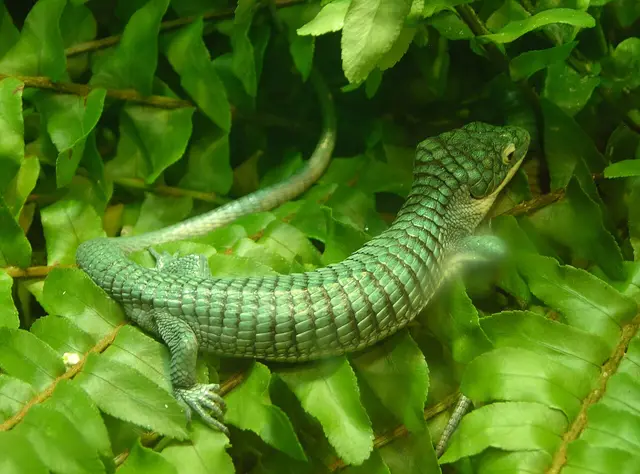
The Mount Zempoaltepec alligator lizard is a green, tree-living lizard found only in the cloud and pine-oak forests of the northern Sierra of Oaxaca, Mexico. The IUCN Red List rated it Endangered in 2007. Only a handful of specimens exist, and its forest is being converted to farmland.
How to recognise it
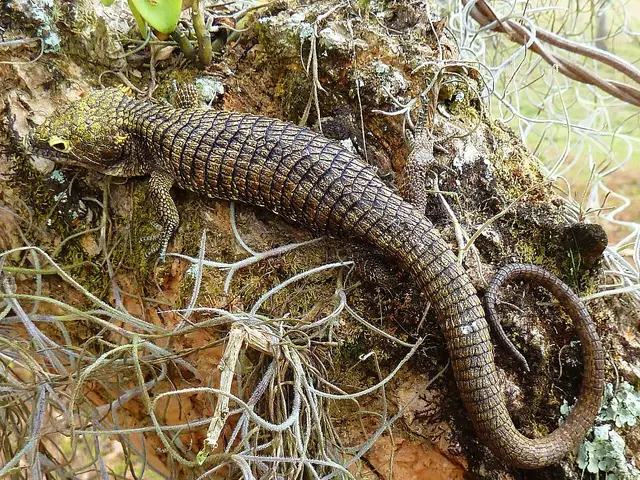
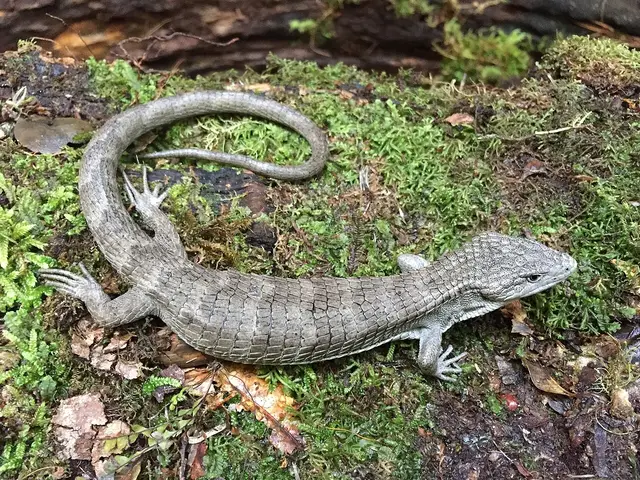
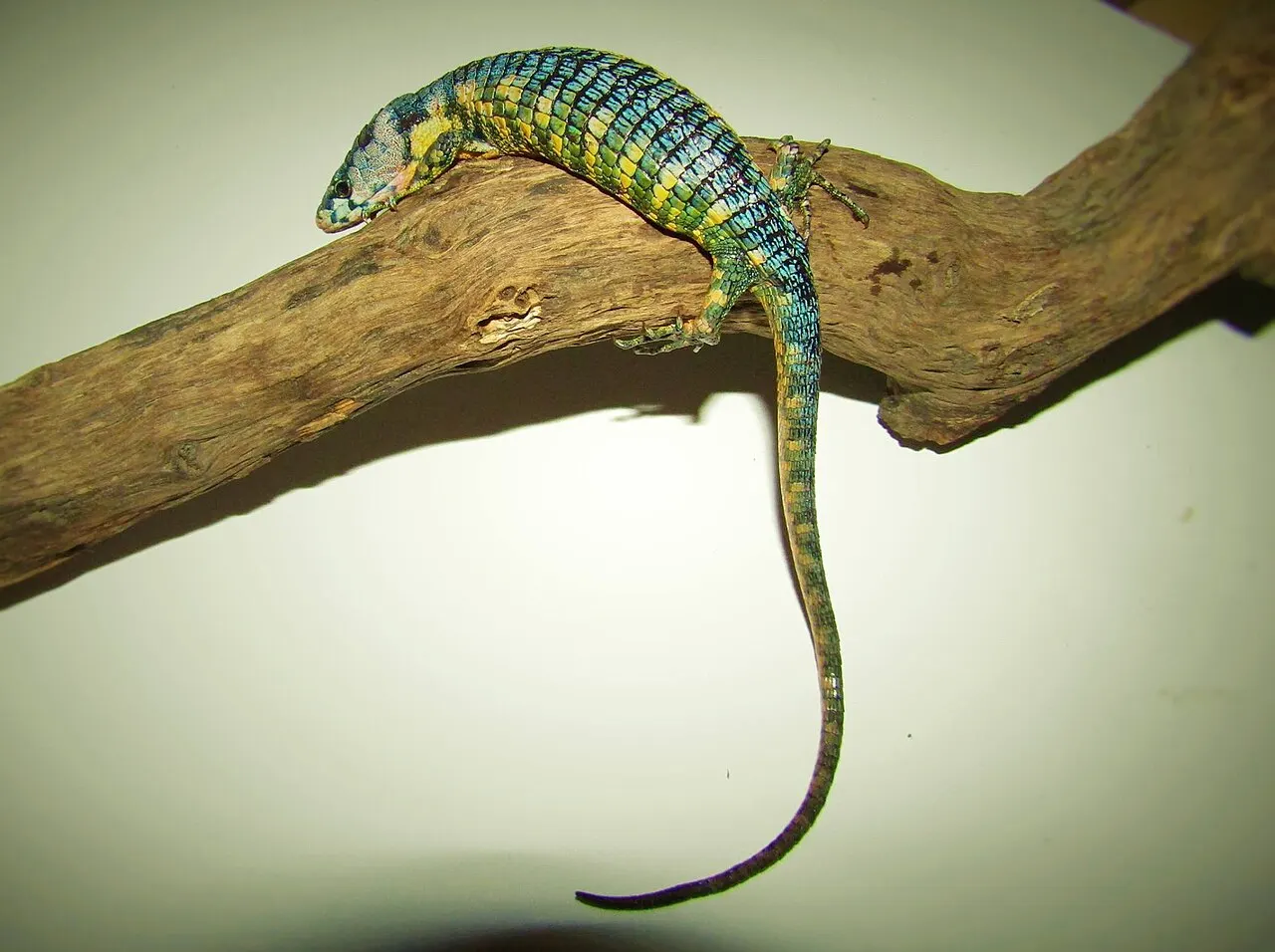
Adults reportedly measure 11 to 12 cm from snout to vent. Young lizards are beige with dark brown or black crossbands, while adults range from yellow-green through green to turquoise. A pale arrowhead-shaped mark reportedly sits on top of the head, with dark markings on the sides of the head and neck.
The species name comes from Latin words for dark and lips, a reference to the lower lip scales, which are darker than the chin.
Where it lives
It is endemic to Mexico and restricted to the northern Sierra of Oaxaca, with records from the Sierra Mixe and the Sierra Juárez. The type locality is Mount Zempoaltepec. Joseph Tihen described it in 1944 as Gerrhonotus fuscolabialis, and a later name, Abronia kalaina, was folded into it.
The IUCN gives collection elevations of about 2,158 to 2,438 m, and lizards photographed in 2015 and 2016 were at about 2,280 to 2,456 m. The IUCN describes the species as a canopy dweller of mature cloud forest. Until recently it was reported only from cloud forest, but four photographed records from the municipalities of Santiago Xiacuí and Capulálpam de Méndez showed it in humid pine-oak forest as well.
Pins are Wikidata “endemic to” fields. Orange dots, when present, are GBIF occurrence tiles — survey bias included.
How it lives
Though it is arboreal, it is not strictly so. The four sightings, made between May and June, caught one lizard resting on a fallen pine log, one moving on the ground 150 m from a stream, one on a bromeliad 1.5 m up a madrone tree and one basking on a dead oak about 15 m tall.
The Reptile Database lists the species as ovoviviparous, meaning the eggs develop inside the mother and she gives birth to live young. Little else about its diet or breeding has been published.
Why it is in trouble
Only six preserved specimens were known in museum collections as of 2021, five from the Sierra Mixe and one from the Sierra Juárez. The IUCN calls the species rare and its population decreasing, and says there was substantial deforestation across its range after 1985. Its listed threats are farming and grazing, by both small-holders and industry, which convert the forest.
A 2021 field note by Ortega-Álvarez and colleagues described all four sighting sites as lying in or beside forest managed for timber, and said local people show fear of the lizard.
What is being done
The IUCN lists protection and management of sites as the actions needed, and says the remaining suitable cloud forest within the recorded range should be conserved. In 2007 it noted that Mexican law gave the species special protection but that it was not known from any protected area. The 2021 note says Mexico lists it as Threatened, that no federal protected areas cover the region, and that its survival depends on communities preserving and managing their forests. It urged more support for community conservation and community-based monitoring, which might also ease the fear local people feel toward the lizard.
Sources
Written for this catalog in our own words from the sources below, checked against them on 12 November 2026. Population figures are estimates and carry the year they were made. Status and assessment year: IUCN. 2026. The IUCN Red List of Threatened Species. Version 2026-1. iucnredlist.org.
- IUCN Red List assessment 12706446 (2007), via IUCN Red List API
- IUCN Red List API taxon record
- Ortega-Álvarez et al. 2021, New records for Mount Zempoaltepec alligator lizard, Revista Latinoamericana de Herpetología
- Wikipedia, Mount Zempoaltepec alligator lizard
- The Reptile Database, Mount Zempoaltepec alligator lizard
- GBIF species record