Critically Endangered
Abronia campbelli
Abronia campbelli
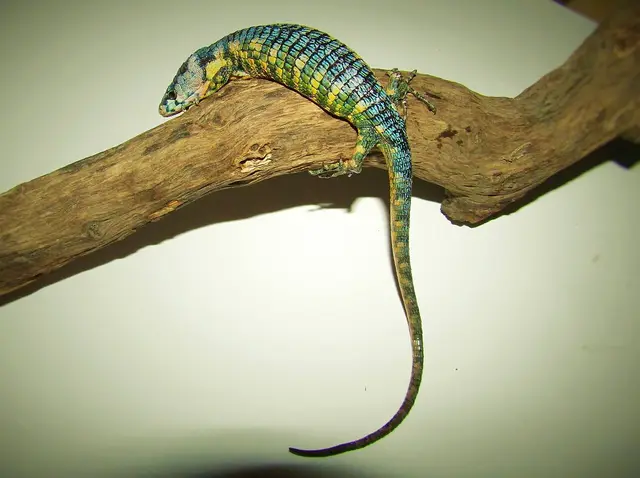
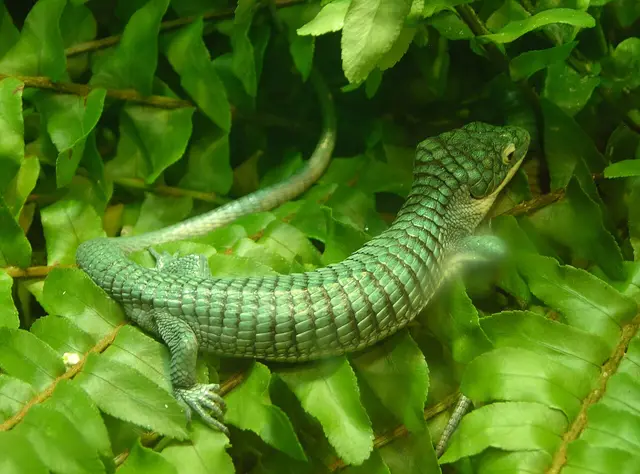
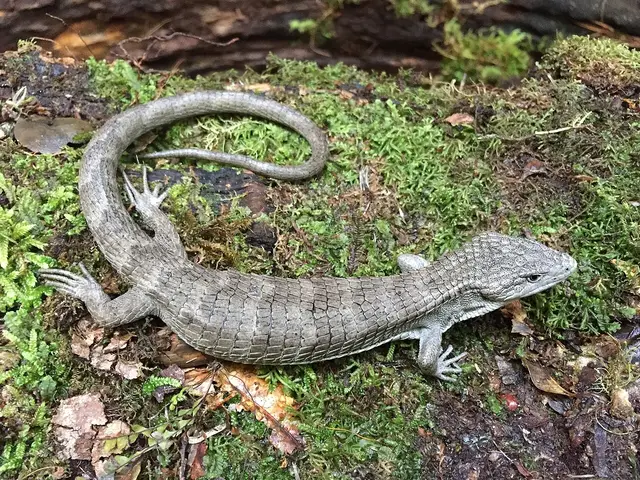
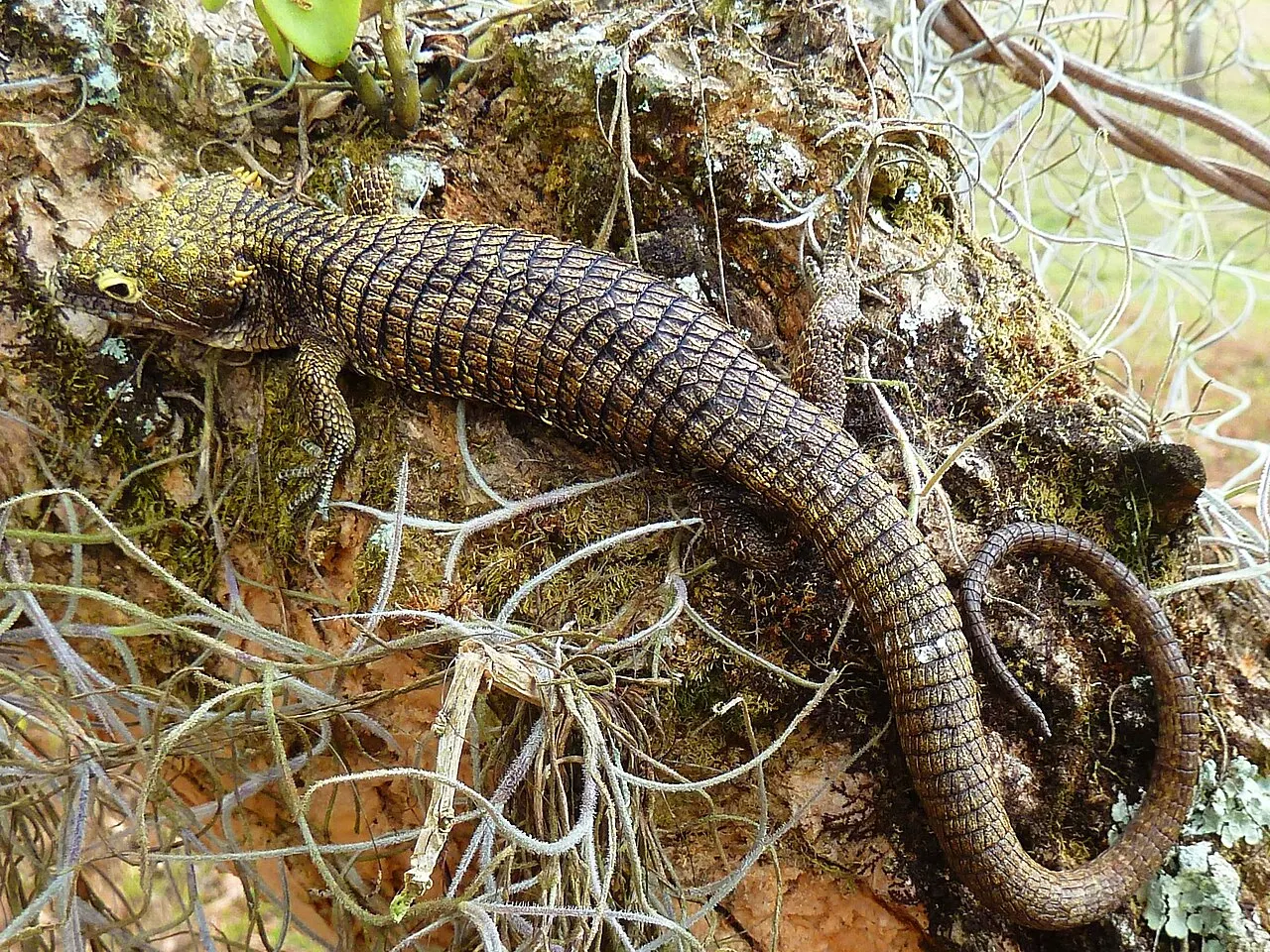
Campbell's alligator lizard (Abronia campbelli) is a tree-dwelling lizard found only in the montane forests of eastern Guatemala. Once regarded as extinct, it was found again in 2009. The IUCN's 2026 assessment rates it Critically Endangered, with a decreasing population confined to a single location.
What kind of lizard it is
This is an arboreal alligator lizard of the family Anguidae and the genus Abronia, a group of tree-living lizards from the forests of Mexico and Central America. It was described in 1993 and named for the herpetologist Jonathan A. Campbell. It bears live young: females keep the eggs inside the body until they hatch.
Guatemala's 2016 CITES proposal describes it as earthy grey to brown, with pale brown to cream skin around the eyes. Mating runs from August to November, and the average litter is about 12 young.
Where it lives
Campbell's alligator lizard is endemic to eastern Guatemala. The IUCN assessment records it from montane moist forest at 1,800 to 1,900 m above sea level, and it does not migrate. The assessment counts a single location and puts the area the species actually occupies at only 4 square kilometres.
It had been considered extinct. A second adult was found in an oak tree in 2009, and a 2010 paper in Herpetological Review by Daniel Ariano-Sánchez and Mónica Torres described its pine-oak forest habitat and natural history in southeastern Guatemala.
Pins are Wikidata “endemic to” fields. Orange dots, when present, are GBIF occurrence tiles — survey bias included.
Why it is in trouble
The main problem is forest loss. A Rufford Foundation profile puts the share of its original habitat that remains at about 3 percent. The 2026 assessment records the habitat as still shrinking, with small-holder farming and grazing named as ongoing threats.
The assessment gives a population figure of 487 and a decreasing trend. Guatemala's 2016 CITES proposal explains that this is an estimate of adults, worked out from a 2010 survey of the remaining trees (about 2.5 lizards per tree, with 48 percent of trees occupied).
Collection for the pet trade is the other pressure. The IUCN lists international pet and display use as a threat. In 2010, according to the CITES proposal, researchers met a villager who was holding about 30 of these lizards for traffickers, and he agreed to release them. A 2019 IIED case study notes that poaching levels are low but high relative to such a small population, so losing even one animal matters. Persecution by local people is also listed as a low-impact, ongoing threat.
What is being done
Guatemala proposed the species for CITES Appendix I in 2016, and it is listed there, which bars commercial international trade. The IUCN assessment records a recovery plan, at least one protected area where it occurs, an ex situ breeding programme, and education and awareness work as in place. Zootropic, a Guatemalan conservation group, has run a captive breeding programme, and by 2012 the group and its partners were working with a private landowner to protect the last remnant of habitat.
The IIED case study describes a community programme by the Foundation for the Endangered Species of Guatemala (FUNDESGUA) that combines habitat work, captive breeding and education. It reported little to no evidence of poaching inside project areas over the previous two years, although adults could still be bought at markets (possibly captive-bred ones). A Rufford-funded restoration project led by Monica Torres reports 155.8 hectares restored and more than 162,000 trees planted, and aims to link forest patches with corridors and a protected area.
Sources
Written for this catalog in our own words from the sources below, checked against them on 12 November 2026. Population figures are estimates and carry the year they were made. Status and assessment year: IUCN. 2026. The IUCN Red List of Threatened Species. Version 2026-1. iucnredlist.org.
- IUCN Red List assessment, Abronia campbelli (2026)
- Guatemala CONAP, CITES CoP17 proposal on Abronia (26 April 2016)
- Wikipedia, Abronia campbelli
- Rufford Foundation, Monica Torres showcase
- Year of the Lizard News No. 2 (March 2012), Alliance for the Conservation of Endangered Species of Guatemala
- IIED and IUCN-SULi, Community-led approaches to tackling illegal wildlife trade (September 2019)
- IRCF, Arboreal Alligator Lizard (Project Abronia)