Endangered
Monte Cristo Arboreal Alligator Lizard
Abronia montecristoi
The Monte Cristo arboreal alligator lizard (Abronia montecristoi) is a rarely seen, tree-living lizard of the cloud forests of El Salvador and Honduras. The IUCN Red List assessed it as Endangered in 2013, citing a tiny range, and very little has been written about how it lives.
How to recognise it
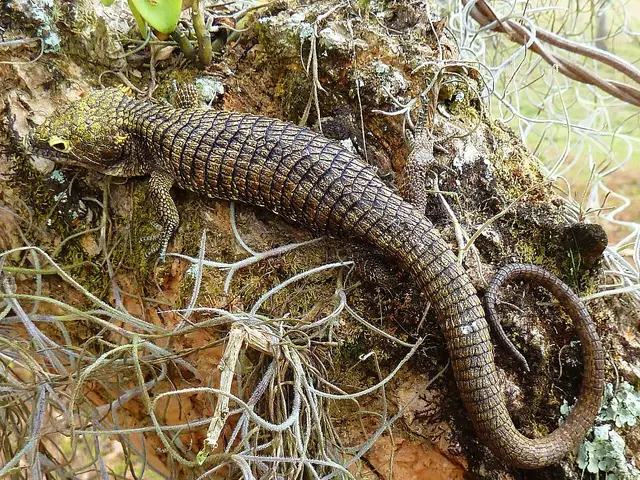
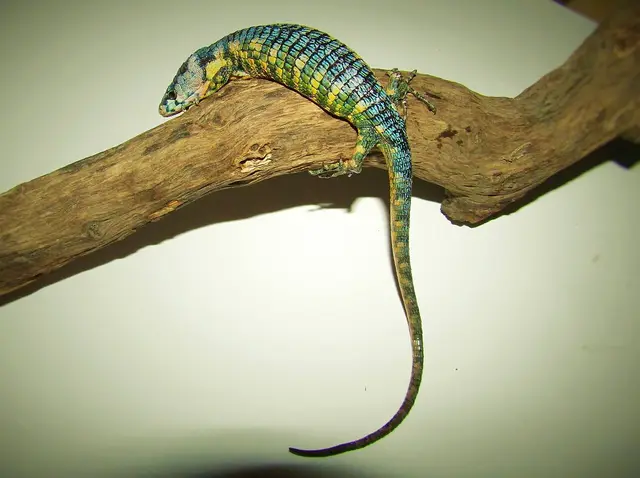
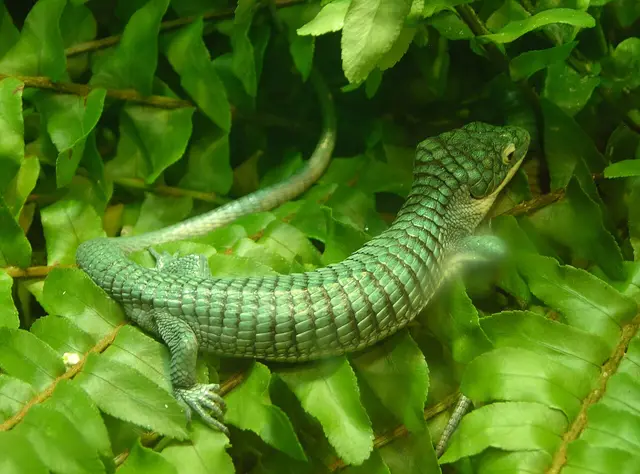
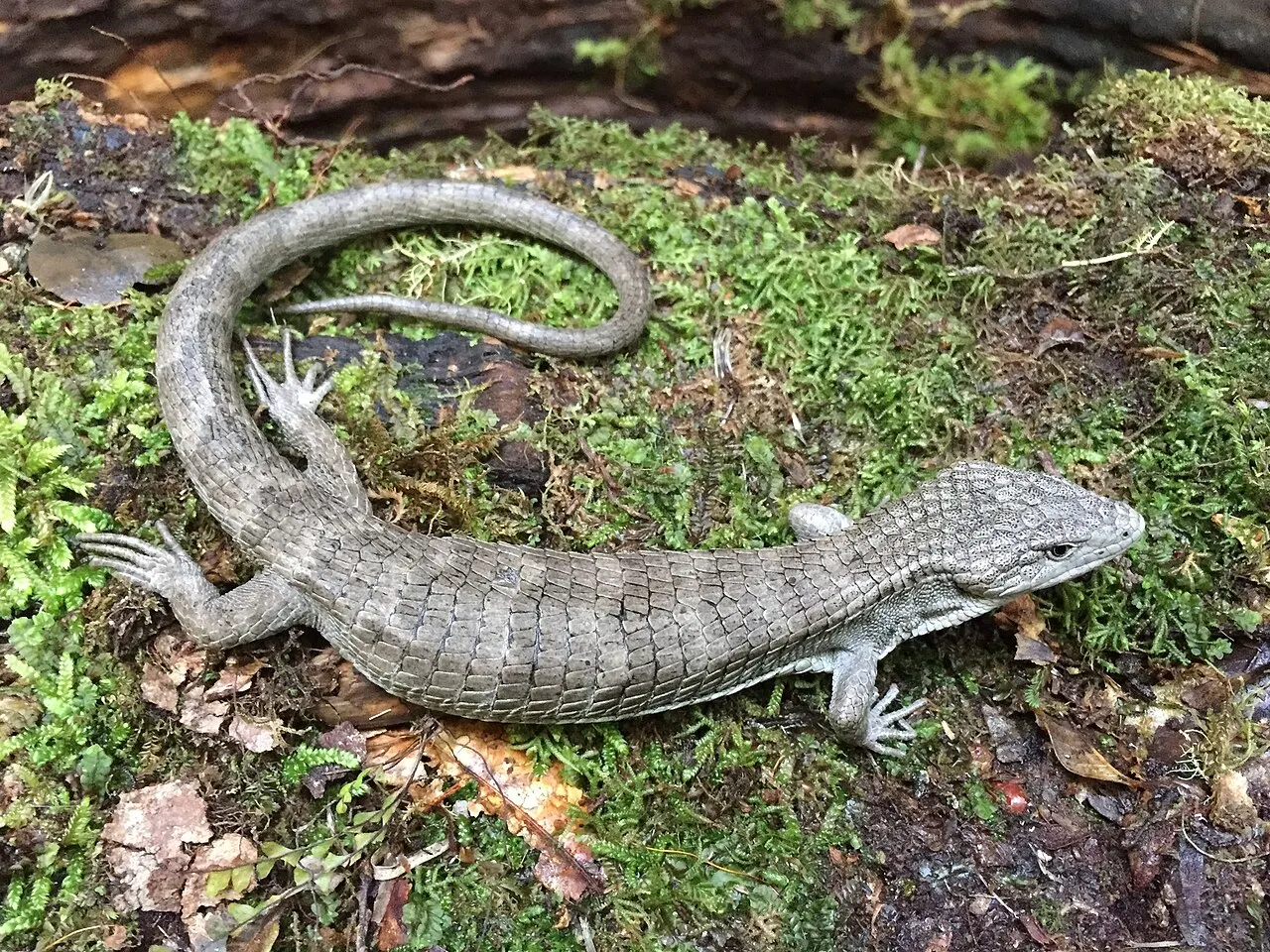
The Monte Cristo lizard belongs to the anguid family and to Abronia, the arboreal alligator lizards of Mexico and Central America. Herpetologists McCranie and Wilson described its back as brown with pale cinnamon crossbands, the sides buff-yellow, the head cinnamon and the eyes pale greenish silver.
Scale counts separate it from its close relatives. It has five occipital scales at the back of the head, where the similar Salvadoran species Abronia salvadorensis usually has three. It has 12 longitudinal rows of ventral scales.
Where it lives
Hugo Hidalgo described the species in 1983. It is named for the type locality, the Hacienda Montecristo near Metapan in Santa Ana, El Salvador. The Red List records it as present in El Salvador and Honduras, with presence in Guatemala listed as uncertain, though the Reptile Database includes Guatemala.
The species is known from moist montane forest between about 1,370 and 2,250 m. The Red List estimates an extent of occurrence of about 800 square kilometres, spread over just two locations.
Pins are Wikidata “endemic to” fields. Orange dots, when present, are GBIF occurrence tiles — survey bias included.
How it lives
It lives mostly in trees in cloud forest. It is ovoviviparous, meaning females carry their eggs inside the body and give birth to live young. Almost nothing else about its ecology is documented.
Other Abronia species have prehensile tails and shelter in bromeliads and tree holes, but those habits come from the genus, not from study of this lizard.
Why it is in trouble
The Red List lists a decreasing population. With so small a range, any forest loss matters a lot. At the time of the assessment, none of its population was recorded as inside a protected area, and the threats were recorded only with unknown scale and motivation. Cloud forests as a whole are reportedly shrinking.
Collecting for the pet trade has contributed to the decline of another Abronia, the endangered A. graminea, and the Monte Cristo lizard is reportedly listed in CITES Appendix II. Whether it is actually traded is not documented.
What is being done
The Red List records no conservation actions specific to this lizard. The cloud forests it depends on are the focus of the Tropical Montane Cloud Forest Initiative, which involves UNEP, IUCN and WWF. The assessment dates from 2012, and a species that went undocumented for decades needs new survey work.
Sources
Written for this catalog in our own words from the sources below, checked against them on 12 November 2026. Population figures are estimates and carry the year they were made. Status and assessment year: IUCN. 2026. The IUCN Red List of Threatened Species. Version 2026-1. iucnredlist.org.