Endangered
Mexican alligator lizard
Abronia graminea
The Mexican alligator lizard (Abronia graminea) is a bright green tree-dwelling lizard found only in the cloud forests of eastern Mexico, in Veracruz, Puebla and Oaxaca. The IUCN assessed it as Endangered in 2007. Farming and grazing are the ongoing pressures it lists, and collectors have targeted it too.
How to recognise it
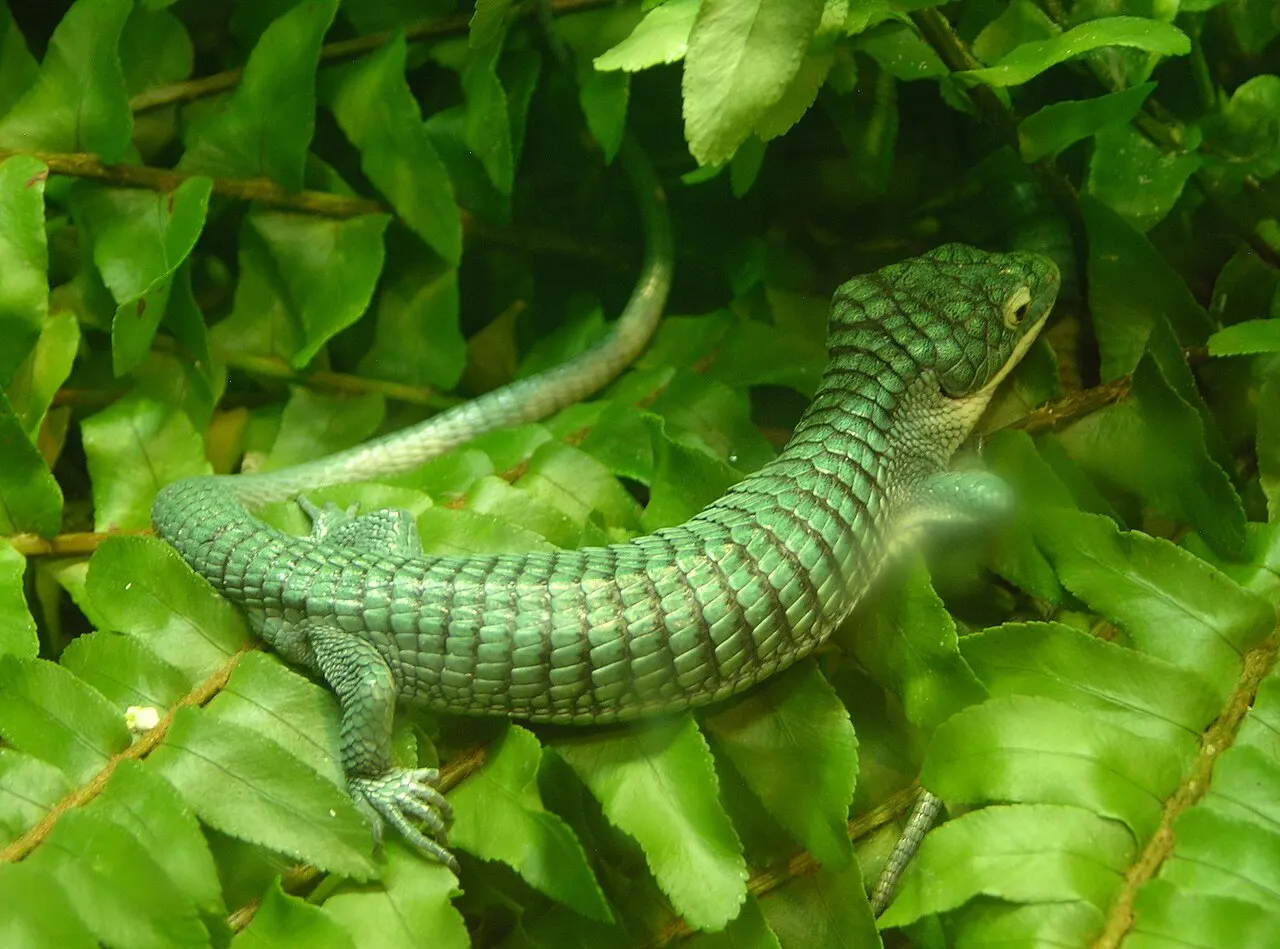
This is a stocky arboreal lizard, reportedly reaching about 10.6 centimetres from snout to vent, with a tail up to roughly 16 centimetres. Two measured adults of 9.8 and 10.0 centimetres weighed about 21 grams.
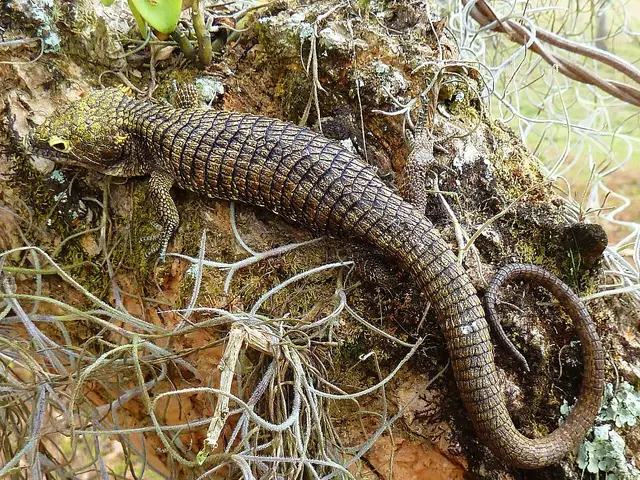
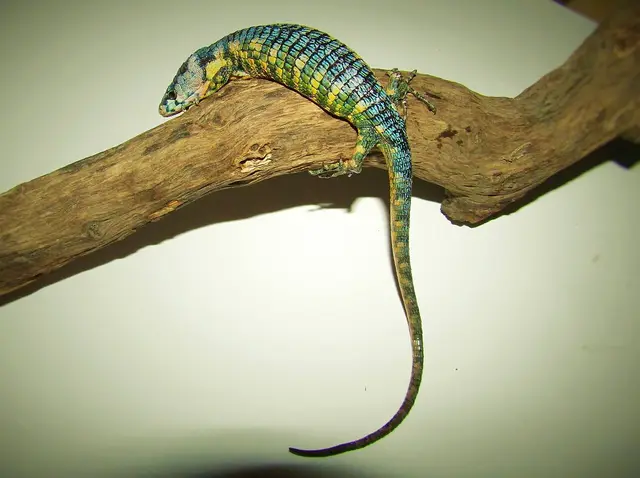
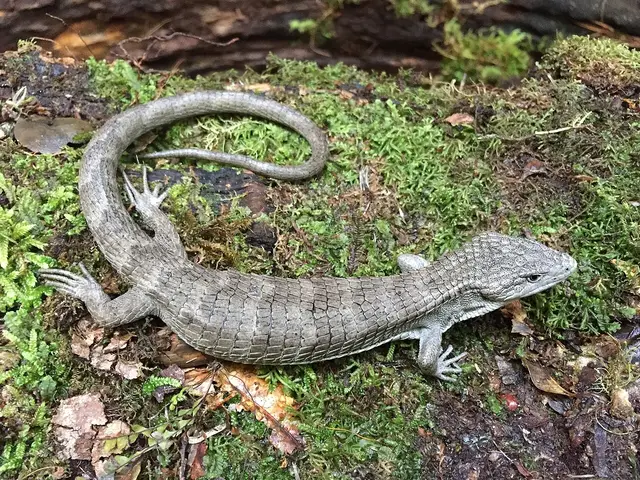
In the wild, adults are usually a brilliant emerald green, and some shade to dark teal blue. Juveniles look quite different, tan with dark crossbands. Captives kept indoors under poor light can fade to a grayish teal. It's also called the green arboreal alligator lizard, and collectors know it as a little green dragon.
Where it lives
The species is endemic to Mexico, in central Veracruz, eastern Puebla and Oaxaca, along the Sierra Madre de Oaxaca. The type specimen came from near Orizaba. It has been recorded at Chignahuapan in Puebla and Puerto del Aire in Veracruz. Its elevation range is reportedly 1,350 to 2,743 metres, and its range has been estimated at about 11,500 square kilometres.
It lives in humid montane cloud forest and pine-oak forest, high in the canopy, up to around 40 metres, mostly among bromeliads. Arboreal alligator lizards as a group spend most of their time high in trees.
Pins are Wikidata “endemic to” fields. Orange dots, when present, are GBIF occurrence tiles — survey bias included.
How it lives
Little has been recorded in the wild. In captivity it eats insects and other arthropods, and captive animals have reportedly lived up to 10 years.
It bears live young. Females reportedly mature in their third year and have litters of 1 to 12, born after a gestation of about six to eight months. Reptile keepers working with the genus report that a female gives birth once a year.
Why it is in trouble
The Red List names farming, grazing and ranching, both industrial and small-scale, as the ongoing threats, and lists the population trend as decreasing. The only habitat it lists is moist montane forest, and the lizard seems unable to persist in degraded forest.
Collecting for the pet trade adds to the pressure. A Mexican conservationist quoted by Mongabay in 2019 called it the most commercial of the legally traded Abronia species. Mexico's environment prosecutor seized 97 lizards of three Abronia species, this one included, between 2005 and 2017. Mexico and the European Union asked at a 2016 CITES conference for the whole genus to go on Appendix II, which regulates international trade, and it was later added.
What is being done
The Red List records that the species occurs in at least one protected area, and lists site and area management as the one conservation action. That assessment dates from 2007, and no recent survey figures turned up.
Captive breeding is under way among private keepers. A reptile magazine author describes keeping a second-generation captive-bred animal and suggests the species as a candidate for breeding projects with Mexican wildlife agencies.
Sources
Written for this catalog in our own words from the sources below, checked against them on 12 November 2026. Population figures are estimates and carry the year they were made. Status and assessment year: IUCN. 2026. The IUCN Red List of Threatened Species. Version 2026-1. iucnredlist.org.
- IUCN Red List assessment, Abronia graminea (2007)
- Mexican alligator lizard, encyclopedia article
- The Reptile Database, Abronia graminea
- Reptiles Magazine, Abronia arboreal alligator lizards
- Mongabay, 4 February 2019, trafficking of Abronia lizards
- Defenders of Wildlife, July 2016
- GBIF, Abronia graminea names