Endangered
Rim rock crowned snake
Tantilla oolitica
The rim rock crowned snake is a small, mostly underground snake from the limestone rocklands of southeastern Florida and the Florida Keys. The Red List rated it Endangered in 2007 because its habitat is small, broken up and shrinking. Federal endangered status followed in 2026.
How to recognise it
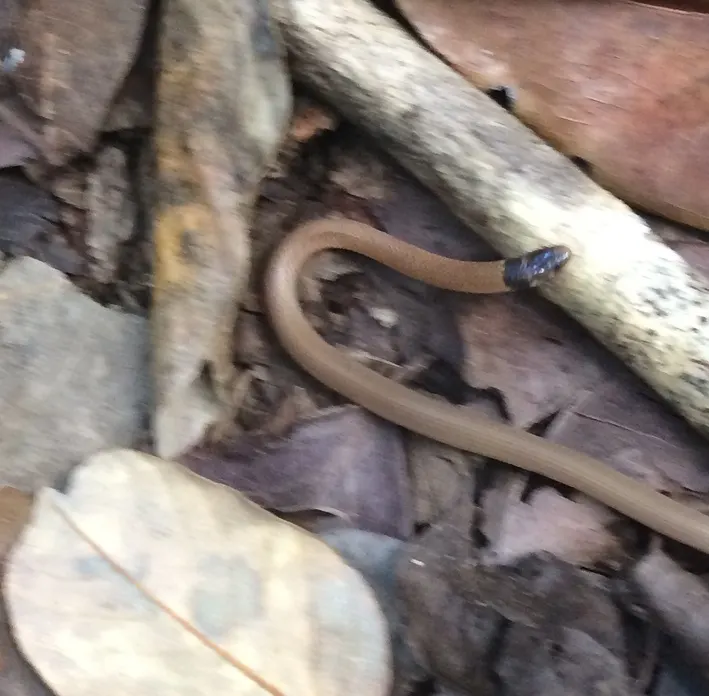
Adults are 18 to 23 cm long (7 to 9 in), and females run a little longer than males but have shorter tails. The head is black from the snout back to a black collar, the back is tan or beige, and the belly is pinkish white to cream. There is often a pale blotch just behind the eye. Snakes from the Florida Keys can have a pale band that separates the black cap from the collar, which mainland animals lack. Hatchlings measure 7.5 to 9 cm.
It is one of 76 species in the genus Tantilla. Taxonomically its closest relative is the southeastern crowned snake, although the Florida crowned snake lives nearer to it. No genetic analysis has been done on the species.
Where it lives
It is found only on the southeastern tip of the Florida peninsula, in Miami-Dade County, and in the Florida Keys, including Key West and Big Pine Key. Within that small range it lives in pine rockland and rockland hammock, where thin soil sits over limestone. It has also turned up in roadsides, vacant lots and shrubby pastures. Despite extensive searches, it has never been found in Everglades National Park.
Because the snake lives underground and hides well, nobody has developed a method for counting it. Researchers consider 15 populations to be present, seven in Miami-Dade and eight in the Keys, based on records and habitat.
Pins are Wikidata “endemic to” fields. Orange dots, when present, are GBIF occurrence tiles — survey bias included.
How it lives
Much about its life is unrecorded. It spends most of its time under the surface, in holes and crevices in the limestone, rock rubble, and pockets of organic matter. It dries out easily, so it favors moist spots, and it likely comes up after rains, possibly because its underground refuges flood. It is also found under logs, rocks, rotten stumps and human litter.
Its diet hasn't been documented, but it probably eats centipedes, insects and other small invertebrates, like its relatives. If it breeds like a close relative, a clutch might be three eggs, possibly two clutches a year. Larger snakes are likely predators, and the slender brown scorpion may also prey on it.
Why it is in trouble
Pine rockland has shrunk to around 3% of its historical extent across south Florida. Miami-Dade County has about 2,275 acres of pine rockland and 609 acres of rockland hammock left, and more than 90% of suitable rockland habitat in the region has been lost. Snakes recorded at sites around Miami have not been found at those places since the 1980s. Where fire is kept out of pine rockland, the habitat gradually turns into denser hammock, which is less suitable.
In the Keys, the worry is water. Higher seas, flooding and salt in the groundwater are turning rockland into salt-tolerant vegetation such as mangrove. The 2026 federal rule projects that the lower Keys populations could be lost within 10 to 20 years, and that the upper Keys could lose nearly half their habitat by 2040.
What is being done
A final rule published on 21 July 2026 lists the species as endangered under the US Endangered Species Act, effective 20 August 2026. The Red List rated it Endangered in 2007 and recorded a decreasing trend.
Some habitat is protected. Since 1990 Miami-Dade County's Environmentally Endangered Lands program has bought more than 1,500 acres of pine rockland, and the snake has been found at four of those preserves. It has also been recorded in the National Key Deer Refuge and Crocodile Lake National Wildlife Refuge. About 76% of the remaining suitable habitat in eastern Miami-Dade is protected, but it lies in small, isolated patches.
Sources
Written for this catalog in our own words from the sources below, checked against them on 12 November 2026. Population figures are estimates and carry the year they were made. Status and assessment year: IUCN. 2026. The IUCN Red List of Threatened Species. Version 2026-1. iucnredlist.org.




