Endangered
Scree skink
Oligosoma waimatense
The scree skink (Oligosoma waimatense, also listed as O. laxa) is a large lizard of the dry, rocky high country of New Zealand's South Island, living among screes, boulderfields and stony river beds. The IUCN Red List rated it Endangered in 2019, with a declining, fragmented population.
How to recognise it
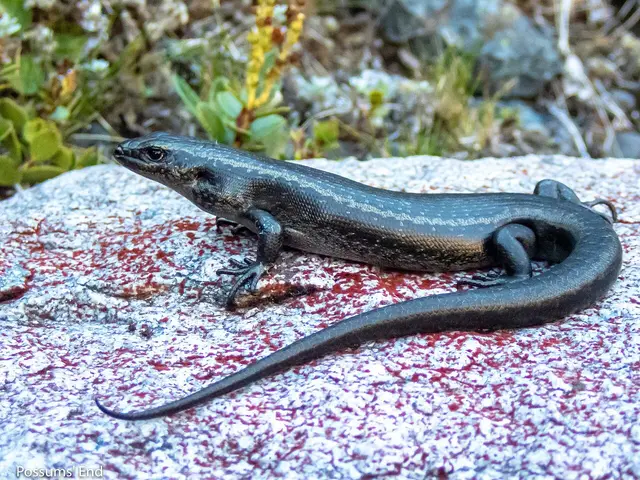
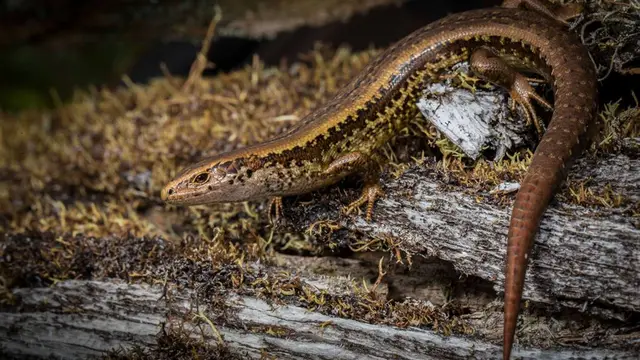
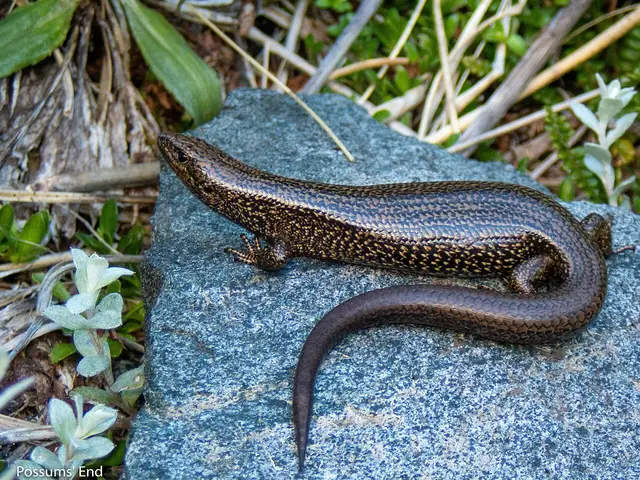
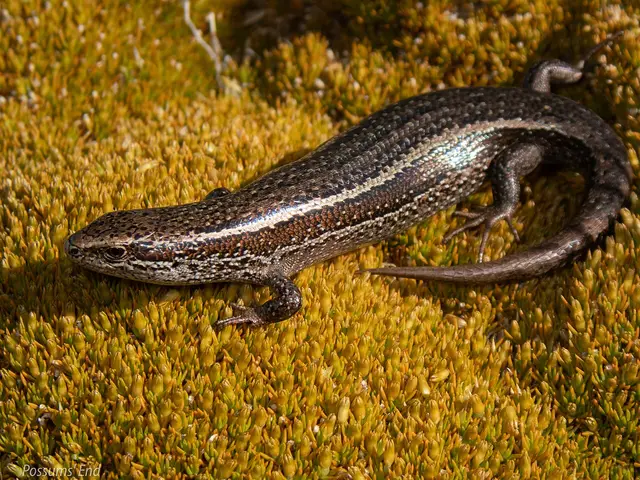
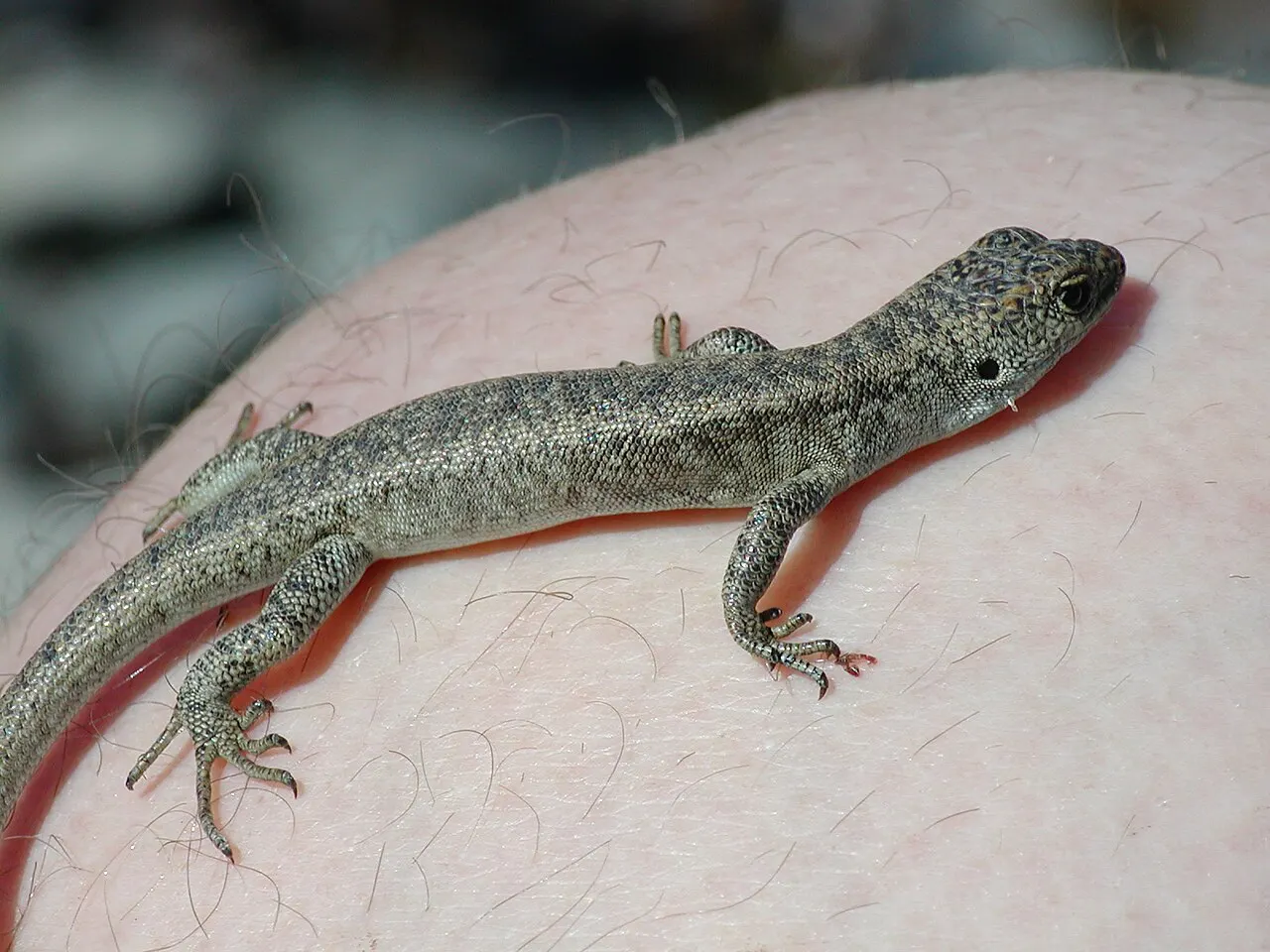
This is one of New Zealand's biggest skinks. Adults measure 60 to 114 mm from snout to vent, the tail is longer than the body, and weights of at least 28 g have been recorded. Very long toes help it scramble over loose rock.
Colour varies by region. Canterbury animals are drab pale or dark grey with faint bands and dense speckling. Skinks in Otago are cream-yellow or tan, often with bold black bands. A lizard from Marlborough that resembles the Otago form is now treated as a separate species.
The name is in flux. In 2023 a re-examination of the old holotype of Mocoa laxa, described in 1872, found it was a scree skink, so the New Zealand Herpetological Society now lists the species as Oligosoma laxa. The IUCN assessment, the Department of Conservation and the 2019 field study all use O. waimatense for the same animal.
Where it lives
It occurs in patches in the montane to sub-alpine country of Canterbury and Otago, and the Department of Conservation describes the range as running from South Marlborough to North Otago. The IUCN gives an elevation range of 400 to 1,750 m, an estimated area of occupancy of 208 square kilometres, and lists rocky areas and seasonal or irregular streams as its habitats. Rock outcrops, boulderfields, bluffs and stony river terraces all suit it.
Individuals are active by day and bask a lot. They are alert, and will dive into water to escape capture. The diet includes invertebrates, native fruits and smaller lizards.
Pins are Wikidata “endemic to” fields. Orange dots, when present, are GBIF occurrence tiles — survey bias included.
How it lives
Breeding is poorly known. It may reproduce yearly or every second year, and animals probably mature at 4 or 5 years at the earliest. They are thought to live more than 20 years. Home ranges recorded in one study ran from about 40 to 950 square metres.
Why it is in trouble
The Red List's 2019 population estimate is 5,000 to 20,000 individuals, and it describes a decreasing population split into fragments. Its large size makes it vulnerable to introduced mammals, and cats, mustelids, mice and hedgehogs are all named as predators. Weeds and shading from wilding conifers can also degrade open rock habitat. On Black Jack Island in Lake Benmore, where the skink was last seen in the 1980s, forestry is thought to have caused a local extinction.
Floods are a serious risk for stream-bed groups. In a ten-year study of one population in the mid-Canterbury high country (2008 to 2018), a severe, unseasonal flood in May 2009 cut captures by 84%. Numbers took about 8.5 years to recover with no species-specific management, and a later flood reportedly hit the site again.
What is being done
New Zealand's Department of Conservation classes the species as Nationally Vulnerable. The IUCN lists invasive species control and habitat protection as conservation actions, notes that it occurs in at least one protected area, and records some ex situ conservation. Researchers have urged longer monitoring at the study site and four further scree sites, a survey of Black Jack Island, and prompt removal of wilding conifers from affected habitat.
Sources
Written for this catalog in our own words from the sources below, checked against them on 12 November 2026. Population figures are estimates and carry the year they were made. Status and assessment year: IUCN. 2026. The IUCN Red List of Threatened Species. Version 2026-1. iucnredlist.org.
- IUCN Red List assessment (Lettink et al., 2019)
- Scree skink, New Zealand Herpetological Society profile
- Scree skinks, what happens over ten years, DOC blog (2019)
- Lettink and Monks, Ecology of scree skinks in O Tu Wharekai Wetland (NZ Journal of Ecology 43(1), 2019)
- Scree skink, NZ Forest Owners Association rare species page
- Scree skink, Wikipedia