Endangered
Attenborough's fan-throated lizard
Sitana marudhamneydhal
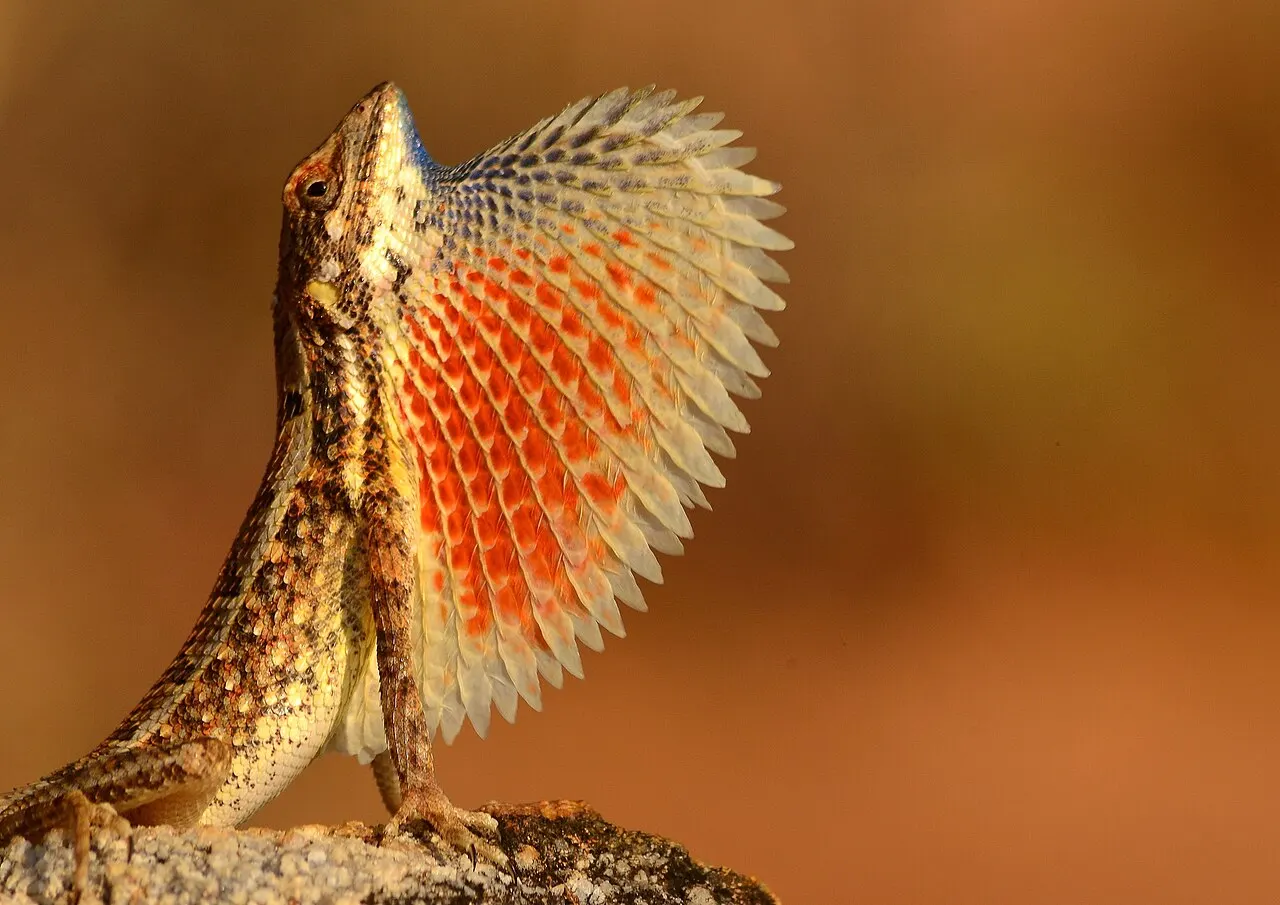
Attenborough's fan-throated lizard (Sitana marudhamneydhal) is a ground-living agamid from the coastal plains of southern India, known for the large, serrated throat fan of males. The IUCN Red List classed it as Endangered in 2021, with a declining, fragmented population squeezed by farming.
How to recognise it
This is a large fan-throated lizard by the standards of its genus, with a maximum snout to vent length of 55 millimetres and an average of 51 millimetres. Males carry a dewlap, a throat fan, that is strongly serrated along its edge and extends beyond the forearm attachment. It can cover up to 64 percent of the trunk.
Its dorsal scale count is 39 to 40.
Where it lives
The species was first described in 2016 from Kallidaikurichi in Tirunelveli District, Tamil Nadu, at about 68 metres elevation. A second species, Sitana attenboroughii, named for David Attenborough, was described in 2018 from Trivandrum in Kerala. A 2021 Zootaxa study by Balan and colleagues compared two populations of the first and one of the second, found shallow genetic differences and overlapping features, and treated the Kerala name as a synonym of marudhamneydhal. The Reptile Database therefore gives its range as Tamil Nadu and Kerala, while the Red List lists only Tamil Nadu.
The Red List gives an elevation range of 0 to 80 metres and describes the habitat as dry tropical grassland and coastal sand dunes. The Reptile Database adds open ground dominated by the mesquite Prosopis juliflora and plains in southern Tamil Nadu. The species name joins two Tamil words, marudham (cultivable grassland) and neydhal (land beside the sea).
Pins are Wikidata “endemic to” fields. Orange dots, when present, are GBIF occurrence tiles — survey bias included.
How it lives
Breeding males were seen in September and October, and hatchlings were recorded in January. The Reptile Database lists the species as egg-laying.
Why it is in trouble
The Red List assessment names agro-industry farming as the main threat, affecting a majority of the population and driving rapid declines, through conversion and degradation of its habitat. The population is severely fragmented, and its area is still shrinking.
The assessment records no protected area holding the species. It lists site protection, habitat protection and site management as conservation actions, and research on threats, population size and distribution, and population trends as priorities.
Sources
Written for this catalog in our own words from the sources below, checked against them on 12 November 2026. Population figures are estimates and carry the year they were made. Status and assessment year: IUCN. 2026. The IUCN Red List of Threatened Species. Version 2026-1. iucnredlist.org.




