Endangered
Kentani dwarf chameleon
Bradypodion kentanicum
The Kentani dwarf chameleon (Bradypodion kentanicum) is a small, plain-coloured chameleon from the coast of South Africa's Eastern Cape. The IUCN Red List assessed it as Endangered in 2022, up from Near Threatened in 2018, because its scattered habitat is shrinking under farming and grazing.
How to recognise it
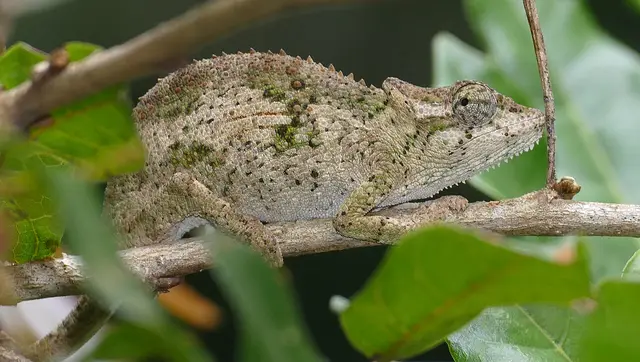
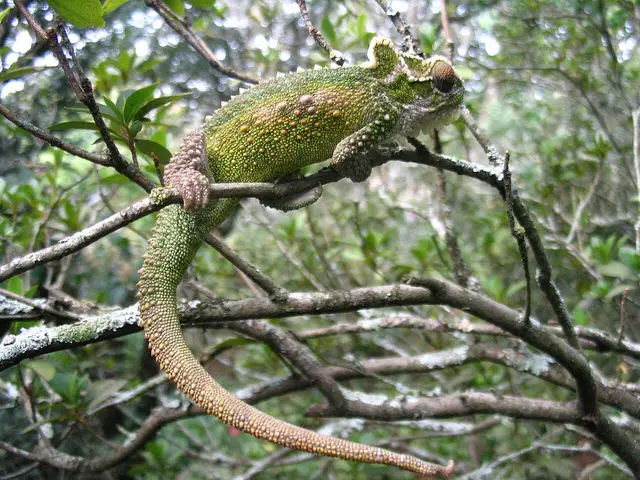
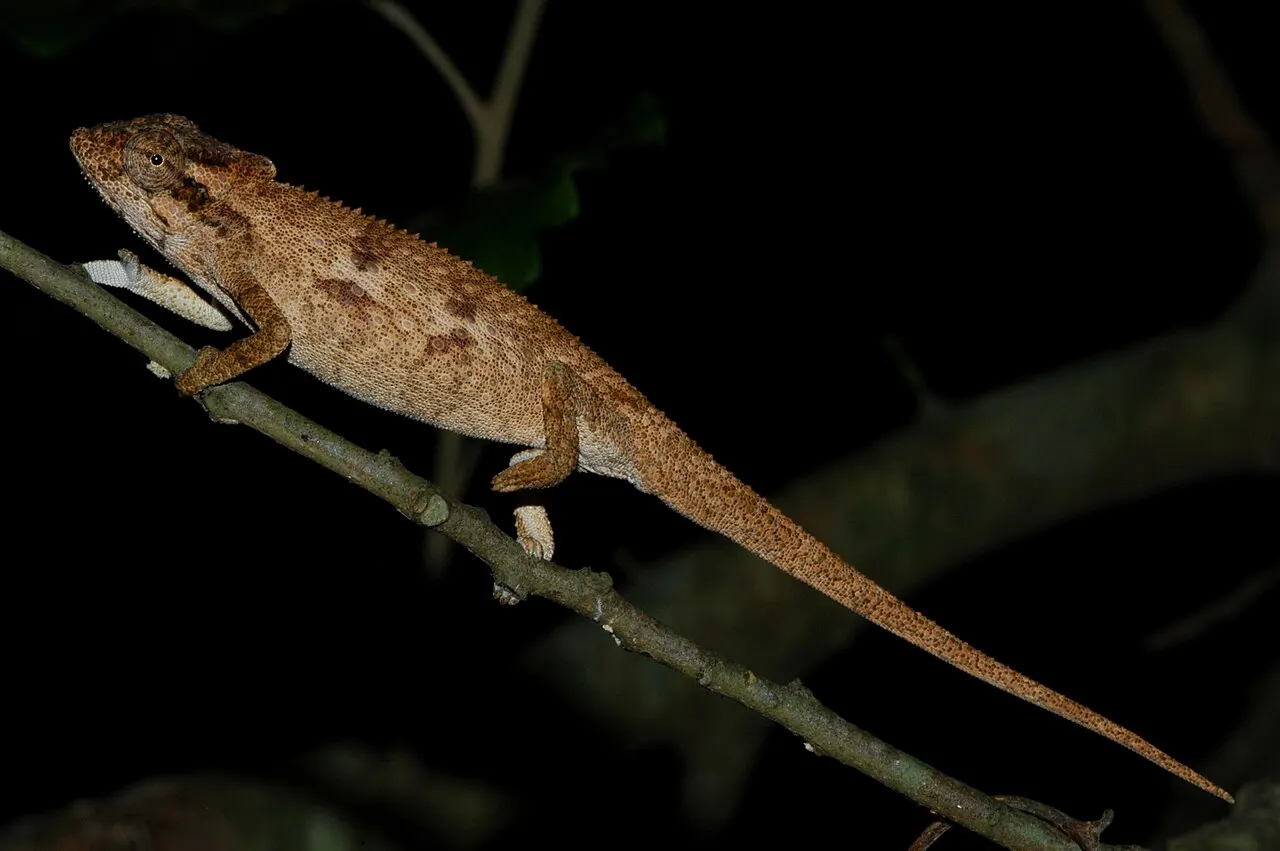
This is a small chameleon, typically no more than about 10 cm long, and a drab one. A South African reptile enthusiast's guide describes the colour as brown to dirty olive, sometimes with pale brown patches along the sides. The Red List also gives the name Kentani grass chameleon. It is ovoviviparous, meaning the eggs develop inside the mother and the young are born live.
Where it lives
It is found in the coastal Eastern Cape, and the name comes from the town of Kentani (also spelled Centani), the type locality. Database records fall along the coast between Kentani and Mazeppa Bay, at Manubi Forest and The Haven, at Cats Pass, in Dwesa Nature Reserve, and as far south as Coffee Bay. The Red List estimates its extent of occurrence at about 3,050 square kilometres.
The guide describes its habitat as tall grasses, small shrubs and reeds near water, with some use of forest edges and the low canopy. The Red List lists dry savanna and moist lowland forest as its habitat types.
Pins are Wikidata “endemic to” fields. Orange dots, when present, are GBIF occurrence tiles — survey bias included.
How it came to be recognised
John Hewitt described it in 1935 as Lophosaura melanocephala kentanica, a form of another chameleon. Klaver and Böhme listed it in 1997 as a synonym of Bradypodion pumilum melanocephalum. Later authors, including Tilbury and colleagues in 2006, have treated it as a species in its own right.
Why it is in trouble
The species was rated Vulnerable in 2017 and Near Threatened in 2018, then Endangered in 2022 under criterion B1ab(i,ii,iii,v). That criterion applies to species with a small range that is severely fragmented, with continuing decline in range, occupied area, habitat quality and numbers. The assessment records all of these, and a decreasing population trend.
The threats listed are small-holder farming and small-scale grazing, ranching or farming, both ongoing. The guide adds that frequent burning by small-scale cattle farmers, and livestock feeding on the vegetation the chameleons use, degrade the habitat.
What is being done
The assessment records that the species occurs in at least one protected area, and that it is subject to international trade controls. It is listed in CITES Appendix II. Dwesa Nature Reserve is among the places where it has been recorded.
Sources
Written for this catalog in our own words from the sources below, checked against them on 12 November 2026. Population figures are estimates and carry the year they were made. Status and assessment year: IUCN. 2026. The IUCN Red List of Threatened Species. Version 2026-1. iucnredlist.org.