Endangered
Transkei Dwarf Chameleon
Bradypodion caffer
The Transkei dwarf chameleon (Bradypodion caffer, spelled caffrum by the Red List), also called the Pondo dwarf chameleon, is a small live-bearing chameleon found only in South Africa's Eastern Cape. It was assessed as Endangered in 2022, mainly because its coastal forest home is being cleared and broken up.
How to recognise it
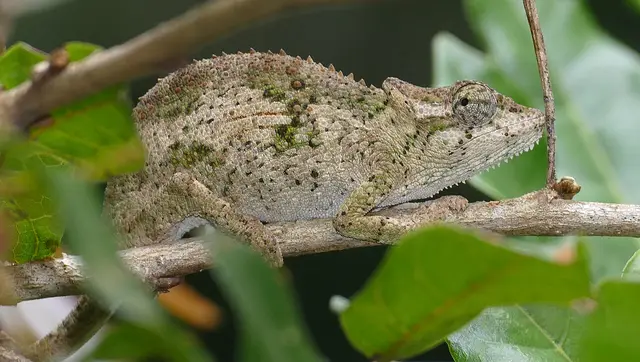
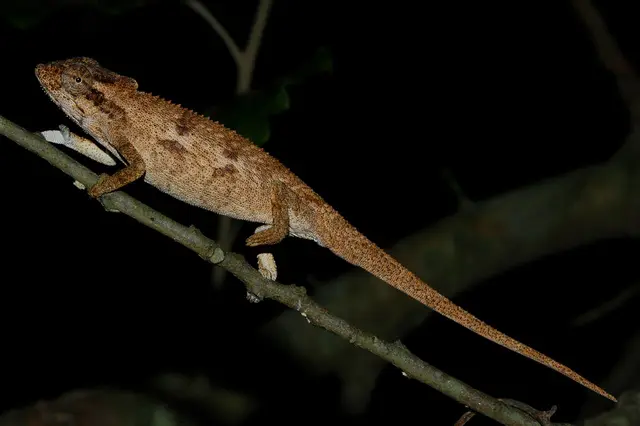
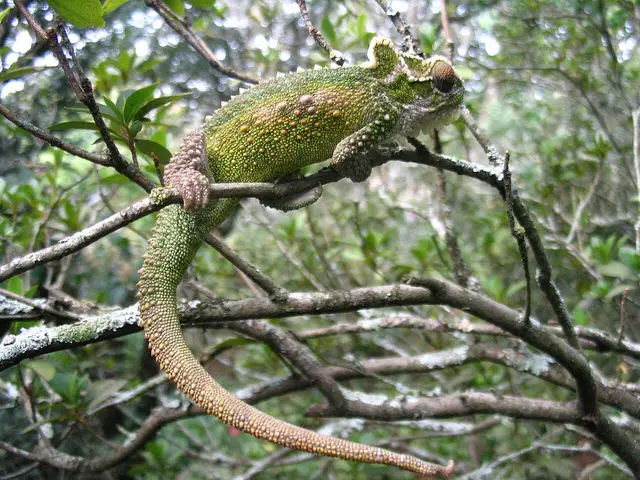
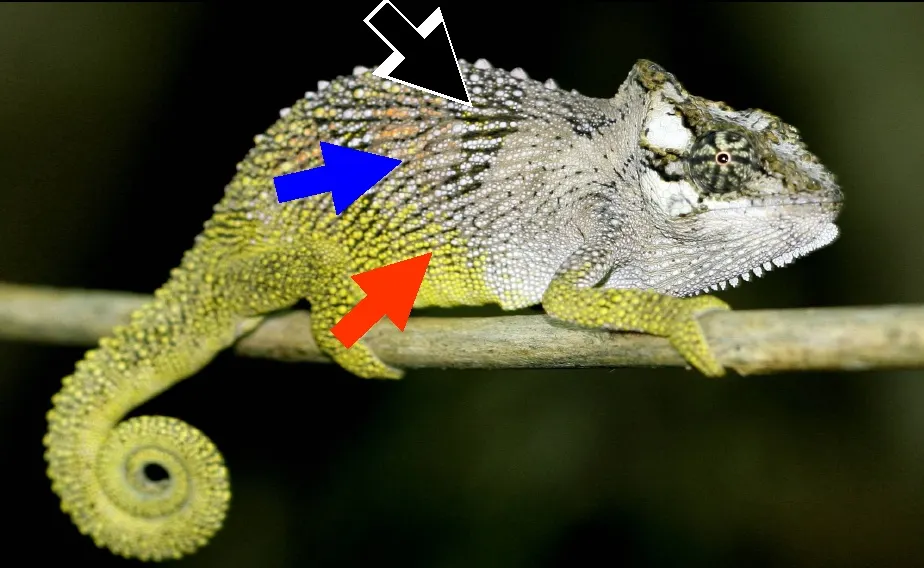
It's a medium-sized dwarf chameleon, often reaching about 16 cm from nose to tail tip. Males are brown to pale green, with two emerald blotches along the flanks, yellow tubercles on the body and short, broad red spines running down the back and onto the first third of the tail.
Females are brown to greenish with two white triangular patches behind the eye, and a mottled dark green and black body with whitish blotches on the sides. Like other chameleons it changes colour with mood.
Where it lives
It lives in the former Transkei region of the Eastern Cape (the type locality is Pondoland), in low coastal forest, particularly where there are dense vines, shrubs and bushes, though it also perches high in big trees. It copes with people better than many chameleons and can be abundant in hedgerows between houses in some towns.
The Red List estimates its extent of occurrence at about 422 square km and the area it actually occupies at about 300 square km. Silaka Nature Reserve is the protected area most often named. One photographer's guide also lists Hluleka and Mkambati Nature Reserves and Ntsubane Forest Reserve, so the full list of protected sites varies between sources.
Pins are Wikidata “endemic to” fields. Orange dots, when present, are GBIF occurrence tiles — survey bias included.
How it lives
Females give birth to live young that develop from eggs held inside the body, rather than laying eggs in the ground.
Why it is in trouble
The Red List describes the population as decreasing and severely fragmented, with its occupied area still shrinking. The listed threats are small-holder farming and housing, which turn forest into fields and settlement. Earlier accounts add overgrazing by livestock, firewood collection and invasive plants.
The assessment also records use of the species as a pet or display animal. It is listed in CITES Appendix II, so international trade needs permits.
What is being done
Recorded conservation actions are site protection and site management, centred on reserves such as Silaka. The species occurs in at least one protected area, but no systematic monitoring scheme is in place, so how reserve populations are faring hasn't been measured.
Sources
Written for this catalog in our own words from the sources below, checked against them on 12 November 2026. Population figures are estimates and carry the year they were made. Status and assessment year: IUCN. 2026. The IUCN Red List of Threatened Species. Version 2026-1. iucnredlist.org.