Endangered
Natal Midlands Dwarf Chameleon
Bradypodion thamnobates
The Natal Midlands dwarf chameleon (Bradypodion thamnobates) is a stocky, shrub-dwelling chameleon from the hills of inland KwaZulu-Natal, South Africa. The IUCN Red List rated it Endangered in 2022, mainly because its small range is being built over and farmed, and because wild animals are collected for the pet trade.
How to recognise it
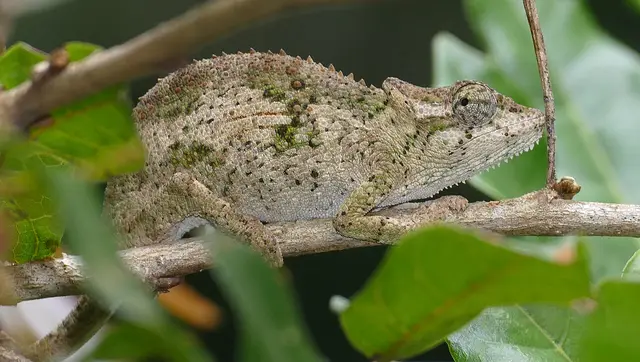
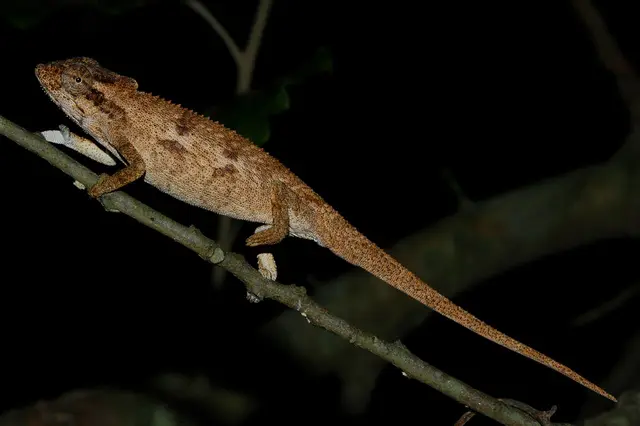
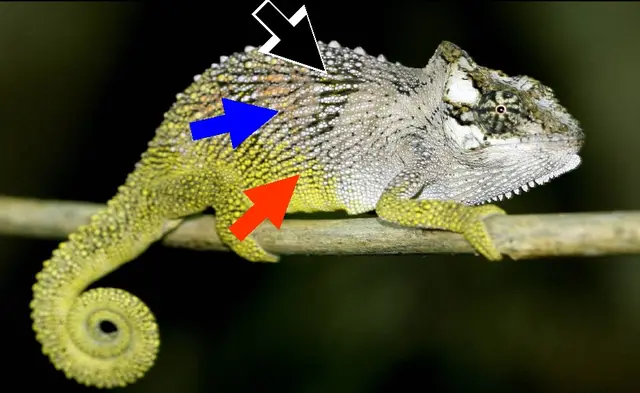
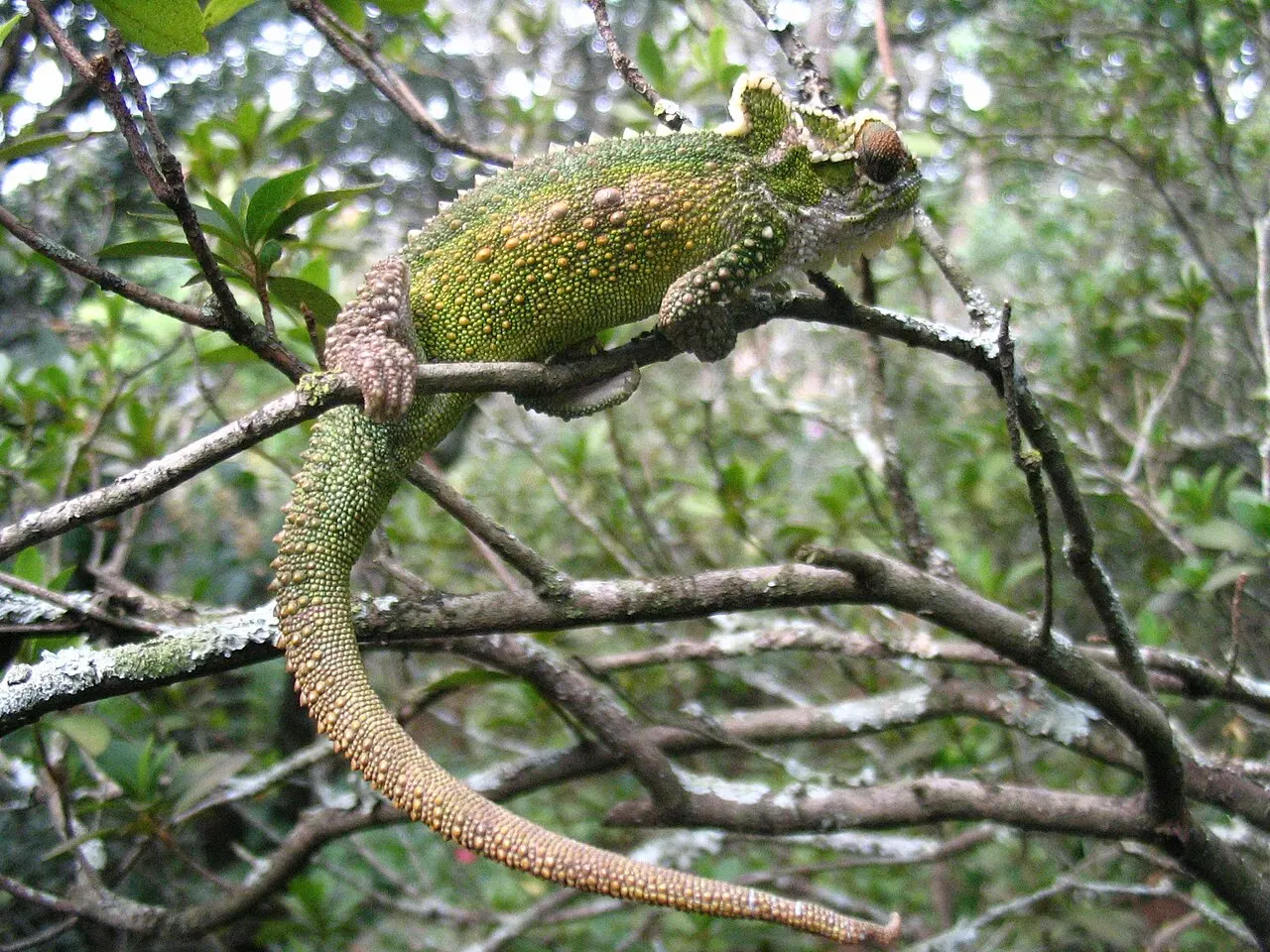
It is reportedly the largest dwarf chameleon in KwaZulu-Natal, with a total length of about 19 cm (7.5 inches), roughly 7.6 cm (3 inches) of that being body. It weighs about 10 to 12 grams. Most are green with yellow or orange sides, though some have black sides tinged with blue, and colors vary a good deal.
The head carries a yellow, helmet-like crest and the throat is white. Bulbous scales cover the body, with spikes along the back, crests on the throat and tubercles along the body. Males have a short orange stripe around the middle and red-spotted eyelids, while females are browner with a smaller crest.
Where it lives
It is found only in the Natal Midlands, between Mooi River, Bulwer, Howick and Dargle, at roughly 900 to 1,280 m. The Red List puts its extent of occurrence at about 4,610 square kilometers. Winters here are cold, with frost and occasional snow, and rain falls mainly from October to April.
The chameleon uses hedgerows, dense bush, reed beds and the edges of indigenous forest, and has been recorded in blue gum plantations, along fences, and in gardens. Young animals favor tall grass. The Red List lists both moist montane forest and urban areas as habitat.
Pins are Wikidata “endemic to” fields. Orange dots, when present, are GBIF occurrence tiles — survey bias included.
How it lives
This species gives birth to live young. Captive records show a gestation of five to eight months and litters of 8 to 16 babies, each about 4 cm long. Captive males can mature by about three months, though six months is more usual. Where it is found, it can be locally abundant.
Its taxonomy is reportedly unsettled. It is a close relative of the black-headed dwarf chameleon (Bradypodion melanocephalum), and an undescribed population from the Gilboa and Karkloof forests seems related to both, so the true number of species in this group is unclear.
Why it is in trouble
The Red List names housing and urban growth, small farms, timber plantations and collection for the pet trade as threats, and judges that the population is declining and badly fragmented. The extent of occurrence is not shrinking, but the area it actually occupies is.
Keepers prize the species, and animals are reportedly taken illegally and exported. It is reportedly also used in local folk medicine.
What is being done
The Red List records the species in at least one protected area and under international trade controls. Its listed conservation actions include habitat restoration, site management and trade management.
Assessments of its status have moved up and down. It was rated Vulnerable in 2017, then Endangered in 2018 and again in 2022.
Sources
Written for this catalog in our own words from the sources below, checked against them on 12 November 2026. Population figures are estimates and carry the year they were made. Status and assessment year: IUCN. 2026. The IUCN Red List of Threatened Species. Version 2026-1. iucnredlist.org.
- IUCN Red List assessment, Bradypodion thamnobates (2022)
- IUCN Red List taxon record, Bradypodion thamnobates
- Natal Midlands dwarf chameleon (encyclopedia article)
- Reptile Database, Bradypodion thamnobates
- Tyrone Ping, Natal Midlands dwarf chameleon
- African Dwarf Chameleons profile, Bradypodion thamnobates